
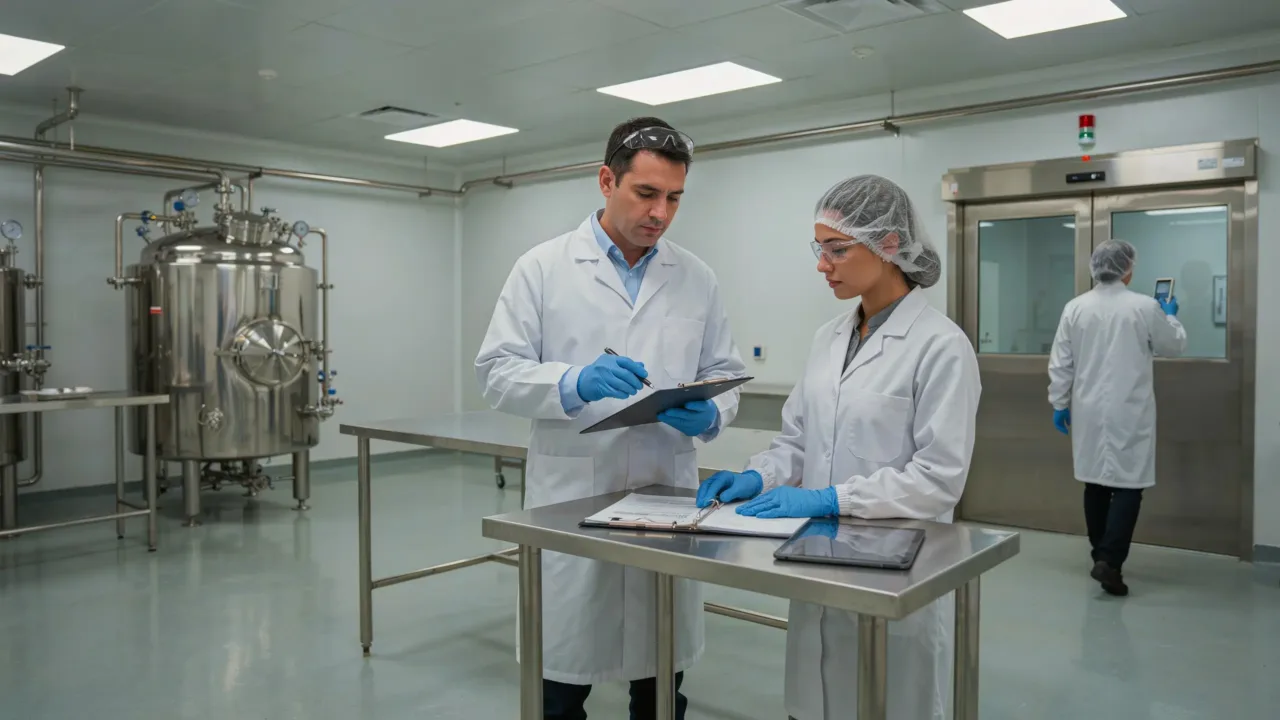
Introduction
Preparing for a GMP compliance audit requires careful planning, accurate documentation, trained personnel, and effective quality management systems. For pharmaceutical manufacturers and other regulated organizations, audit preparation is essential for identifying compliance gaps and maintaining product quality.
Good Manufacturing Practices (GMP) establish quality standards for the manufacturing, testing, handling, and distribution of regulated products. A GMP compliance audit evaluates whether an organization’s processes, facilities, documentation, and quality systems meet applicable regulatory requirements.
In 2026, organizations should pay particular attention to documentation accuracy, data integrity, corrective and preventive actions (CAPA), employee training, and risk management. Preparing in advance helps companies identify weaknesses and address them before an external audit or regulatory inspection.
This guide explains how to prepare for a GMP compliance audit, which documents to review, how to prepare employees, and how GxP Cellators can support your GMP audit readiness.
What Is a GMP Compliance Audit?
A GMP compliance audit is a systematic review of an organization’s quality systems, manufacturing activities, documentation, and procedures against applicable Good Manufacturing Practices requirements.
Depending on the organization, the audit may focus on production, laboratory operations, equipment maintenance, supplier qualification, warehouse activities, or quality management systems.
GMP audits may be conducted internally, by external auditors, by customers, or as part of supplier qualification. Regulatory inspections are conducted by the relevant authorities under their applicable regulatory frameworks.
The primary objective is to identify compliance gaps, evaluate potential risks, and confirm that suitable controls are in place to protect product quality and patient safety.
Why Is GMP Audit Preparation Important?
Effective GMP audit preparation helps organizations identify weaknesses before they become significant compliance issues. It also allows teams to organize evidence, review procedures, and confirm that established controls are working as intended.
The main benefits include:
- Improved compliance: Identify gaps against applicable GMP requirements and internal procedures.
- Better documentation: Ensure records are complete, accurate, traceable, and readily available.
- Stronger data integrity: Review how regulated data is created, recorded, checked, and maintained.
- Reduced operational risks: Identify weaknesses in manufacturing, testing, equipment, and facility controls.
- Improved employee readiness: Help personnel understand their responsibilities and applicable procedures.
- Effective corrective actions: Resolve identified issues through documented investigations and CAPA plans.
Although preparation cannot guarantee a successful audit, it can help organizations demonstrate control over their processes and respond to audit findings more effectively.
Step 1: Conduct a GMP Gap Assessment
Start by reviewing your current quality management system against the GMP requirements applicable to your products, activities, and markets.
A gap assessment helps determine whether existing procedures, records, and operational controls meet established requirements. It also provides a clear starting point for your audit preparation plan.
During the assessment, review the following areas:
- Quality management systems and responsibilities
- Standard operating procedures (SOPs)
- Manufacturing and laboratory documentation
- Equipment qualification and calibration
- Employee training and competency records
- Deviation management and CAPA
- Change control procedures
- Supplier qualification and monitoring
- Facility maintenance and cleaning
- Data integrity and record management
Once gaps have been identified, classify them according to their potential impact on product quality, patient safety, data reliability, and regulatory compliance.
Next, assign responsibilities, establish realistic deadlines, and track corrective actions until completion. High-risk issues should receive appropriate priority based on their potential impact.
Step 2: Review and Update GMP Documentation
Documentation is a major part of GMP audit preparation. Auditors may review procedures, records, and supporting evidence to determine whether activities were performed according to approved requirements.
Before an audit, verify that documents are current, approved, controlled, and available to authorized personnel.
Essential Documents to Review
1. Quality Manual and SOPs
Review the quality manual, standard operating procedures, work instructions, and related controlled documents. Confirm that they reflect current practices and applicable requirements.
2. Batch Manufacturing Records
Check batch production and packaging records for completeness, consistency, required approvals, and traceability. Investigate missing entries or unexplained discrepancies.
3. Laboratory and Analytical Records
Review testing records, analytical results, instrument records, and investigations involving unexpected results. Ensure that records are complete and scientifically justified.
4. Deviation and CAPA Records
Confirm that deviations have been investigated appropriately. CAPA records should explain the root cause, corrective action, preventive action where applicable, assigned responsibilities, and effectiveness checks.
5. Change Control Records
Review changes involving equipment, processes, materials, software, facilities, and procedures. Confirm that changes were assessed, approved, implemented, and verified according to established procedures.
6. Training Records
Verify that employees have completed required training before performing assigned activities. Records should show the training completed and any applicable competency assessments.
7. Equipment and Maintenance Records
Review calibration certificates, preventive maintenance schedules, equipment qualification documents, and records of relevant repairs or failures.
Keep documents organized so that the responsible team can retrieve the requested records without unnecessary delays.
Step 3: Prepare Your Facility and Equipment
A GMP compliance audit may include a physical walkthrough of manufacturing areas, laboratories, warehouses, and other controlled environments.
Before the audit, confirm that facilities are maintained in accordance with applicable GMP requirements and approved procedures.
Key Facility Preparation Activities
- Ensure manufacturing and laboratory areas are clean and appropriately maintained.
- Verify that equipment calibration and preventive maintenance are up to date.
- Review cleaning and sanitation procedures and their supporting records.
- Check pest control arrangements and associated documentation.
- Confirm that materials are appropriately identified and stored.
- Review environmental monitoring records where applicable.
- Verify that equipment status labels and maintenance records are accurate.
- Check that deviations involving facilities or equipment have been documented and addressed.
For organizations operating cleanrooms, the review may also include environmental controls, pressure differentials, contamination prevention, and relevant qualification records.
The exact checks depend on the facility, product type, manufacturing process, and applicable regulatory requirements.
Step 4: Prepare Employees for the Audit
Employees play an important role in demonstrating GMP compliance. Even when documentation is complete, unclear responsibilities or unfamiliarity with procedures can create avoidable problems during an audit.
Prepare employees by reviewing their training status and explaining how the audit will be conducted.
How to Improve Employee Audit Readiness
Review GMP responsibilities: Ensure that employees understand the procedures relevant to their roles.
Verify training completion: Check that required GMP and job-specific training is documented and current.
Conduct awareness sessions: Explain the audit process, expected professional behaviour, and how employees should respond to questions.
Practice procedure-based questions: Ask employees to explain their routine activities and identify the applicable SOPs.
Clarify escalation procedures: Employees should understand how to report deviations, errors, unexpected events, and potential quality issues.
Employees should answer questions honestly and clearly. They should not guess when they do not know an answer. Instead, they should follow the organization’s established process for obtaining accurate information.
Step 5: Conduct a Mock GMP Audit
A mock GMP audit simulates an actual audit to identify weaknesses before the scheduled assessment. It helps organizations evaluate documentation, facility conditions, employee readiness, and the effectiveness of existing quality controls.
An effective mock audit should follow a structured audit plan based on the organization’s operations and applicable GMP requirements.
What Should a Mock Audit Include?
- Review of quality management system documentation
- Sampling of batch and laboratory records
- Assessment of deviation and CAPA management
- Interviews with relevant personnel
- Facility and equipment walkthroughs
- Review of supplier qualification records
- Evaluation of data integrity controls
- Verification of previous audit findings and corrective actions
After the mock audit, document the observations and supporting evidence. Classify findings according to the organization’s established risk criteria and applicable procedures.
Develop corrective action plans for identified gaps, assign responsibilities, and establish target completion dates. Where necessary, verify whether corrective actions have resolved the underlying issue.
A mock audit is most useful when it evaluates actual practices rather than simply checking whether documents exist.
Step 6: Review Data Integrity and Electronic Records
Data integrity is an important part of pharmaceutical quality and GMP compliance. Organizations should ensure that regulated data remains accurate, complete, consistent, and reliable throughout its lifecycle.
During preparation, review both paper-based and electronic records, depending on the systems used.
Consider the following questions:
- Are records attributable to the individuals who performed the activities?
- Are entries recorded at the appropriate time?
- Are original records or appropriate verified copies maintained?
- Are records accurate, complete, and consistent?
- Are corrections documented with appropriate justification and traceability?
- Are electronic systems access-controlled and appropriately managed?
- Are audit trails reviewed where required?
- Are backup, retention, and retrieval arrangements suitable for the relevant records?
The ALCOA+ principles can help organizations evaluate important data integrity characteristics, including attributable, legible, contemporaneous, original, accurate, complete, consistent, enduring, and available records.
Review the applicable procedures and regulatory expectations before the audit, particularly where computerized systems and electronic records are involved.
Step 7: Review Supplier Qualification and Quality Controls
Suppliers can affect the quality, safety, and reliability of pharmaceutical products. Therefore, supplier qualification and monitoring may form an important part of GMP audit preparation.
Review whether suppliers have been evaluated and approved according to established procedures. Check that supplier risks are assessed and that relevant quality agreements, certificates, specifications, and supporting records are available.
Your review may include:
- Approved supplier lists
- Supplier qualification and evaluation records
- Supplier audit reports
- Material specifications and certificates of analysis
- Quality agreements, where applicable
- Supplier-related deviations and complaints
- Corrective actions and follow-up assessments
Risk-based supplier oversight helps organizations focus resources on suppliers and materials that could have a greater impact on product quality or regulatory compliance.
Step 8: Develop a CAPA Plan and Verify Corrective Actions
Identifying gaps is only one part of GMP audit preparation. Organizations must also determine how identified issues will be corrected and how recurrence will be prevented.
A CAPA plan should clearly document the problem, investigation, root cause where established, proposed actions, responsible personnel, and target completion dates.
For effective CAPA management:
- Describe the issue clearly and objectively.
- Investigate the root cause using an appropriate method.
- Determine suitable corrective and preventive actions.
- Assign responsibilities and realistic deadlines.
- Document implementation and supporting evidence.
- Evaluate effectiveness where required by the applicable procedure.
- Escalate overdue or ineffective actions appropriately.
Avoid closing actions only because a task has been completed. The organization should also consider whether the underlying cause has been addressed and whether further action is necessary.
Common Mistakes to Avoid During GMP Audit Preparation
Even well-established organizations can experience difficulties when audit preparation is rushed or poorly coordinated.
Common mistakes include:
- Updating documents without reviewing actual work practices.
- Leaving deviations or CAPA actions unresolved without appropriate justification.
- Providing incomplete or inconsistent records.
- Overlooking employee training requirements.
- Ignoring supplier qualification and monitoring gaps.
- Failing to investigate recurring quality issues.
- Conducting mock audits without documented follow-up.
- Making unsupported claims about compliance.
- Failing to verify whether corrective actions are effective.
A structured preparation plan helps organizations address these issues systematically rather than relying on last-minute document collection.
How GxP Cellators Helps You Prepare for a GMP Compliance Audit
GxP Cellators supports regulated organizations through GxP consulting, auditing, and quality-related services. Its GMP audit preparation support can help organizations evaluate their current processes, identify potential gaps, and improve audit readiness.
Depending on the scope and agreed requirements, support may include:
- Pre-audit GMP gap assessments
- Quality system and documentation reviews
- Mock GMP audits
- Review of deviations and CAPA processes
- GMP training and employee awareness support
- Supplier and quality-system audit support
- Risk-based audit preparation
- Inspection readiness recommendations
GxP Cellators can help organizations focus on practical improvements and prioritize issues according to their potential compliance impact.
Its approach can be tailored to the organization’s operations, quality systems, and applicable regulatory framework. The specific scope of services should be confirmed before engagement.
To discuss your requirements, visit the GxP Cellators Contact Page.
Why Choose GxP Cellators for GMP Audit Preparation?
Choosing the right audit support partner can help your team prepare more systematically and identify areas that require further attention.
GxP Cellators focuses on practical compliance support for regulated organizations. When evaluating audit preparation support, organizations should consider:
- Relevant pharmaceutical and quality-system experience
- Familiarity with applicable regulatory expectations
- A risk-based approach to identifying gaps
- Clear and actionable recommendations
- Appropriate confidentiality arrangements
- Documented findings and follow-up recommendations
GMP audit preparation should reflect the organization’s actual processes rather than rely on a generic checklist alone. A tailored approach helps teams focus on the areas most relevant to their products, facilities, and compliance obligations.
Frequently Asked Questions
1. How far in advance should I prepare for a GMP compliance audit?
Preparation should ideally begin several months before a scheduled audit. Three to six months can be a useful planning period for complex operations, although the required time depends on the organization’s size, audit scope, identified gaps, and corrective action workload.
2. What documents should I prepare for a GMP compliance audit?
Important documents may include the quality manual, SOPs, batch records, laboratory records, deviation reports, CAPA records, change control documents, training records, equipment maintenance records, and supplier qualification files. The exact list depends on the audit scope.
3. How can I prepare employees for a GMP compliance audit?
Review employee training records, explain relevant GMP responsibilities, and conduct awareness sessions or mock interviews. Employees should understand their procedures, answer questions honestly, and follow established processes when they need clarification.
4. What is a mock GMP audit?
A mock GMP audit is a planned assessment that simulates aspects of an actual audit. It helps identify documentation gaps, process weaknesses, and training needs so that the organization can take appropriate corrective action before the scheduled audit.
5. What are the most common GMP audit findings?
Potential findings include incomplete documentation, inadequate deviation investigations, ineffective CAPA, insufficient training records, equipment maintenance gaps, data integrity weaknesses, and inadequate supplier controls. Actual findings depend on the facility, operations, and applicable requirements.
6. What is the difference between a GMP audit and a regulatory inspection?
A GMP audit may be conducted internally or by an external organization to evaluate compliance with applicable requirements and internal standards. A regulatory inspection is conducted by a regulatory authority under its legal mandate. Their scope, purpose, and outcomes may differ.
7. How does GxP Cellators support GMP audit preparation?
GxP Cellators provides GxP consulting and auditing support that may include gap assessments, documentation reviews, mock audits, CAPA-related support, and inspection readiness recommendations, depending on the agreed project scope.
8. How can I contact GxP Cellators for GMP audit preparation support?
Visit the GxP Cellators Contact Page to discuss your organization’s audit preparation requirements and determine which services may be suitable.
Conclusion
Preparing for a GMP compliance audit involves more than collecting documents before an auditor arrives. Organizations need to review their quality systems, maintain reliable records, prepare employees, assess facility conditions, and address identified compliance gaps.
A practical preparation plan should include a risk-based gap assessment, documentation review, facility checks, employee training, a mock audit, and appropriate CAPA follow-up. In addition, reviewing data integrity and supplier controls can help organizations identify important areas that may require attention.
With a structured approach, organizations can improve their understanding of GMP requirements and prepare more effectively for audits and regulatory inspections.
GxP Cellators offers GxP consulting and auditing support to help organizations evaluate their compliance needs and identify practical improvement opportunities.
Need help preparing for aGMP compliance audit? Visit GxP Cellators to discuss your audit preparation requirements.

