
Introduction
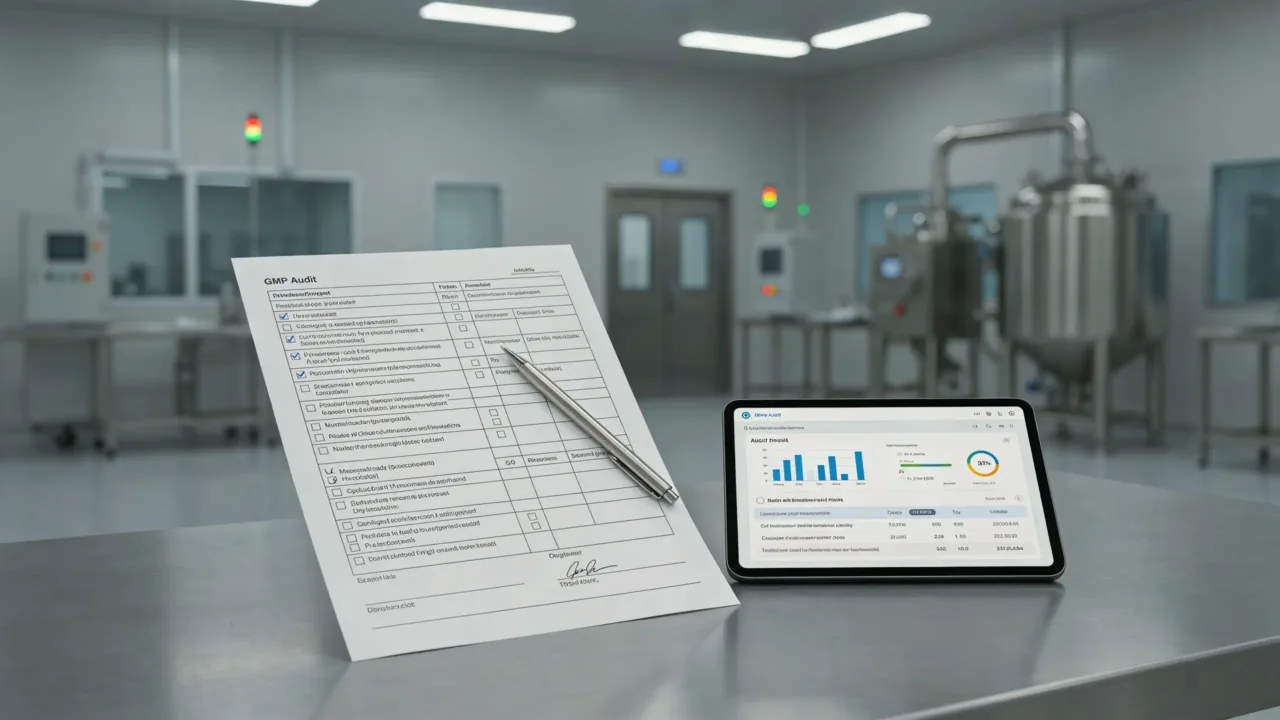
Good Manufacturing Practices (GMP) help pharmaceutical companies manufacture products that consistently meet established quality, safety, and regulatory requirements. A GMP manufacturing audit examines the processes, equipment, documentation, and controls used during pharmaceutical production. It helps identify compliance gaps before they affect product quality or lead to regulatory concerns.
In 2026, pharmaceutical facilities must maintain effective quality systems, reliable documentation, validated processes, and strong data integrity controls. An organized GMP manufacturing audit checklist helps quality teams review these areas systematically and identify opportunities for improvement.
GxP Cellators provides GMP auditing services to help pharmaceutical organizations assess manufacturing operations, review compliance practices, and prepare for regulatory inspections. This guide explains the essential areas to include in a pharmaceutical manufacturing audit checklist.
What Is a GMP Manufacturing Audit?
A GMP manufacturing audit is a systematic review of pharmaceutical manufacturing activities to determine whether established procedures, quality standards, and applicable regulatory requirements are being followed.
The audit may cover production records, equipment qualification, process validation, personnel training, material handling, packaging, labeling, and data integrity. Auditors review documents, observe operations, interview personnel, and examine evidence to identify weaknesses or non-compliance.
Manufacturing audits can be conducted internally or by independent external auditors. Their scope depends on the facility, product type, operational risks, and applicable regulatory requirements.
GMP Manufacturing Audit Checklist for 2026
The following checklist covers ten important areas that pharmaceutical companies should review during manufacturing audits. Organizations should adapt it to their specific processes, products, and regulatory obligations.
1. Production Documentation
Accurate production documentation provides evidence that pharmaceutical products have been manufactured according to approved procedures. Auditors review batch manufacturing records, production instructions, deviations, and change records to confirm that activities are properly documented.
Checklist:
- Are batch manufacturing records complete and accurate?
- Are batch records reviewed and approved by authorized personnel?
- Are production deviations documented and investigated?
- Are changes to manufacturing processes properly recorded and approved?
- Are records maintained according to applicable retention requirements?
Missing information, unexplained corrections, and incomplete batch records can create compliance risks. Companies should ensure that documentation is completed at the time activities occur and reviewed according to established procedures.
2. Process Validation
Process validation provides documented evidence that a manufacturing process can consistently produce products meeting predetermined quality requirements. Auditors assess whether validation activities are planned, approved, documented, and maintained throughout the process lifecycle.
Checklist:
- Are manufacturing processes validated where required?
- Are validation protocols approved before execution?
- Are validation reports complete and reviewed?
- Is continued process verification performed where applicable?
- Are significant process changes assessed for their impact on validation status?
Validation should not be treated as a one-time activity. Pharmaceutical companies should review process performance, investigate unexpected results, and determine whether revalidation is necessary following significant changes or emerging risks.
3. In-Process Controls
In-process controls help ensure that manufacturing activities remain within established operating limits. They may include monitoring critical process parameters, checking intermediate products, and verifying that manufacturing steps meet approved specifications.
Checklist:
- Are appropriate in-process controls established?
- Are control parameters monitored at defined intervals?
- Are results within approved acceptance limits?
- Are out-of-specification results investigated?
- Are control results documented and reviewed?
Effective monitoring allows quality teams to identify potential problems before they affect the finished product. Auditors should also check whether unexpected trends are investigated and whether corrective actions are implemented when required.
4. Equipment Qualification and Maintenance
Manufacturing equipment must be suitable for its intended purpose and maintained in an appropriate condition. Equipment-related failures can affect product quality, process consistency, and manufacturing records.
Checklist:
- Is equipment appropriately designed and suitable for its intended use?
- Is equipment qualified where required?
- Are measuring instruments calibrated according to approved schedules?
- Is preventive maintenance performed and documented?
- Are equipment cleaning activities recorded and controlled?
Auditors should review qualification records, calibration certificates, maintenance logs, and equipment status labels. They should also check whether equipment failures are investigated and whether affected batches are assessed for potential quality impact.
5. Personnel Training and Qualification
Employees involved in pharmaceutical manufacturing must understand their responsibilities and follow approved procedures. Training should match each person’s assigned duties and the risks associated with their work.
Checklist:
- Have personnel completed the required GMP training?
- Are employees qualified for their assigned responsibilities?
- Are job responsibilities clearly defined?
- Are training records complete and available?
- Is staffing adequate to support manufacturing activities?
Training records should demonstrate that employees have received appropriate instruction before performing tasks independently, where required. Refresher training should be provided according to company procedures, regulatory expectations, and identified training needs.
6. Material Management and Traceability
Raw materials, packaging components, and other production materials must be appropriately received, identified, tested, approved, stored, and issued. Poor material controls can result in mix-ups, contamination, or the use of unsuitable materials.
Checklist:
- Are incoming materials tested or assessed according to approved requirements?
- Are materials approved before use?
- Are storage conditions appropriate and monitored where required?
- Can materials be traced through receiving, dispensing, and production records?
- Are rejected, expired, or quarantined materials properly controlled?
Auditors should review supplier documentation, material status controls, inventory records, and traceability procedures. Any discrepancies should be investigated to determine whether product quality or manufacturing compliance has been affected.
7. Packaging and Labeling Controls
Packaging and labeling activities require careful control because errors can affect product identification, traceability, and patient safety. Auditors should examine procedures designed to prevent label mix-ups and ensure that packaging operations follow approved instructions.
Checklist:
- Are labels accurate and consistent with approved specifications?
- Are labeling materials controlled and reconciled?
- Are packaging processes validated where required?
- Are labels inspected at appropriate stages?
- Are line-clearance checks completed and documented?
Companies should ensure that obsolete labels are removed from use and that packaging records clearly identify the materials used. Any labeling discrepancy should be investigated, documented, and assessed for its potential impact.
8. Yield Calculation and Reconciliation
Yield calculations and material reconciliation help identify unexpected losses, discrepancies, and possible errors during production. These checks support process control and help organizations detect unusual manufacturing outcomes.
Checklist:
- Are production yields calculated at appropriate stages?
- Are yields monitored against established limits?
- Are significant discrepancies investigated?
- Are reconciliation records complete and accurate?
- Are investigation outcomes documented and reviewed?
Auditors should examine whether yield differences are within approved limits and whether unexplained variations receive appropriate attention. Investigations should identify potential causes and determine whether corrective or preventive actions are necessary.
9. Data Integrity and Electronic Records
Data integrity is an essential part of pharmaceutical GMP compliance. Manufacturing decisions must be supported by reliable, complete, and accurate records. Auditors review both paper-based and electronic systems to determine whether information can be trusted throughout its lifecycle.
Checklist:
- Are appropriate audit trails enabled for relevant electronic records?
- Are system access controls established and periodically reviewed?
- Are records attributable, legible, contemporaneous, original, and accurate?
- Are electronic records protected against unauthorized changes or loss?
- Are audit trails and relevant records reviewed according to approved procedures?
The ALCOA principles and their commonly extended form, ALCOA+, provide a useful framework for evaluating data integrity. Organizations should also assess system security, backup arrangements, record retention, and the handling of data corrections.
When gaps are identified, companies should document their findings and assess the potential impact on product quality and compliance. Corrective actions should address the underlying causes rather than only correcting individual records.
10. Cleaning Procedures and Contamination Control
Cleaning procedures help prevent product carryover, cross-contamination, and the accumulation of residues on manufacturing equipment. Auditors should verify that cleaning activities are appropriately defined, performed, and documented.
Checklist:
- Are cleaning procedures approved and available to personnel?
- Are cleaning records maintained for relevant equipment?
- Is cleaning validation performed where required?
- Are cleaning acceptance limits scientifically justified?
- Are cleaning deviations investigated and resolved?
The audit should also consider equipment design, product characteristics, shared manufacturing areas, and contamination risks. Cleaning effectiveness should be supported by suitable evidence, and procedures should be reassessed when relevant changes occur.
How to Conduct a GMP Manufacturing Audit
A structured audit process helps organizations obtain useful evidence and produce clear, actionable findings. Although the exact approach depends on the audit scope, the following steps provide a practical framework.
Step 1: Define the Audit Scope
Identify the manufacturing areas, products, processes, equipment, and quality systems that will be reviewed. A risk-based approach helps prioritize activities with the greatest potential impact on product quality and patient safety.
Step 2: Review Documents Before the Audit
Examine relevant procedures, batch records, validation documents, deviation reports, CAPA records, and previous audit findings. This preparation helps auditors identify areas requiring closer examination.
Step 3: Observe Manufacturing Activities
Where appropriate, observe production operations and interview responsible personnel. Compare actual practices with approved procedures to identify inconsistencies that may not be apparent from documentation alone.
Step 4: Document Audit Findings
Record each finding clearly and support it with objective evidence. Findings should identify the requirement or procedure involved, the observed condition, and the potential compliance or quality impact.
Step 5: Agree on Corrective Actions
Assign appropriate responsibility for addressing findings. Corrective and Preventive Actions (CAPA) should include investigation of root causes, suitable remediation, and effectiveness checks where necessary.
Step 6: Verify Closure and Follow Up
Review evidence showing that agreed actions have been completed. Where required, verify that corrective actions are effective and that similar issues have not continued elsewhere in the manufacturing process.
How GxP Cellators Supports GMP Manufacturing Audits
GxP Cellators provides GMP manufacturing audit support for pharmaceutical companies seeking to strengthen their quality systems and assess manufacturing compliance. The audit scope can be tailored to the facility’s operations, applicable requirements, and identified risks.
Our Manufacturing Audit Services Include
- Full-scope manufacturing audits covering relevant production and quality activities.
- Process validation audits to assess validation documentation and process controls.
- Data integrity audits covering applicable records, systems, and controls.
- Documentation reviews to identify incomplete or inconsistent records.
- Mock inspections to help teams prepare for regulatory scrutiny.
- CAPA verification and follow-up to assess corrective action implementation.
Why Choose GxP Cellators?
GxP Cellators focuses on practical audit support that helps organizations understand their compliance gaps and plan appropriate improvements.
Key service benefits include:
- Auditors with regulatory inspection and industry quality experience.
- Audit coverage informed by applicable FDA, EMA, Health Canada, MHRA, and WHO requirements.
- Risk-based audit planning tailored to manufacturing operations.
- Clear reports with practical findings and actionable recommendations.
- Confidential handling of proprietary business and quality information.
The specific audit scope and applicable requirements should be agreed upon before the engagement begins. This helps ensure that the assessment addresses the organization’s actual compliance needs.
Conclusion
A comprehensive GMP manufacturing audit checklist helps pharmaceutical companies evaluate production documentation, process validation, equipment, materials, personnel, packaging, data integrity, and contamination controls. Regular, risk-based audits can identify weaknesses early and support continuous improvement.
However, a checklist alone cannot guarantee compliance. Organizations must also maintain effective procedures, investigate deviations, implement appropriate CAPA, and verify that their controls remain effective.
GxP Cellators provides manufacturing audit support to help pharmaceutical organizations assess compliance gaps and strengthen their audit readiness. To discuss your requirements, visit the GxP Cellators contact page.
Frequently Asked Questions
1. What is a GMP manufacturing audit?
A GMP manufacturing audit examines pharmaceutical production processes, documentation, equipment, materials, and quality controls to assess whether applicable Good Manufacturing Practices requirements and approved procedures are being followed.
2. What should be included in a GMP manufacturing audit checklist?
A checklist should cover production documentation, process validation, in-process controls, equipment, personnel, materials, packaging and labeling, yield reconciliation, data integrity, and cleaning procedures.
3. How often should GMP manufacturing audits be conducted?
Audit frequency should be based on applicable requirements, internal procedures, and risk. Some organizations plan annual audits, while higher-risk operations or significant changes may require more frequent assessments.
4. How does GxP Cellators support manufacturing audits?
GxP Cellators offers support that can include full-scope manufacturing audits, process validation audits, data integrity audits, documentation reviews, mock inspections, and CAPA verification.
5. How can I contact GxP Cellators for manufacturing audit support?
Visit https://www.gxpcellators.com/contact/ to discuss your manufacturing audit requirements and the type of support your organization needs.

