
Introduction
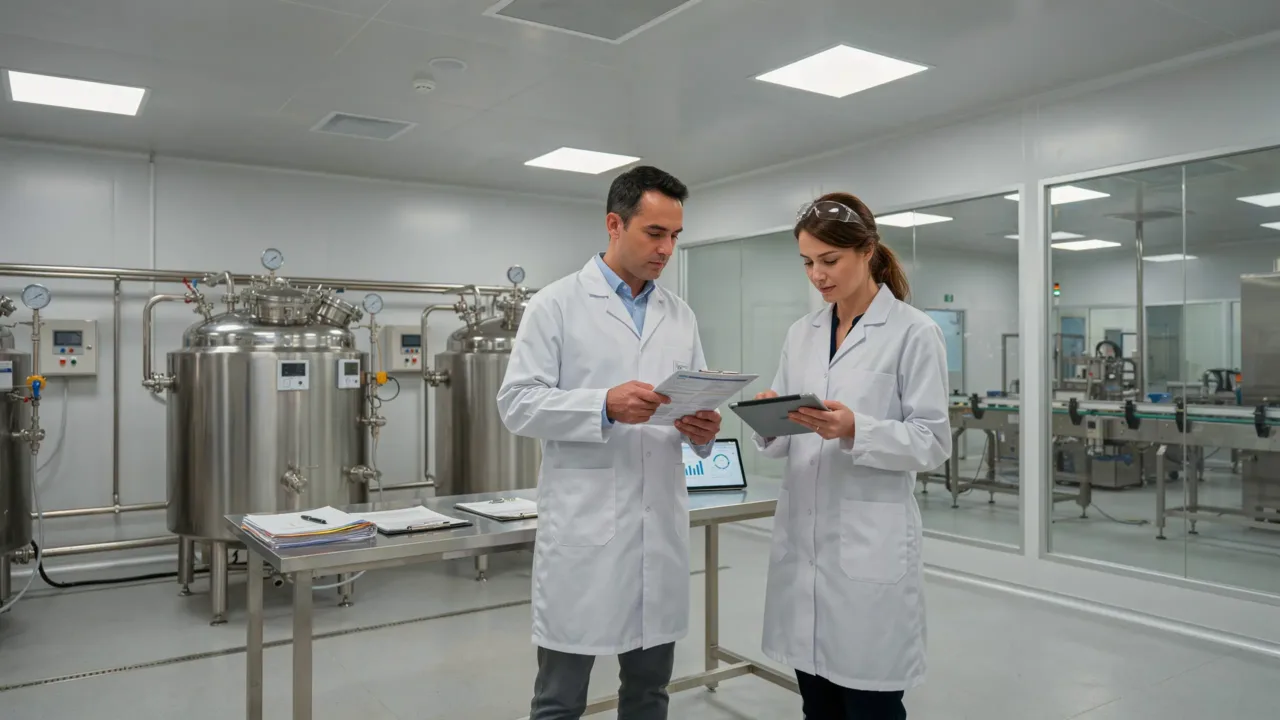
GMP manufacturing audits play an important role in maintaining product quality, patient safety, and regulatory compliance in the pharmaceutical industry. During these audits, auditors examine manufacturing activities, observe personnel, inspect equipment, and review records to verify whether operations follow Good Manufacturing Practices (GMP).
The production floor requires particular attention because even small mistakes in material handling, equipment cleaning, documentation, or personnel practices can affect product quality. A structured audit helps organizations identify compliance gaps before they become serious issues.
In this guide, we explain what auditors check during GMP manufacturing audits, which production activities require attention, and how pharmaceutical companies can prepare for an audit. GxP Cellators provides GMP auditing services to help organizations assess manufacturing operations and identify areas for improvement.
What Are GMP Manufacturing Audits?
GMP manufacturing audits are systematic assessments of pharmaceutical manufacturing processes, facilities, equipment, personnel practices, and quality records. Their purpose is to determine whether manufacturing activities follow approved procedures and applicable GMP requirements.
Auditors review both documented procedures and actual practices on the production floor. For example, a procedure may require equipment cleaning after every production batch. During an audit, the auditor checks whether employees follow that procedure and whether the cleaning records provide sufficient evidence.
These audits can be conducted internally or by independent external auditors. They help organizations identify weaknesses, improve quality systems, and prepare for regulatory inspections.
What Auditors Check on the Production Floor
During GMP manufacturing audits, auditors examine several areas to understand how effectively a facility controls its manufacturing operations.
1. Personnel Behaviour and Hygiene
Personnel behaviour directly affects manufacturing quality. Auditors observe employees during routine activities to verify whether they follow approved procedures, hygiene requirements, and gowning practices.
Key checks include:
- Whether employees follow approved standard operating procedures (SOPs).
- Whether personnel wear appropriate protective clothing and cleanroom attire.
- Whether hygiene and handwashing requirements are followed.
- Whether employees understand their assigned responsibilities.
- Whether personnel have completed the required GMP training.
- Whether improper practices could introduce contamination or mix-ups.
Auditors may interview employees to confirm that they understand the procedures relevant to their work. Training records may also be reviewed to verify that personnel are qualified for their assigned activities.
2. Equipment Operation, Maintenance, and Calibration
Manufacturing equipment must operate as intended to support consistent product quality. Auditors examine equipment condition, operating practices, maintenance records, and calibration status.
Typical GMP audit checks include:
- Whether equipment is operating correctly.
- Whether instruments are calibrated according to approved schedules.
- Whether preventive maintenance is performed and documented.
- Whether equipment cleaning procedures are followed.
- Whether equipment status labels are accurate and current.
- Whether equipment is qualified where required.
Auditors may also review equipment logbooks and investigate whether breakdowns, repairs, or unusual operating conditions were properly documented.
Any equipment used outside its approved operating limits may require investigation and an assessment of its potential impact on product quality.
3. Material Handling, Identification, and Traceability
Incorrect material handling can lead to contamination, mix-ups, or the use of unsuitable materials. For this reason, material control is an important part of pharmaceutical manufacturing audits.
Auditors commonly verify:
- Whether incoming materials have appropriate identification labels.
- Whether materials are stored under specified conditions.
- Whether approved and rejected materials are segregated.
- Whether material status is clearly identified.
- Whether dispensing and weighing activities follow approved procedures.
- Whether materials can be traced to their suppliers and relevant batches.
Auditors may also examine how personnel handle raw materials, packaging components, and work-in-process materials.
Proper identification and traceability help organizations investigate deviations, manage recalls, and demonstrate control over the manufacturing process.
4. In-Process Controls and Manufacturing Parameters
In-process controls help ensure that manufacturing activities remain within established limits. Auditors review whether required checks are performed at the correct stages and whether results are properly recorded.
Important areas include:
- Whether required in-process checks are completed.
- Whether results meet approved acceptance criteria.
- Whether critical process parameters remain within established limits.
- Whether out-of-specification results are investigated.
- Whether deviations are documented and assessed.
- Whether records are complete and reviewed by authorized personnel.
Depending on the process, checks may include temperature, mixing time, pressure, weight, pH, or other relevant parameters.
If a result falls outside an approved limit, auditors expect evidence of an appropriate investigation and documented decisions. Simply repeating a test or recording a new result without a justified investigation may not adequately address the issue.
5. Batch Manufacturing Records and Documentation
Documentation provides evidence that manufacturing activities were performed according to approved procedures. During GMP manufacturing audits, auditors examine batch records and other controlled documents for completeness, accuracy, and consistency.
Common checks include:
- Whether batch manufacturing records are complete.
- Whether entries are legible and attributable to the person performing the activity.
- Whether records are completed at the time the activity occurs.
- Whether corrections follow approved documentation practices.
- Whether calculations and recorded results are accurate.
- Whether required reviews and approvals are completed.
- Whether discrepancies are documented and investigated.
Auditors may compare batch records with equipment logbooks, material dispensing records, and electronic system data.
Missing signatures, unexplained gaps, inconsistent timestamps, and undocumented corrections can indicate weaknesses in documentation controls. Companies should ensure that records accurately reflect the activities performed.
6. Cleaning Procedures and Contamination Control
Cleaning is essential for preventing cross-contamination and maintaining suitable manufacturing conditions. Auditors check whether cleaning procedures are appropriate, current, and consistently followed.
Key audit checks include:
- Whether approved cleaning procedures are available.
- Whether cleaning activities are performed as required.
- Whether cleaning records are complete.
- Whether cleaning equipment and tools are properly controlled.
- Whether cleaning limits and acceptance criteria are established where required.
- Whether cleaning validation or verification activities are appropriate to the process.
- Whether cleaning failures are investigated.
Auditors may also examine how facilities prevent product mix-ups and contamination between different manufacturing activities.
For facilities handling multiple products, effective cleaning controls are particularly important. Companies should maintain evidence that their procedures are suitable for the equipment, products, and risks involved.
7. Environmental Conditions and Facility Controls
Manufacturing environments must remain suitable for the activities being performed. Depending on the facility and product, environmental controls may include temperature, humidity, pressure differentials, particulate levels, and microbiological monitoring.
During production floor audits, auditors may check:
- Whether environmental conditions are controlled within established limits.
- Whether monitoring activities are performed at defined intervals.
- Whether monitoring records are complete and reviewed.
- Whether alarms and excursions are investigated.
- Whether cleaning and housekeeping standards are maintained.
- Whether personnel and material movement are controlled appropriately.
For sterile manufacturing and controlled cleanroom environments, additional attention may be given to contamination control, airflow, gowning, and environmental monitoring programmes.
The exact requirements depend on the manufacturing process, product type, facility design, and applicable regulations.
8. Data Integrity and Electronic Records
Data integrity is a major consideration during GMP manufacturing audits because manufacturing decisions must be supported by reliable and accurate information.
Auditors review whether paper and electronic records are complete, consistent, and protected against unauthorized changes.
Important checks include:
- Whether relevant electronic systems have appropriate access controls.
- Whether audit trails are enabled and reviewed where required.
- Whether records are attributable, legible, contemporaneous, original, and accurate.
- Whether electronic records are protected from unauthorized alteration or deletion.
- Whether system changes and data corrections are properly documented.
- Whether users have access only to functions appropriate to their responsibilities.
These principles are commonly associated with ALCOA and ALCOA+ data integrity expectations.
Companies should ensure that electronic systems are appropriately validated for their intended use and that personnel understand their responsibilities when creating, reviewing, and managing GMP records.
How to Prepare for a GMP Manufacturing Audit
Good preparation helps organizations identify problems early and make the audit process more efficient. A structured approach should include the following activities.
Review SOPs and Manufacturing Records
Check that relevant standard operating procedures are current, approved, and available to personnel. Review recent batch records, equipment logbooks, cleaning records, and in-process control documentation for missing information or inconsistencies.
Conduct a Production Floor Walkthrough
Observe actual manufacturing practices and compare them with approved procedures. Check equipment status, material labels, personnel hygiene, housekeeping, and the availability of required documents.
Verify Training and Equipment Records
Confirm that employees have completed required training and that equipment maintenance, calibration, and qualification records are current where applicable.
Review Deviations and CAPA
Examine open and closed deviations, investigations, and Corrective and Preventive Actions (CAPA). Verify that identified problems have been investigated appropriately and that corrective actions address their underlying causes.
Check Data Integrity Controls
Review access permissions, electronic records, audit trails, and applicable data review procedures. Confirm that records can be retrieved and that discrepancies are investigated.
Document and Prioritise Findings
Record identified gaps clearly, assess their potential impact, and assign appropriate actions and responsibilities. Follow-up should verify whether corrective actions were implemented and whether they were effective.
Common Findings During GMP Manufacturing Audits
Although findings vary between facilities, several issues frequently require attention during production floor assessments:
- Incomplete or inconsistent batch manufacturing records.
- Expired or missing equipment calibration records.
- Poor material identification or segregation.
- Inadequate employee training documentation.
- Cleaning records that do not match actual practices.
- Deviations without sufficient investigation.
- CAPA actions that do not address root causes.
- Weak access controls or inadequate electronic record review.
- Environmental monitoring excursions without appropriate follow-up.
- Employees not following approved SOPs.
Organizations should evaluate findings according to their severity, potential product impact, and applicable requirements. Not every observation presents the same level of risk, so corrective actions should be prioritised accordingly.
How GxP Cellators Supports GMP Manufacturing Audits
GxP Cellators provides GMP manufacturing audits that include production floor assessments for pharmaceutical and other regulated organizations. These assessments help companies examine manufacturing practices, review quality documentation, and identify potential compliance gaps.
The scope of an engagement can be tailored to the organization’s operations, products, facilities, and audit objectives.
Manufacturing Audit Services Include
- Full-scope manufacturing audits.
- Production floor assessments.
- Personnel behaviour assessments.
- Equipment assessments.
- Manufacturing documentation reviews.
- Data integrity audits.
- Mock inspections.
- CAPA verification and follow-up.
Why Choose GxP Cellators?
GxP Cellators offers an approach focused on practical findings and actionable recommendations. Its audit support can help organizations evaluate relevant requirements associated with regulatory frameworks such as those of the FDA, EMA, Health Canada, MHRA, and WHO, depending on the audit scope.
Key service considerations include:
- Auditors with regulatory inspection and industry quality experience.
- Risk-based assessments tailored to manufacturing operations.
- Practical reports identifying observations and improvement opportunities.
- Support for corrective action planning and follow-up.
- Confidential handling of proprietary information.
To discuss your manufacturing audit requirements, visit the GxP Cellators contact page.
Frequently Asked Questions
1. What do auditors check during GMP manufacturing audits?
Auditors examine personnel behaviour, equipment operation, material handling, in-process controls, manufacturing records, cleaning procedures, environmental conditions, and data integrity. They also verify whether actual practices match approved procedures.
2. Why is personnel behaviour important during a GMP audit?
Personnel behaviour can directly affect product quality and contamination control. Auditors check whether employees follow approved procedures, maintain hygiene, wear appropriate attire, and complete the training required for their responsibilities.
3. What environmental conditions are checked during production floor audits?
Depending on the manufacturing environment, auditors may review temperature, humidity, pressure differentials, particulate levels, and microbiological monitoring. They also examine monitoring records, established limits, and investigations into environmental excursions.
4. How can a company prepare for a GMP manufacturing audit?
Companies should review SOPs, batch records, equipment maintenance, calibration, cleaning records, employee training, deviations, CAPA, and data integrity controls. A production floor walkthrough can help identify gaps before the formal audit.
5. What happens when an auditor identifies a GMP deficiency?
The organization should document the finding, assess its potential impact, investigate the underlying cause, and implement appropriate corrective and preventive actions. Follow-up should confirm that actions are effective and that relevant risks have been addressed.
6. How does GxP Cellators support manufacturing audits?
GxP Cellators provides manufacturing audit support, including production floor assessments, personnel and equipment reviews, documentation checks, data integrity audits, mock inspections, and CAPA verification, depending on the agreed audit scope.
7. How can I contact GxP Cellators for manufacturing audit support?
You can visit the GxP Cellators contact page to discuss your manufacturing operations, audit objectives, and compliance support requirements.
Contact GxP Cellators
A well-planned GMP manufacturing audit helps organizations evaluate production floor practices, identify compliance gaps, and strengthen quality controls. Regular assessments also support inspection readiness by highlighting issues that need attention before they affect product quality or regulatory compliance.
If your organization requires support with GMP manufacturing audits, production floor assessments, documentation reviews, or CAPA follow-up, contact GxP Cellators to discuss your requirements.

