
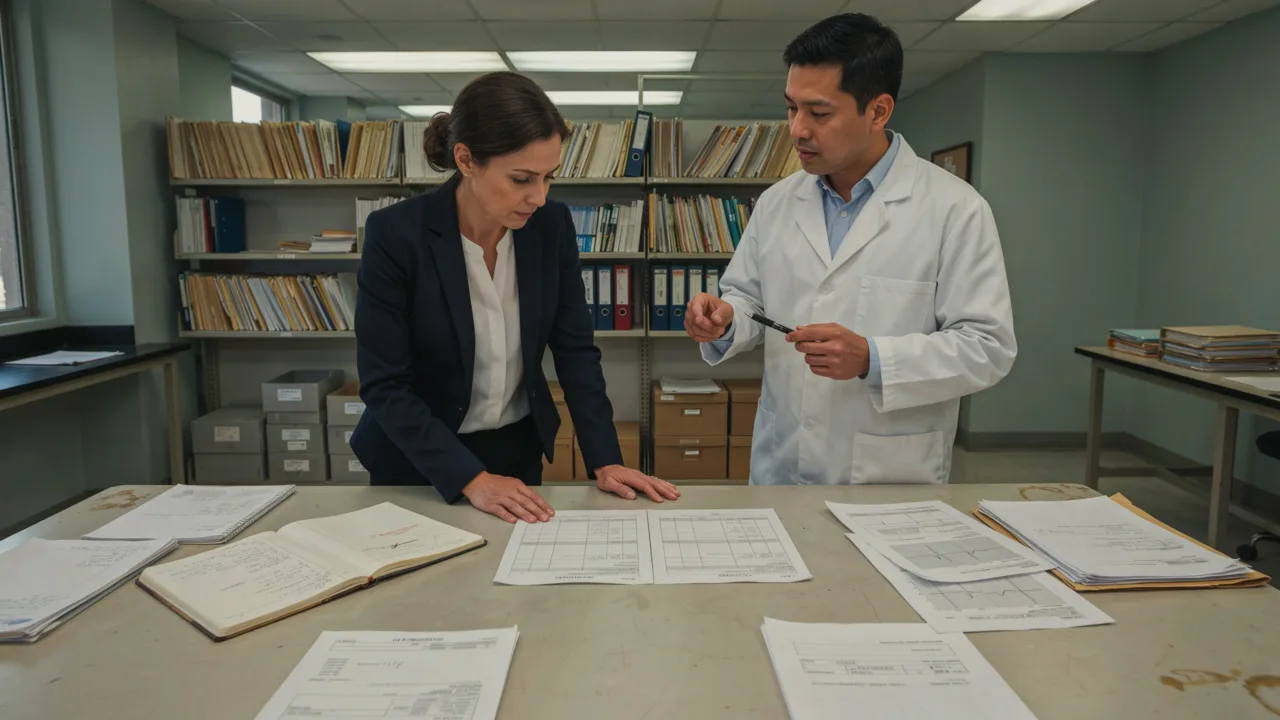
Documentation Is the Heart of GLP Compliance
If there is one area where laboratories consistently fall short during GLP audits, it is documentation. The FDA’s 483 observations and Warning Letters are filled with documentation-related findings, and OECD GLP inspectors similarly cite documentation deficiencies as a major area of non-compliance.
Documentation is the heart of GLP compliance. Regulatory agencies cannot inspect your laboratory operations directly. They must rely on your documentation to understand how studies were conducted, what data was generated, and whether GLP principles were followed.
This article identifies the most common documentation errors found during GLP audits and provides practical guidance on how to avoid them. By understanding these common pitfalls, you can strengthen your documentation practices and reduce your risk of audit findings.
Error 1: Corrections That Obscure Original Entries
One of the most serious documentation errors is making corrections that obscure the original entry. This includes using correction fluid or tape, overwriting, or otherwise making the original entry illegible.
Why This Is a Problem
Regulatory agencies expect that all data entries will be permanent and traceable. Obscuring the original entry makes it impossible to determine what was originally recorded, raising questions about whether data was manipulated.
How to Correct This Error
The proper correction procedure is to strike through the original entry with a single line, enter the correction, and date and initial the change. The original entry must remain legible. For electronic records, corrections must be documented through the audit trail.
How to Prevent This Error
Train all personnel on proper correction procedures. Prohibit the use of correction fluid or tape. Ensure that electronic systems have audit trails that document all changes.
Error 2: Missing Signatures and Dates
Auditors frequently find records that lack signatures or dates. This includes raw data sheets, study plans, deviation logs, and final reports.
Why This Is a Problem
Signatures and dates are essential for establishing attributability and contemporaneity. Without signatures, it is impossible to know who generated or reviewed the data. Without dates, it is impossible to know when activities occurred.
How to Correct This Error
Records that lack signatures or dates should be identified and corrected immediately. The individual who generated or reviewed the data should sign and date the record, with an explanation of why the signature was missing.
How to Prevent This Error
Implement procedures that require signatures and dates for all records. Train personnel on the importance of signing and dating records. Use checklists to ensure that all documentation is complete.
Error 3: Data Recorded on Loose Notes
Another common error is recording data on loose notes, scrap paper, or sticky notes before transcribing it to official study records.
Why This Is a Problem
Data should be recorded directly into official study records. Transcription from loose notes increases the risk of errors and omissions. Loose notes can also be lost or destroyed, resulting in data loss.
How to Correct This Error
Discourage the use of loose notes for data recording. If loose notes are used, they should be attached to the official record, with the transcribed data verified against the original notes.
How to Prevent This Error
Provide personnel with official study records for data recording. Train personnel on the importance of recording data directly into official records. Eliminate the use of loose notes for data recording.
Error 4: Failure to Document Deviations
Deviations from the approved study plan must be documented and justified. Failure to document deviations is a common finding in GLP audits.
Why This Is a Problem
Deviations from the study plan can impact the validity of study results. If deviations are not documented and justified, regulators cannot determine whether the study was conducted as planned.
How to Correct This Error
Implement a deviation management system that documents all deviations from the study plan. Deviations should include a description of the deviation, the reason for the deviation, the impact on the study, and the corrective action taken.
How to Prevent This Error
Train personnel on deviation management procedures. Encourage reporting of deviations. Implement procedures for documenting and justifying all deviations.
Error 5: Missing or Outdated SOPs
Standard Operating Procedures are essential for ensuring that activities are performed consistently and in accordance with GLP principles. Missing or outdated SOPs are a common finding in GLP audits.
Why This Is a Problem
Without SOPs, there is no assurance that activities are performed consistently. Outdated SOPs may not reflect current practices, leading to deviations.
How to Correct This Error
Identify missing or outdated SOPs and develop or update them. Ensure that SOPs are available in the laboratory and that personnel are trained on them.
How to Prevent This Error
Implement an SOP management system that includes regular review and revision. Ensure that SOPs are available in the laboratory. Train personnel on SOPs and document the training.
Error 6: Inadequate Archival Procedures
GLP requires that study plans, raw data, final reports, and samples be archived in a secure and organized manner. Inadequate archival procedures are a common finding in GLP audits.
Why This Is a Problem
Inadequate archival procedures can result in data loss, making it impossible to reconstruct the study. They can also make it difficult for inspectors to access records during an audit.
How to Correct This Error
Implement archival procedures that ensure records are stored securely, organized logically, and accessible to inspectors. Archives should have environmental controls to protect records from damage.
How to Prevent This Error
Designate an archivist responsible for archival procedures. Implement procedures for transferring records to the archive. Conduct periodic audits of the archive to ensure compliance.
How GxP Cellators Can Help You Avoid Documentation Errors
At GxP Cellators, we have conducted over 500 GLP audits and have seen every documentation error imaginable. Our certified GLP and IRCA auditors bring extensive experience in identifying documentation gaps and helping laboratories improve their documentation practices.
Our team includes professionals with RQAP-GLP and IRCA Auditor certifications, ensuring that our auditing methodologies comply with international standards. We perform GLP audits on behalf of clients and sponsors, providing objective, third-party evaluations that carry greater credibility with regulatory authorities.
Our documentation audit services include:
Comprehensive documentation review covering study plans, raw data, final reports, SOPs, deviation logs, training records, and archival procedures
Gap assessments identifying documentation deficiencies and providing actionable recommendations
Sponsor-side audits of CROs with a focus on documentation practices
Full-spectrum GLP study audits including toxicology, pharmacokinetics, bioanalytical method validation, genotoxicity, reproductive toxicology, carcinogenicity, dermal and ocular toxicology, and ecotoxicology
Detailed audit reports with findings linked to specific regulations and prioritized recommendations
CAPA support and verification to ensure documentation issues are effectively addressed
Why sponsors choose us: We speak both the regulatory language and the scientific language. Our findings are factual, evidenced, and actionable. As an independent third-party audit firm, we have no organizational biases or conflicts of interest. Our audit reports carry greater credibility with regulatory authorities, clients, and business partners.
Our global presence spans Saskatchewan, Calgary, Toronto, North Carolina, Indiana, and Frankfurt, enabling us to deploy auditors worldwide and understand local regulatory nuances while upholding the OECD framework.
Ready to strengthen your documentation practices? Let GxP Cellators help you achieve GLP compliance with confidence.
Reach out to us today to schedule your GLP audit.
Email:
Phone: +1 (306) 715-9460
Website: /gxp-auditing/
GxP Cellators – Your Certified GLP Audit Partners

