
Introduction
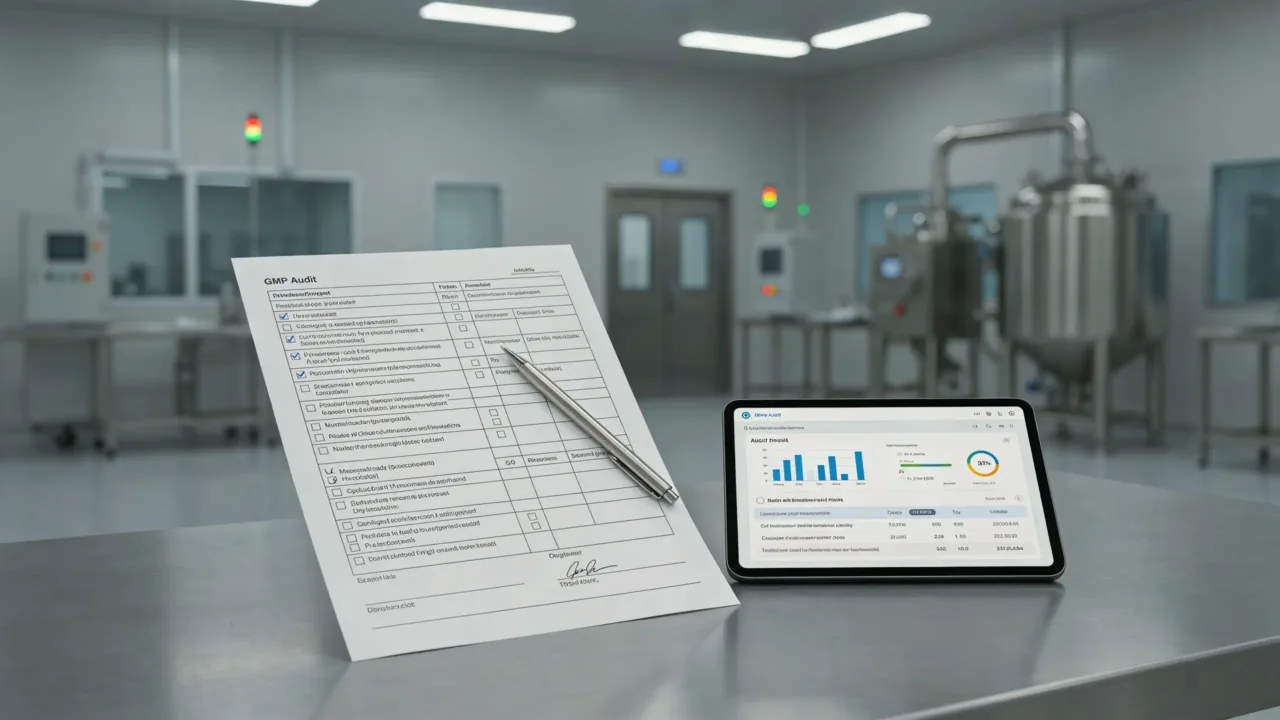
A GMP regulatory compliance audit helps pharmaceutical companies check whether their processes, documentation, facilities, and quality systems meet applicable Good Manufacturing Practices (GMP) requirements. These audits also help organizations identify compliance gaps before a regulatory inspection.
In 2026, pharmaceutical companies must continue to pay close attention to data integrity, quality management, supplier oversight, computerized systems, and contamination control. Regulatory expectations depend on the applicable regulations, product type, manufacturing activities, and market.
The U.S. Food and Drug Administration (FDA) and the European Medicines Agency (EMA), together with relevant national authorities in Europe, have established requirements that pharmaceutical manufacturers must understand and apply.
Preparing for these expectations requires more than reviewing documents shortly before an inspection. Companies need effective quality systems, trained employees, reliable records, and documented corrective actions.
This guide explains the key areas to review during a GMP regulatory compliance audit and how GxP Cellators supports pharmaceutical companies with audit and inspection readiness.
Why Is a GMP Regulatory Compliance Audit Important?
A GMP regulatory compliance audit helps a company evaluate whether its daily activities follow approved procedures and applicable regulatory requirements. It can identify weaknesses before they lead to serious compliance problems.
Regular audits can help organizations:
- Identify gaps in GMP procedures and documentation.
- Improve data integrity and record management.
- Evaluate the effectiveness of corrective and preventive actions (CAPA).
- Check supplier qualification and oversight.
- Review manufacturing and quality control activities.
- Prepare employees for regulatory inspections.
- Reduce the risk of repeated audit findings.
An audit should not focus only on whether documents exist. It should also determine whether procedures are followed in practice and whether the controls are effective.
FDA Expectations for GMP Regulatory Compliance Audits
Pharmaceutical companies supplying products to the United States should understand the applicable FDA requirements. A GMP compliance audit can help assess manufacturing practices, quality controls, documentation, and inspection readiness.
1. Data Integrity and Electronic Records
Data integrity is an important part of pharmaceutical compliance. Companies must ensure that records are complete, consistent, accurate, and appropriately protected throughout their lifecycle.
During an audit, reviewers should examine:
- Whether audit trails are enabled and appropriately reviewed for relevant computerized systems.
- Whether user access is controlled according to job responsibilities.
- Whether electronic records are protected against unauthorized changes or deletion.
- Whether electronic signatures comply with applicable requirements, including 21 CFR Part 11 where applicable.
- Whether original records and associated metadata are retained appropriately.
- Whether data review responsibilities are clearly documented.
Companies should also review their procedures for handling missing data, unexplained changes, system failures, and potential data integrity incidents.
2. Pharmaceutical Quality Systems
An effective quality system helps ensure that manufacturing and quality control activities remain consistent with approved procedures and applicable GMP requirements.
A GMP regulatory compliance audit should review:
- Deviation reporting and investigation.
- CAPA implementation and effectiveness checks.
- Change control procedures.
- Document control and record retention.
- Complaint handling and product quality investigations.
- Training records and employee qualifications.
- Management review and quality oversight.
Auditors should check whether investigations identify the underlying causes of problems rather than simply correcting the immediate issue. Repeated deviations may indicate that existing corrective actions are not effective.
3. Supplier Qualification and Oversight
Suppliers can affect the quality, safety, and reliability of pharmaceutical products. Companies should therefore maintain appropriate controls for raw materials, components, outsourced activities, and other relevant suppliers.
Supplier-related audit checks should include:
- Documented supplier qualification and approval.
- Risk-based supplier assessment and auditing.
- Approved specifications and material requirements.
- Quality agreements where appropriate.
- Review of supplier performance and recurring issues.
- Investigation of supplier-related deviations.
- Documented follow-up of audit findings.
The level of oversight should reflect the supplier’s role, the risks associated with its materials or services, and applicable regulatory requirements.
4. Sterile Manufacturing and Contamination Control
Sterile manufacturing requires specific controls to minimize contamination risks. Facilities involved in sterile production should assess their processes against the applicable GMP requirements, including relevant FDA requirements and EU GMP Annex 1 where applicable.
Important audit areas include:
- Contamination Control Strategy (CCS).
- Personnel gowning and aseptic practices.
- Environmental and process monitoring.
- Cleaning and disinfection procedures.
- Equipment qualification and maintenance.
- Aseptic process simulations, commonly called media fills.
- Investigation of contamination events and adverse trends.
Auditors should verify that monitoring results are evaluated properly and that identified risks lead to appropriate corrective actions.
EMA and EU GMP Expectations
Companies manufacturing or supplying medicines in the European market should understand applicable EU GMP requirements and the role of relevant national competent authorities. The EMA provides scientific and regulatory coordination at the European level, while inspections are generally conducted by the relevant national authorities.
1. Data Integrity and Computerized Systems
Data integrity controls should ensure that pharmaceutical records remain trustworthy throughout their lifecycle.
During an audit, companies should review:
- Audit trail functionality and review procedures.
- User access and system security.
- Electronic record management.
- Data backup, recovery, and retention.
- Computerized system validation and ongoing control.
- Electronic signatures and applicable EU requirements, including Annex 11 where relevant.
Companies should verify that their controls are suitable for the systems and processes involved. Electronic signatures and computerized system controls must be assessed against the applicable requirements rather than treated as a single universal checklist.
2. Pharmaceutical Quality System
EU GMP expectations include an effective Pharmaceutical Quality System (PQS). The system should support consistent product quality, appropriate risk management, and continuous improvement.
A GMP quality system audit should examine:
- Deviation management and investigation.
- CAPA procedures and effectiveness.
- Change management.
- Document and record control.
- Product quality review processes.
- Quality risk management.
- Management responsibilities and oversight.
Auditors should confirm that quality decisions are documented and supported by appropriate evidence. They should also examine whether management receives sufficient information to identify and address recurring problems.
3. Supplier Management and Outsourced Activities
Supplier controls should be appropriate to the materials, services, and risks involved. Companies should understand their responsibilities when activities are outsourced.
An audit should verify that suppliers are evaluated before approval and monitored throughout the business relationship. Quality agreements, supplier audits, performance reviews, and documented corrective actions can help maintain effective oversight.
Where applicable, companies should also assess outsourced manufacturing, testing, storage, and distribution arrangements against relevant contractual and regulatory requirements.
4. Sterile Products and Contamination Control
For applicable sterile manufacturing operations, EU GMP Annex 1 provides requirements and guidance concerning the manufacture of sterile medicinal products.
A review should consider the documented Contamination Control Strategy, facility and equipment design, cleanroom qualification, personnel practices, environmental monitoring, and aseptic process simulation.
The audit should also examine how the organization responds to contamination risks, monitoring excursions, and adverse trends. Corrective actions should be documented, scientifically justified, and evaluated for effectiveness.
FDA vs. EMA: Key Areas to Review
Although both regulatory frameworks aim to protect product quality and patient safety, their requirements and implementation details are not identical.
| Audit Area | FDA Considerations | EU/EMA-Related Considerations |
|---|---|---|
| Data integrity | Applicable FDA regulations and guidance | Applicable EU GMP requirements and guidance |
| Electronic records | 21 CFR Part 11 where applicable | EU GMP Annex 11 where applicable |
| Quality systems | Relevant drug GMP requirements, including 21 CFR Parts 210 and 211 where applicable | EU GMP requirements for the Pharmaceutical Quality System |
| Sterile manufacturing | Applicable FDA requirements and guidance | EU GMP Annex 1 where applicable |
| Supplier oversight | Supplier controls appropriate to applicable requirements and risks | Supplier and outsourced activity controls under applicable EU GMP requirements |
| Inspection readiness | Evidence of compliance with applicable FDA requirements | Evidence of compliance with applicable EU GMP requirements |
Companies operating in both markets should avoid assuming that one audit checklist will fully cover every requirement. A well-designed audit should identify the relevant regulations, products, sites, and processes before defining its scope.
How to Prepare for a GMP Regulatory Compliance Audit in 2026
A structured preparation process helps companies identify weaknesses and assign responsibilities before an audit or inspection.
Step 1: Define the Audit Scope
Identify the site, products, processes, systems, and regulatory requirements covered by the audit. Consider whether the organization supplies products to the United States, European Union, or other markets.
A clearly defined scope helps auditors focus on the most relevant compliance risks.
Step 2: Conduct a GMP Gap Assessment
Compare existing procedures and practices against applicable regulatory requirements. Review previous audit reports, inspection observations, open deviations, and recurring quality issues.
Record each identified gap, its potential impact, and the action required to address it.
Step 3: Review Documentation and Records
Check whether procedures, batch records, training records, equipment logs, validation documents, and quality records are current and properly controlled.
Documentation should accurately reflect actual activities. Avoid making retrospective changes without an appropriate, documented, and authorized process.
Step 4: Evaluate CAPA Effectiveness
Review open and closed CAPAs to determine whether corrective actions addressed the underlying causes of problems.
Check completion dates, supporting evidence, approval records, and effectiveness checks. Repeated findings should receive appropriate investigation and management attention.
Step 5: Prepare Employees
Employees should understand their responsibilities and follow approved procedures. Provide training where needed, particularly for documentation practices, data integrity, deviation reporting, and inspection communication.
Mock interviews can help employees explain their work clearly without encouraging rehearsed or misleading responses.
Step 6: Conduct a Mock Inspection
A mock inspection can help evaluate how effectively employees retrieve records, explain procedures, and respond to questions.
Document observations, assign responsible owners, and establish realistic completion dates for corrective actions. The objective is to identify genuine weaknesses, not simply create a positive-looking inspection report.
How GxP Cellators Supports GMP Regulatory Compliance Audits
GxP Cellators provides GMP auditing and compliance support to help pharmaceutical organizations assess their quality systems and improve inspection readiness.
Its services can help companies identify compliance gaps, review procedures, and prioritize corrective actions based on the audit scope and applicable requirements.
Regulatory Compliance Audit Services
Support may include:
- Full-scope GMP regulatory compliance audits.
- Pre-inspection readiness assessments.
- Mock FDA and EU regulatory inspections.
- Data integrity audits.
- GMP quality system audits.
- Supplier qualification and supplier audits.
- CAPA verification and follow-up.
- GMP gap assessments and remediation planning.
Why Choose GxP Cellators?
A structured and risk-based audit can provide practical insight into areas that require improvement. GxP Cellators focuses on identifying gaps, documenting observations, and helping organizations understand the corrective actions needed.
Its approach can be tailored to the organization’s operations, quality systems, and applicable regulatory requirements. Audit findings should be clear, evidence-based, and useful for planning corrective actions.
For pharmaceutical companies preparing for an inspection, external audit support can provide an additional perspective on compliance risks that internal teams may overlook.
Frequently Asked Questions
1. What is a GMP regulatory compliance audit?
A GMP regulatory compliance audit evaluates whether pharmaceutical manufacturing, quality systems, documentation, and related activities meet applicable Good Manufacturing Practices requirements. It helps identify gaps and prepare organizations for regulatory inspections.
2. How do I prepare for FDA and EMA expectations in GMP audits?
Start by defining the audit scope and reviewing applicable regulations. Assess data integrity, quality systems, supplier oversight, manufacturing controls, and relevant sterile manufacturing requirements. Conduct a gap assessment, review CAPAs, train employees, and consider a mock inspection.
3. What are FDA expectations for data integrity?
FDA expects applicable records to be reliable and trustworthy. Companies should maintain appropriate access controls, protect records against unauthorized changes, and implement suitable audit trail and electronic record controls. The specific requirements depend on the applicable regulations and systems.
4. What are EU GMP expectations for data integrity?
EU GMP data integrity controls should support accurate, complete, consistent, and traceable records. Companies should assess computerized systems, audit trails, access controls, electronic records, and signatures against applicable requirements, including Annex 11 where relevant.
5. What is the difference between a GMP audit and a regulatory inspection?
A GMP audit is a systematic review used to evaluate compliance and identify improvement opportunities. It may be conducted internally or by an external auditor. A regulatory inspection is conducted by an authorized regulatory authority to assess compliance with applicable legal and regulatory requirements.
6. How often should a pharmaceutical company conduct GMP audits?
Audit frequency should be based on risk, applicable regulatory requirements, the organization’s quality system, previous findings, and changes to processes or suppliers. Higher-risk activities may require more frequent review than lower-risk activities.
7. How does GxP Cellators support regulatory compliance audits?
GxP Cellators offers GMP auditing and compliance support, including regulatory audit preparation, gap assessments, mock inspections, data integrity reviews, quality system audits, supplier audits, and CAPA follow-up, depending on the agreed scope of work.
Contact GxP Cellators for GMP Audit Support
Preparing for FDA and EU regulatory expectations requires effective quality systems, reliable documentation, trained employees, and a clear process for addressing compliance gaps.
A GMP regulatory compliance audit can help your organization identify weaknesses before an inspection and develop a practical improvement plan.
If your pharmaceutical company needs support with GMP auditing, inspection readiness, supplier oversight, or quality system reviews, contact GxP Cellators to discuss your requirements.
Contact page: https://www.gxpcellators.com/gmp-auditing/