

Water For Injections Archives | GxP Cellators Consultants Ltd.

30/10/2026
GMP-Audit-Culture-1280x720.webp

What GMP Audit Culture Means

GMP audit culture is the set of shared beliefs, behaviors, and practices that determine how an organization approaches quality and compliance when no one is watching. It is the difference between a site that prepares for audits and a site that is ready for them because quality is built into daily work.

The distinction matters because gmp audits, whether internal or regulatory, are snapshots. They see what is visible on the day. A culture that treats compliance as a checklist to be satisfied will produce systems that look good during an audit and fail between them. A culture that treats quality as a way of working will produce systems that hold up under scrutiny because they are real.

Why Culture Is a Regulatory Concern

ICH Q10 and Management Responsibility

ICH Q10 places management responsibility at the center of the pharmaceutical quality system. Management must ensure that quality is prioritized, that responsibilities are defined, and that review leads to action. Culture is how management responsibility becomes visible in daily operations.

EU GMP Chapter 1

Chapter 1 of EudraLex Volume 4 requires a pharmaceutical quality system with defined responsibilities and management review. A system that exists on paper but is not supported by culture is not an effective system.

FDA and Inspection Outcomes

FDA investigators assess whether quality systems are effective, not just present. An inspection that finds a strong culture will see open communication, thorough investigations, and CAPAs that solve problems. An inspection that finds a weak culture will see incomplete investigations, repeat deviations, and data integrity issues.

The Cost of Weak Culture

Weak culture shows up in measurable ways: normalization of data integrity risks, under-reporting of deviations and near misses, superficial CAPAs, declining right-first-time rates, increasing turnover, and erosion of tacit knowledge. Each of these signals that people do not feel safe, supported, or accountable enough to do the right thing when no one is watching or when procedures do not fit the moment .

What Strong Audit Culture Looks Like

Psychological Safety

People need to feel safe raising concerns, questioning decisions, and admitting mistakes. Where psychological safety is cultivated, imperfect systems function more reliably because people act with judgment and speak up early . Where it is absent, problems stay hidden until an audit finds them.

Ownership Beyond the Quality Department

Quality is not the quality department’s job alone. Sustainable compliance requires alignment and shared ownership across the organization, from leadership to the shop floor. Quality failures rarely occur because systems are missing. They happen when systems are disconnected from reality .

Listening to the Floor

The people closest to the work see risks, workarounds, and inefficiencies long before they show up in metrics or audits. When organizations listen to these voices, quality systems become practical and resilient. A quality culture is rooted in being a listening organization, where feedback is encouraged and visibly valued .

Leadership Behavior Under Pressure

Under pressure, leadership style becomes the system. Command and control creates fear and hidden errors. Conflict avoidance leads to drifting standards. Overfunctioning heroes create dependency and burnout. What GMP sites need are builders: leaders who enable, who are clear and values driven, who ask what is needed to solve the problem, who speak last in decision meetings, and who recognize integrity publicly .

Quality Embedded in Daily Work

Audit readiness is not about preparing for inspections. It is about how consistently an organization operates every day. When quality is embedded into culture, systems, and decision making, audits evolve from moments of stress into moments of assurance .

Building the Culture

Make Quality Visible in Decisions

Quality should be a factor in decisions about production schedules, resource allocation, and change implementation. When quality is visibly prioritized in decisions, people learn that it matters.

Invest in Practical Training

Training that covers regulations abstractly is less effective than training that uses real examples from the site. People need to understand data integrity in real operating contexts. When people understand why quality matters, adherence becomes intrinsic rather than enforced .

Create Channels for Feedback

If the only way to raise a concern is through a formal deviation, people will not raise small concerns. Create informal channels and act on what you hear. Visible action builds trust.

Recognize Integrity

Recognize people who raise problems, not just people who meet targets. What gets recognized gets repeated.

Review Leading Indicators

Management review that focuses only on lagging indicators, such as batches released or studies completed, misses the signals that predict future problems. Leading indicators include on-time audit trail reviews, restore-test pass rates, excursion closure quality, and CAPA effectiveness .

Align Metrics Across Functions

When quality and operations are measured on competing metrics, behavior follows the metrics. Shared responsibility for shared KPIs, rotating moderation of reviews, and joint ownership of improvement work restore balance .

Introducing GxP Cellators for GMP Auditing

GxP Cellators provides GMP auditing services that assess both systems and the culture that supports them. Our auditors walk your floors, review batch records, trace deviation history, and interview staff at different levels. We look for evidence that systems work in practice, not just on paper.

Our audit scope includes sterile manufacturing facilities, non sterile manufacturing facilities, contract manufacturing organizations, quality systems and validation, and batch release and inspection readiness. We review documentation control, deviation investigation depth, root cause analysis quality, CAPA effectiveness, change control impact assessment, training effectiveness, self inspection scope, and data integrity controls.

We offer mock regulatory inspections that simulate the tone and pressure of a real health authority inspection, preparing your team and identifying gaps before the regulator does. We also conduct pre approval inspection readiness audits, for cause audits, and follow up and CAPA verification audits.

Our auditors bring regulatory inspection and industry quality experience across FDA, EMA, Health Canada, MHRA, WHO, and PIC/S frameworks, with global reach and regional expertise.

Build a Culture That Holds Up

Visit https://www.gxpcellators.com/gmp-auditing/ for service details. Email or use https://www.gxpcellators.com/contact/ to discuss how we can support your quality culture.

Frequently Asked Questions About GMP Audit Culture

What is the difference between compliance and culture?

Compliance is meeting the requirements. Culture is how work is done every day. A compliant site can have a weak culture if compliance is achieved through inspection preparation rather than daily practice. A strong culture produces compliance as a byproduct.

How do you assess culture during an audit?

We observe how people interact, interview staff at different levels, review how deviations are investigated, and check whether CAPAs solve problems or just close tickets. We look for signs of psychological safety, ownership, and listening.

Can culture really be audited?

Culture is assessed through its artifacts: behavior, documentation, investigation quality, and the gap between procedure and practice. An auditor cannot measure beliefs directly, but can see the results of those beliefs.

What is psychological safety in a GMP context?

Psychological safety is the belief that you can speak up, ask questions, admit mistakes, and challenge decisions without punishment. In a GMP context, it means people report deviations and near misses rather than hiding them.

How do leading indicators differ from lagging indicators?

Lagging indicators measure outcomes after the fact, such as batches released or studies completed. Leading indicators measure the health of the system, such as on-time audit trail reviews, CAPA effectiveness, and excursion closure quality. Leading indicators predict future problems.

Can you help us improve our quality culture?

We can assess it through audits and mock inspections, identify gaps, and recommend practical improvements. Culture change is owned by leadership, but an audit can show where the gaps are.

How do I request a culture-focused audit?

Email or use https://www.gxpcellators.com/contact/. Service details are at https://www.gxpcellators.com/gmp-auditing/.



30/10/2026
data-integrity-risks-GMP-audit-1280x720.webp

Why Data Integrity Dominates Audit Findings

Data integrity is the extent to which data are complete, consistent, accurate, trustworthy, and reliable throughout the data lifecycle. It has become the single most common finding in GMP inspections worldwide. The reason is not that companies are deliberately falsifying data. The reason is that data integrity controls have not kept pace with the systems that generate data, and the gaps are often invisible until someone looks closely.

A data integrity finding can weaken an otherwise strong audit. It can also trigger a for cause inspection or escalate an inspection outcome. Understanding where the risks lie is the first step to addressing them.

The Regulatory Framework for Data Integrity

FDA 21 CFR 211.68, 211.180, 211.188, and 211.194

The FDA requires backup data to be true, complete, and secure under 21 CFR 211.68. Records must be original or true copies under 211.180. Complete batch production records are required under 211.188. Complete laboratory test data is required under 211.194. These are not new requirements, but enforcement has intensified.

MHRA Data Integrity Guidance

The MHRA guidance requires retained audit trails showing all changes to or deletion of data while preserving the original record. Audit trails should be enabled, protected from unauthorized alteration, and available for review as justified by a risk assessment. Shared or generic user accounts should not be used for systems generating, modifying, or storing GxP data. A specific footnote addresses legacy systems: GMP facilities with industrial automation and control equipment should be able to demonstrate working towards system upgrades with individual login and audit trails .

EU GMP Annex 11

Annex 11 covers computerized systems and requires risk management across the lifecycle, data integrity controls, incident management, and business continuity planning. It applies to all computerized systems used in GMP activities.

WHO Inspection Findings

WHO inspection findings for APIs in 2023 and 2024 include data integrity failures classified as major observations. Specific examples include no data integrity policy, no data integrity risk assessment for standalone equipment and systems, an SOP that did not address senior management oversight and adequate review of results, unlocked analytical balance timestamps, shared IT administrator passwords, analyst privileges for manual integration and file deletion, and audit trails not reviewed before batch release .

FDA Enforcement Examples

FDA 483 observations have cited analytical instrumentation with limited or no electronic audit trail capabilities, software that does not require unique usernames and passwords, communal usernames shared by all chemists, former employees retaining administrator access, GMP data in electronic recycle bins, and balances with password protection capabilities that were not being used .

Where the Risks Hide

Standalone Equipment and Instruments

Balances, pH meters, and standalone analytical instruments are often overlooked because they are not part of a larger networked system. They may have password protection that is not enabled, no audit trail, or shared logins. WHO findings specifically cite unlocked balance timestamps . FDA findings cite balances with password protection capabilities that were not used .

Legacy Automation and Control Systems

PLCs, HMIs, and SCADA platforms are often older than the quality systems that surround them. They may not support individual user accounts or audit trails. MHRA guidance acknowledges this and expects progress toward upgrades rather than immediate compliance. The key word is progress, and progress needs to be documented .

Shared and Generic Accounts

Shared accounts are a persistent problem. FDA findings describe communal Windows usernames used by all chemists and shared passwords for IT administrators . WHO findings describe IT administrators sharing passwords with QC and QA when on leave . Each of these breaks the link between data and the individual who created it.

Audit Trails That Are Not Reviewed

An audit trail that exists but is never reviewed provides little value. WHO findings note that audit trails were not reviewed before an API batch was released . Reviewing audit trails is part of the batch release decision, not an optional activity.

Manual Integration and Data Manipulation

Analysts with privileges to manually integrate chromatographic data and delete or edit files create risk. WHO findings cite this specifically . Privileges should be limited to what the role requires.

Data in Unexpected Places

FDA findings describe GMP related data records found in the electronic Recycle Bin on computer desktops . Data that can be deleted without a trace is data that cannot be trusted.

Addressing the Risks

Conduct a Data Integrity Risk Assessment

Identify all systems that generate, modify, or store GxP data. Assess each for data integrity risk based on its role and its controls. This includes standalone equipment, legacy automation, and paper records.

Enable and Review Audit Trails

Audit trails should be enabled, protected, and reviewed at a frequency justified by risk. For critical systems, review before batch release is appropriate. For others, periodic review may suffice.

Eliminate Shared Accounts

Individual accounts are required for systems that generate or modify GxP data. Where legacy systems cannot support this, document the interim controls and the plan for upgrade.

Limit Privileges

Analysts should have the privileges needed for their role, not more. Manual integration and file deletion should be restricted and controlled.

Train on Data Integrity in Context

Training that covers ALCOA plus principles abstractly is less effective than training that uses real examples from the site. People need to understand why the controls exist, not just that they exist.

Introducing GxP Cellators for Data Integrity Audits

GxP Cellators assesses data integrity controls across your systems and processes. We review whether audit trails are enabled and reviewed, whether user access rights are appropriate for roles, whether shared logins or generic accounts are in use, whether electronic signatures are compliant with 21 CFR Part 11, whether paper records are protected from alteration, and whether data transfers between systems are validated.

Our data integrity work is aligned with ALCOA plus principles and the expectations of the FDA and MHRA. We cover standalone equipment, legacy automation, and computerized systems including LIMS, CDS, and quality management systems. We also audit 21 CFR Part 11 compliance and EU GMP Annex 11 compliance.

Our auditors bring regulatory inspection and industry quality experience across FDA, EMA, Health Canada, MHRA, WHO, and PIC/S frameworks. We deliver clear, prioritized reports with practical remediation guidance.

Find and Fix Data Integrity Gaps

Visit https://www.gxpcellators.com/gmp-auditing/ for service details. Email or use https://www.gxpcellators.com/contact/ to discuss a data integrity audit.

Frequently Asked Questions About Data Integrity Risks

What is ALCOA plus?

ALCOA plus is a framework for data integrity. The original ALCOA principles are Attributable, Legible, Contemporaneous, Original, and Accurate. The plus adds Complete, Consistent, Enduring, and Available. It is used to assess whether data can be trusted.

Are standalone instruments really a risk?

Yes. Standalone instruments often lack audit trails or have password protection that is not enabled. WHO and FDA findings both cite standalone equipment as a source of data integrity issues.

What should we do about legacy systems that cannot support individual accounts?

Document the current controls, assess the risk, and create a plan for upgrade. MHRA guidance expects demonstrated progress toward individual login and audit trails for legacy automation.

How often should audit trails be reviewed?

It depends on the system and the risk. For critical systems that affect batch release, review before release is appropriate. For other systems, a periodic review at a defined frequency may suffice. The key is that the review happens and is documented.

Is paper data included in data integrity?

Yes. Paper records are part of the data lifecycle. They must be protected from alteration, and true copies must be retained where records are scanned or archived.

Can you audit our data integrity controls?

Yes. We assess data governance, gmp audit trails, access controls, shared accounts, electronic signatures, paper records, and data transfers across systems.

How do I request a data integrity audit?

Email or use https://www.gxpcellators.com/contact/. Service details are at https://www.gxpcellators.com/gmp-auditing/.

30/10/2026
GMP-Audit-Findings-1280x720.webp

Why Prioritisation Matters

A GMP audit produces a list of findings. Some are minor. Some are major. Some are critical. The response to each should not be the same. Prioritisation is the process of deciding which findings need action first, which need deeper investigation, and which can be addressed through routine improvement.

This matters for three reasons. Regulators look at how companies respond to findings, not just whether findings exist. Resources are finite, and spreading them evenly across all findings weakens the response to the most serious ones. And some findings are symptoms of deeper system problems, which means fixing the symptom without addressing the cause guarantees recurrence.

The Regulatory Context for CAPA and Finding Classification

FDA 21 CFR 211.192 and 211.22

The quality control unit is responsible for investigating deviations and ensuring corrective actions are taken. FDA investigators assess whether CAPAs address root causes and whether effectiveness was verified. A CAPA that closes without evidence of effectiveness is a weak point.

EU GMP Chapter 1 and Chapter 9

Chapter 1 of EudraLex Volume 4 requires a pharmaceutical quality system with CAPA as a core element. Chapter 9 requires self inspection findings to be evaluated and corrective action taken. The expectation is not just action but effective action.

ICH Q10 and Continual Improvement

ICH Q10 ties CAPA to continual improvement. CAPA is not a administrative process for closing findings. It is the mechanism through which the system learns.

WHO Inspection Trends and Finding Classification

WHO inspection findings for APIs in 2023 and 2024 include data integrity failures that were classified as major observations. Examples include absent data integrity policies, missing data integrity risk assessments, shared passwords, unlocked timestamps, and audit trails not reviewed before batch release . These findings share a pattern: they are not isolated errors but system failures that allowed errors to persist.

MHRA Guidance on Effectiveness Checks

MHRA guidance expects prospective assessment of changes and effectiveness checks after changes. This applies to CAPAs as well. A CAPA that is implemented without an effectiveness check is incomplete.

How to Prioritise Findings

Step 1: Classify by Severity

Use a defined classification system. Critical findings are those with direct patient safety or product quality impact, or that represent a fundamental system failure. Major findings are significant but not immediately patient impacting. Minor findings are isolated or documentation-related. The classification should be applied consistently and documented.

Step 2: Look for Patterns

A single minor finding may be just that. Three minor findings in the same system suggest a deeper issue. Prioritise patterns over isolated events.

Step 3: Assess Root Cause Depth

A finding that has been investigated to root cause can be addressed with confidence. A finding that has only been described requires investigation before a CAPA can be designed. Prioritise investigation for findings where the cause is unclear.

Step 4: Consider Regulatory Risk

Some findings are more likely to be cited in an inspection than others. Data integrity, contamination control, and CAPA effectiveness are high on regulator agendas. These findings warrant earlier action even if they are classified as major rather than critical.

Step 5: Sequence Implementation

Some CAPAs depend on others. System changes may need to precede training updates. Equipment modifications may need to precede procedure revisions. Sequence the work so dependencies are met.

Building a CAPA That Holds Up

Address the Root Cause, Not the Symptom

A CAPA that corrects the specific record or retrains the specific person may close the finding. It will not prevent recurrence. The root cause analysis should reach the system level where the system is at fault.

Define Effectiveness Checks Before Implementation

Decide in advance how you will know the CAPA worked. This might be a reduction in repeat findings, a metric threshold, or an audit verification. Define it before implementation so the check is objective.

Document the Rationale

Regulators read CAPA records to understand how the company thinks. Document why the root cause was selected, why the corrective action was chosen, and how effectiveness will be measured.

Close Only When Verified

A CAPA is not closed when the action is implemented. It is closed when effectiveness is verified. This distinction is important and is frequently tested during inspections.

Introducing GxP Cellators for CAPA and Remediation Support

GxP Cellators provides follow up and CAPA verification audits that confirm corrective actions have been implemented and are effective. Our audit reports include findings classified by severity with risk ranking and CAPA recommendations. We help companies prioritise remediation so that resources go to the findings that matter most.

Our auditors bring regulatory inspection and industry quality experience across FDA, EMA, Health Canada, MHRA, WHO, and PIC/S frameworks. We review deviation investigation depth, root cause analysis quality, CAPA effectiveness, change control impact assessment, and training effectiveness as part of our quality system audits. We also conduct for cause audits to investigate specific events and recommend corrective and preventive actions.

For companies facing a Form 483 or non compliance report, we can help build a credible remediation plan and verify that it works through follow up audits.

Prioritise With Confidence

Visit https://www.gxpcellators.com/gmp-auditing/ for service details. Email or use https://www.gxpcellators.com/contact/ to discuss remediation support.

Frequently Asked Questions About Prioritising GMP Audit Findings

How should findings be classified?

Use a defined system, typically critical, major, and minor. Critical findings involve direct patient safety or product quality impact or fundamental system failure. Major findings are significant but not immediately patient impacting. Minor findings are isolated or documentation related.

What is the difference between correction and corrective action?

A correction fixes the immediate problem. A corrective action addresses the root cause so the problem does not recur. Both may be needed, but they serve different purposes.

How do I know if a CAPA is effective?

Define effectiveness checks before implementation. Examples include a reduction in repeat findings, a metric threshold, or an audit verification. Close the CAPA only when the check confirms effectiveness.

Should all findings be addressed at the same speed?

No. Prioritise by severity, pattern, root cause depth, regulatory risk, and dependencies. Critical and pattern findings should come first.

What if we disagree with a finding?

Document your rationale. An audit finding is a professional judgment based on evidence. If you have evidence that contradicts the finding, present it. If the finding stands, address it.

Can you help us respond to a regulatory observation?

Yes. We can review the observation, help build a remediation plan, and conduct follow up audits to verify effectiveness.

How do I request CAPA support?

Email or use https://www.gxpcellators.com/contact/. Service details are at https://www.gxpcellators.com/gmp-auditing/.


30/10/2026
GMP-Audit-Programme-1280x720.webp

What a Risk-Based GMP Audit Programme Is

A risk-based GMP audit programme is a documented plan that sets audit frequency, scope, and depth according to the risk posed by each area, product, and supplier. It replaces the calendar-driven approach, where audits happen because a year has passed, with a risk-driven approach, where audits happen because the risk justifies them.

Regulators expect this. ICH Q9 asks companies to manage quality risk in a structured way. ICH Q10 ties audit results to management review and continual improvement. EU GMP Chapter 9 requires a documented self inspection programme. None of these require a fixed annual cycle for every area. They require a programme that is justified by risk.

The Regulatory Basis for Risk-Based Audit Planning

EU GMP Chapter 9 and Self Inspection

Chapter 9 of EudraLex Volume 4 requires a documented self inspection programme with defined frequency and follow up. The frequency should reflect the complexity of the operation and the risks involved. A programme that audits everything at the same interval is not risk-based.

ICH Q9 Quality Risk Management

ICH Q9 provides the framework for risk assessment, control, communication, and review. Applied to auditing, it means identifying hazards, estimating risk, and allocating audit resources where they will have the most effect.

ICH Q10 and Management Review

ICH Q10 links audit results to management review. A risk-based programme produces data that management can use to make decisions about resources and priorities.

Regulatory Inspection Frequency as a Model

Regulatory authorities themselves use risk-based models. The EMA uses a quality risk management tool that combines intrinsic risk, based on product complexity and criticality, with compliance risk, based on inspection history, to assign risk ratings and inspection frequencies. Sites with high intrinsic or compliance risk are inspected more frequently, sometimes annually. Sites with lower risk may be inspected every two to three years . A company audit programme can use the same logic internally.

PIC/S and WHO Guidance

PIC/S Guide PE 009 and WHO GMP guidelines both emphasize risk-based approaches. WHO inspection trends show that risk management is applied to planning and conducting inspections, and that information sharing among authorities is intended to focus resources where risk is highest .

How to Build the Programme

Step 1: Inventory What Needs to Be Audited

List your sites, systems, processes, and suppliers. Include internal operations, contract manufacturers, suppliers of critical materials, testing laboratories, and distribution providers. For each, note the products involved, the markets served, and the regulatory requirements that apply.

Step 2: Assign Intrinsic Risk

Intrinsic risk reflects the complexity and criticality of what is being audited. A sterile injectable line carries higher intrinsic risk than a solid oral dosage packaging operation. A single source API supplier carries higher supply risk than a multi source excipient supplier. Document the basis for each rating.

Step 3: Assess Compliance Risk

Compliance risk reflects what you know about the current state. Has the area been audited before? What were the findings? Are there open CAPAs? Has there been a regulatory inspection with observations? Has there been a deviation trend? This is where audit history and performance data feed the plan.

Step 4: Combine and Prioritize

Combine intrinsic and compliance risk to produce an overall rating. The EMA model uses a simple matrix with three ratings, A, B, and C, where C represents the highest risk and the shortest inspection interval . A company programme can use a similar approach. The output is a prioritized list.

Step 5: Set Frequency and Scope

Assign audit intervals based on the combined rating. High risk areas may be audited annually or more often. Medium risk areas every eighteen months to two years. Lower risk areas every two to three years, with questionnaire or performance monitoring in between. Define the scope for each audit, including which systems and processes are covered.

Step 6: Document and Review

The programme should be documented, approved by management, and reviewed at defined intervals. It should also be updated when new information arrives, such as a supplier issue, a regulatory observation, or a significant change.

Common Mistakes

Auditing Everything at the Same Frequency

This is the most common mistake. It spreads resources evenly and often means high risk areas are under-audited while low risk areas are over-audited.

Ignoring Compliance History

Intrinsic risk alone is not enough. A well designed facility with a poor compliance history needs more attention than a complex facility with a strong record.

Not Updating the Programme

A programme that was risk-based when it was written but has not been revised since is no longer risk-based. It should evolve with audit results and external information.

Treating Supplier Audits Separately

Supplier audits should be integrated into the same risk framework. A critical single source supplier should appear on the programme alongside internal sites.

Introducing GxP Cellators for Risk-Based Audit Programmes

GxP Cellators designs and delivers risk-based GMP audit programmes tailored to your products and markets. We work across FDA, EMA, Health Canada, MHRA, WHO, and PIC/S frameworks, with global reach and regional expertise across North America, Europe, Asia Pacific, Africa, and Latin America.

Our audit types include internal GMP audits, supplier and vendor audits, CMO audits, pre approval inspection readiness audits, for cause audits, follow up and CAPA verification audits, and mock regulatory inspections. We can conduct audits on your behalf or train your team to run the programme. Our process includes planning, opening meeting, fieldwork, closing meeting, reporting with risk ranking and CAPA recommendations, and follow up with closure verification.

We also help companies build the programme itself, including risk classification criteria, audit schedules, questionnaire templates, and performance monitoring.

Build a Programme That Holds Up

Visit https://www.gxpcellators.com/gmp-auditing/ for service details. Email or use https://www.gxpcellators.com/contact/ to discuss your audit programme.

Frequently Asked Questions About Risk-Based GMP Audit Programmes

How often should internal GMP audits be performed?

Frequency should be risk-based. High risk areas may be audited annually. Medium risk areas every eighteen months to two years. Lower risk areas every two to three years. The key is documented justification.

What is the difference between intrinsic risk and compliance risk?

Intrinsic risk reflects the complexity and criticality of the operation, such as sterile manufacturing or single source supply. Compliance risk reflects what you know about current performance, such as audit findings, inspection history, and deviation trends.

Do regulators expect a specific risk model?

No. Regulators expect a structured, documented approach that reflects ICH Q9 principles. The EMA model is one example, but companies can use their own provided it is justified.

Can a small company use a risk-based approach?

Yes. A small company with a limited number of products and suppliers can apply the same logic with a simpler matrix. The principle matters more than the complexity of the tool.

How do supplier audits fit into the programme?

Supplier audits should be integrated into the same framework. Critical and single source suppliers should be prioritized alongside internal high risk areas.

Can you help us build the programme?

Yes. We design risk classification criteria, audit schedules, questionnaires, and performance monitoring. We can also train your team to maintain it.

How do I get started?

Email or use https://www.gxpcellators.com/contact/. Service details are at https://www.gxpcellators.com/gmp-auditing/.


30/10/2026
GMP-Audit-Checklist-1280x720.webp

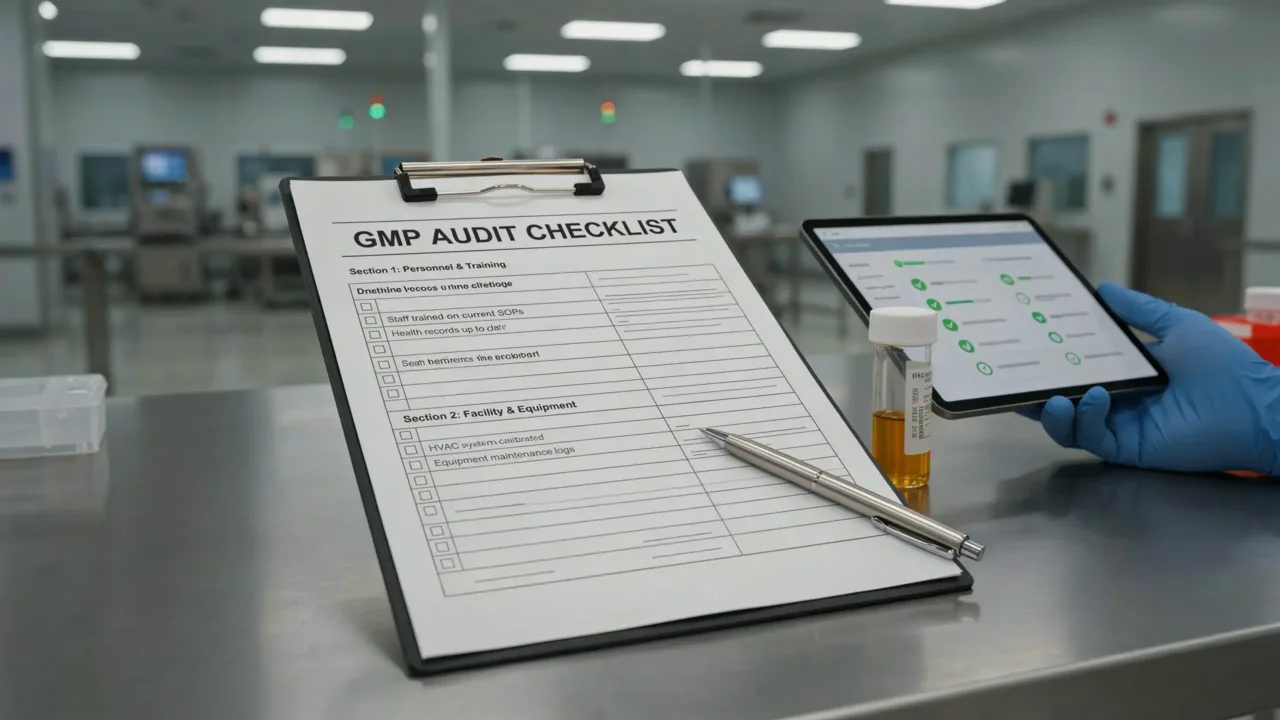
Why a Checklist Alone Is Not Enough

A GMP audit checklist is a structured list of questions and evidence points used to verify compliance with Good Manufacturing Practice requirements. Most pharmaceutical teams have one. Many have several, inherited from past audits, client questionnaires, or regulatory guidance documents. The problem is not the absence of a checklist. The problem is that checklists tend to repeat the same familiar items while missing the areas where findings actually cluster.

Regulators publish their inspection trends, and the patterns are consistent. The gaps that appear year after year are rarely about missing equipment or absent procedures. They are about whether systems work in practice, whether data can be trusted, and whether the people doing the work understand why the controls exist. A checklist that only asks whether a procedure exists will miss all of that.

The Regulatory Context Behind Common Checklist Gaps

FDA 21 CFR Parts 210 and 211

The FDA sets cGMP requirements for finished pharmaceuticals across organization, buildings, equipment, production controls, laboratory controls, and records. Specific data integrity requirements appear in 21 CFR 211.68, which requires backup data to be true, complete, and secure, and 21 CFR 211.180, 211.188, and 211.194, which address record retention, batch production records, and laboratory test data. A checklist that does not probe these areas directly is incomplete.

EU GMP and Annex 1

EudraLex Volume 4 covers the full EU GMP framework. For sterile manufacturers, Annex 1, revised effective August 2023, introduced the contamination control strategy as a central requirement. WHO inspection trends from 2023 and 2024 show that contamination control strategy gaps are among the most frequent major observations for sterile manufacturers, including unaddressed glove controls in RABS, undocumented operator interventions in Grade A, and inadequate separation between Grade A and Grade B areas .

Data Integrity Under MHRA and PIC/S

The MHRA Data Integrity guidance requires retained audit trails, no shared or generic user accounts, and demonstrated progress toward individual login and audit trails for legacy automation systems. PIC/S Guide PE 009 Annex 1 includes the same contamination control expectations for sterile products. WHO inspection findings for APIs in 2023 and 2024 repeatedly cite missing data integrity policies, absent data integrity risk assessments, unlocked date and time stamps, shared passwords, and audit trails not reviewed before batch release .

What Teams Often Miss

The Contamination Control Strategy as a Living Document

Many sterile manufacturers have a contamination control strategy document. Fewer can show that it is used. WHO inspection findings show that strategies often fail to address operator interventions, equipment design details, and the interaction between Grade A and Grade B areas. A checklist item that asks “Is a CCS available?” misses the real question: does the CCS reflect what actually happens on the floor?

Data Integrity Controls for Standalone and Legacy Systems

Teams often focus data integrity efforts on major computerized systems like LIMS and CDS. Standalone equipment, balances, and legacy automation are frequently overlooked. WHO API findings include unlocked balance timestamps, shared IT administrator passwords, and analysts with privileges to manually integrate chromatographic data and delete files. Audit trails were not reviewed before batch release . MHRA guidance specifically expects progress toward individual login and audit trails for industrial automation and control equipment including PLCs, HMIs, and SCADA platforms .

Operator Practices in Aseptic Areas

A checklist can confirm that a media fill was performed. It cannot confirm that the media fill design reflects actual worst case interventions. WHO findings describe operators entering Grade A during setup without the practice being assessed in the CCS, and filling lines where Grade A capping machines were not isolated from Grade B backgrounds with no risk assessment performed .

Deviation and CAPA Depth

Checklists often ask whether deviations were closed. Fewer ask whether investigations reached a defensible root cause. Repeat findings across inspections often trace back to investigations that stopped at the immediate cause.

Training Effectiveness

Training records can show completion. They cannot show competence. Health Canada GUI-0001 addresses training requirements and supervisory qualifications explicitly, which signals that training effectiveness is part of the regulatory expectation, not just a human resources metric.

Introducing GxP Cellators for GMP Auditing

GxP Cellators provides GMP auditing services that go beyond checklist verification. Our auditors walk your floors, review batch records, and trace deviation history to find gaps before inspectors do. We cover FDA 21 CFR Parts 210 and 211, EU EMA EudraLex Volume 4, Health Canada GUI-0001, UK MHRA Orange Guide, WHO Technical Report Series, and PIC/S Guide PE 009.

Our audit scope includes sterile manufacturing facilities, non sterile manufacturing facilities, contract manufacturing organizations, quality systems and validation, and batch release and inspection readiness. For sterile sites, we audit cleanroom design and classification, air flow patterns, personnel and material flows, environmental monitoring programs, aseptic technique, media fill design and execution, sterilization validation, isolator integrity, and container closure integrity. For quality systems, we review documentation control, deviation investigation depth, CAPA effectiveness, change control impact assessment, training effectiveness, self inspection scope, and data integrity controls aligned with ALCOA plus principles.

We offer internal GMP audits, supplier and vendor audits, CMO audits, pre approval inspection readiness audits, for cause audits, follow up and CAPA verification audits, and mock regulatory inspections. Our process runs from planning and opening meeting through fieldwork, closing meeting, reporting, and follow up.

Start With a Better Audit

Review our full services at https://www.gxpcellators.com/gmp-auditing/. Email or use https://www.gxpcellators.com/contact/ to request a scoping call.

Frequently Asked Questions About GMP Audit Checklists

What should a GMP audit checklist include?

A useful checklist covers facility and equipment, documentation, production controls, laboratory controls, data integrity, deviation and CAPA systems, training effectiveness, and supplier oversight. For sterile products, it should also cover contamination control strategy elements and aseptic practices.

Why do teams miss findings even with a checklist?

Checklists verify that documents and systems exist. They often do not test whether systems work in practice. Findings cluster in areas where practice diverges from procedure, such as data integrity controls on standalone equipment or operator interventions in aseptic areas.

How often should the checklist be updated?

At minimum, review it when regulations change, such as the Annex 1 revision, and when inspection trends shift. WHO and PIC/S publish inspection findings that show where regulators are focusing.

Can you audit against our existing checklist?

Yes. We can use your checklist as a starting point and supplement it with areas drawn from current inspection trends and regulatory requirements.

Do you provide a checklist we can use internally?

We can share the framework we use as part of an engagement. The value is in the audit execution, not just the list.

How do I request a GMP audit?

Email or use https://www.gxpcellators.com/contact/. Service details are at https://www.gxpcellators.com/gmp-auditing/.

23/10/2026
Picture-10-1-1280x720.webp

What Third Party GMP Audit Services Are

Third party GMP audit services are audits performed by an external organization that has no operational stake in the audited entity. That independence is the defining feature. The auditor does not report to the plant manager, does not depend on the site for future work, and has no reason to soften findings. What you get is an honest assessment.

Independence matters because internal audits, however well intentioned, operate within a web of relationships. People work together every day. Findings can be softened to avoid conflict. A third party auditor sits outside that web and can say what needs to be said. That does not mean the auditor is harsh. Good third party auditors are direct but constructive, and they explain findings in a way that helps the site improve.

Third party audits are also useful when you need to demonstrate oversight to a regulator, a partner, or an investor. An independent report carries weight that an internal memo cannot match.

Why Independence Is Regulatorily Meaningful

EU GMP Chapter 9 and Self Inspection

Chapter 9 of EudraLex Volume 4 requires a documented self inspection program with defined frequency and follow up. Internal self inspection is required, but independent third party audits strengthen the program and provide external benchmarking. Many companies present a combination of internal and external audits to regulators as evidence of a robust program.

FDA 21 CFR 211.22 and Quality Unit Independence

The quality unit must have the authority to carry out its responsibilities. An independent auditor can assess whether that authority is genuinely exercised without undue commercial pressure. This is a sensitive area, and an outside perspective helps. Data integrity expectations under 21 CFR 211.68 and related sections also benefit from independent review.

ICH Q10 and Management Review Assurance

Third party audit results give management credible assurance data for decision making. When the audit is independent, the data carries more weight in management review.

Health Canada and MHRA Perspectives

Health Canada GUI-0001 addresses training requirements and supervisory qualifications, which an independent auditor can assess objectively. The MHRA Orange Guide treats Pharmaceutical Quality System compliance as a hot topic, and independent audits provide evidence of genuine self scrutiny.

PIC/S and WHO Guidance on Audit Programs

PIC/S is an international arrangement between regulatory authorities that develops harmonized GMP standards and provides inspector training. The PIC/S Guide PE 009 is used by many authorities as their GMP standard. The WHO guidelines, published in the Technical Report Series, reinforce the value of independent oversight. Both inform how we structure our audits.

Our Third Party Audit Approach

Independence and Conflict of Interest Safeguards

We screen for conflicts before accepting an engagement. If we have worked with the audited site in a way that could compromise independence, we say so and decline. Complete confidentiality and conflict of interest management are part of every engagement.

Risk Based Audit Planning

We plan around the risks that matter to your products and markets, not around a generic checklist. Scope definition, standard selection, document review, and agenda agreement happen before fieldwork begins.

Evidence Based Execution

We collect evidence, not impressions. Findings are backed by records, observations, and interviews. Our fieldwork includes facility tours, interviews, document review, and sample tracing.

Regulatory Cited Reporting

Each finding is linked to the specific regulation or guidance that applies. That makes the report useful for both remediation and inspection preparation. Findings are risk ranked and include CAPA recommendations.

CAPA Support and Re Audit Options

We can help you build corrective actions and return later to confirm they worked. Follow up includes CAPA review, effectiveness check, and closure verification, with a closure letter or re audit as the output.

The Audit Types We Provide

Internal GMP Audits

We can conduct internal audits on your behalf or train your team to perform them effectively. Internal audits cover all aspects of your quality system and manufacturing operations, typically conducted annually with more frequent audits for high risk areas.

Supplier and Vendor GMP Audits

We verify that raw material, component, and service providers meet GMP requirements, before qualification, periodically during the relationship, and when significant changes occur.

Contract Manufacturing Organization Audits

We audit CMOs on your behalf, covering quality agreements, change control, deviation and complaint handling, batch record review, release timelines, capacity, business continuity, and subcontractor oversight.

Pre Approval Inspection Readiness Audits

We conduct mock Pre Approval Inspections that simulate the actual inspection experience, reviewing facilities, systems, and documentation as an inspector would, and identifying gaps that could lead to findings or delays.

For Cause Audits

Triggered by product quality complaints, adverse event reports, regulatory observations, or significant deviations, these audits investigate root causes, assess the extent of the issue, and recommend corrective and preventive actions.

Follow Up and CAPA Verification Audits

We verify that CAPAs have been effectively implemented and that issues have been resolved, providing closure documentation and helping prevent recurrence.

Mock Regulatory Inspections

We simulate the tone and pressure of a real health authority inspection, preparing your team and identifying gaps before the regulator does, with realistic questioning and document review.

Introducing GxP Cellators for Third Party GMP Audits

GxP Cellators is built for independent auditing. Our auditors bring regulatory inspection and industry quality experience across sterile manufacturing facilities, non sterile manufacturing facilities, contract manufacturing organizations, quality systems and validation, and batch release and inspection readiness.

We cover FDA, EMA, Health Canada, MHRA, WHO, and PIC/S GMP frameworks, with global reach and regional expertise across North America, Europe, Asia Pacific, Africa, and Latin America. Our presence includes Saskatchewan, Calgary, and Toronto in Canada, North Carolina and Indiana in the United States, and Frankfurt in Germany.

Our process keeps you informed at every stage. Planning includes scope definition, standard selection, document review, and agenda agreement, producing an audit plan and pre audit questionnaire. The opening meeting covers introductions, scope confirmation, logistics, and confidentiality. Fieldwork includes facility tour, interviews, document review, and sample tracing. The closing meeting summarizes findings, discusses classification, and agrees next steps. Reporting delivers a formal audit report with risk ranking and CAPA recommendations. Follow up covers CAPA review, effectiveness check, and closure verification.

We work with pharmaceutical manufacturers, biotechnology companies, medical device manufacturers, CMOs, CROs, API manufacturers, packaging companies, distribution companies, regulatory authorities, and investment firms conducting due diligence.

Benefits of Third Party GMP Audits

Unbiased Findings

An auditor with no stake in the outcome can report what they see without pressure.

Regulatory Credibility

Independent reports carry weight with regulators and partners, and they demonstrate genuine self scrutiny.

Specialized Expertise on Demand

You get access to auditors who have worked across many operations and know what good practice looks like.

Scalable Audit Capacity

Third party audits let you expand audit coverage without expanding headcount, which is useful for multi site programs and supplier portfolios.

Global Coverage

With presence across North America and Europe and partner support elsewhere, we can cover suppliers and sites in multiple regions.

Engage an Independent GMP Auditor

Visit https://www.gxpcellators.com/gmp-auditing/ to see our full service offering. Email or use https://www.gxpcellators.com/contact/ to start a conversation.

Frequently Asked Questions About Third Party GMP Audits

What makes a third party audit different from an internal audit?

A third party audit is performed by an organization with no operational stake in the audited entity. Internal audits are performed by employees. The independence of a third party audit reduces bias and carries more weight with regulators and partners.

Do regulators accept third party audits?

Regulators generally view third party audits positively as part of a robust audit program. The self inspection obligation remains with the company, but independent audits strengthen the program and provide external benchmarking.

How do you manage conflicts of interest?

We screen for conflicts before accepting an engagement. If we have worked with the audited site in a way that could compromise independence, we say so and decline.

Can you conduct a mock regulatory inspection?

Yes. We simulate the tone and pressure of a real health authority inspection, covering all aspects of your operations and documentation with realistic questioning and document review.

What is a for cause audit?

A for cause audit is triggered by a specific event such as a product quality complaint, adverse event report, regulatory observation, or significant deviation. We investigate root causes, assess the extent of the issue, and recommend corrective and preventive actions.

Do you provide follow up after an audit?

Yes. We conduct follow up and CAPA verification audits to confirm that corrective actions have been implemented and are effective, providing closure documentation.

How long does a third party audit take?

It depends on scope. A focused audit may take a few days, while a full facility audit can take two weeks or more. We agree the timeline before work begins.

How do I request a third party GMP audit?

Email or use https://www.gxpcellators.com/contact/. Our services are described at https://www.gxpcellators.com/gmp-auditing/.


23/10/2026
Picture-9-1-1280x720.webp

What Contract Manufacturing GMP Audit Services Involve

Contract manufacturing GMP audit services assess contract manufacturing organizations against the GMP requirements that apply to the products they make on your behalf. The goal is to confirm that the CMO’s facilities, systems, and people meet the same standards as your own operation. When you outsource manufacturing, you do not outsource responsibility. Regulators still hold you accountable for the product.

That accountability is why CMO audits matter. A CMO may pass a paper review and still have weaknesses that only an audit will reveal. Our audits look at the full operation, from facility conditions to batch records to how changes are communicated back to you. They also look at the relationship itself, because a CMO that does not communicate openly is a risk even if its systems are sound.

Outsourcing has become the norm in the pharmaceutical industry, and regulators know it. They expect contract givers to have real oversight, not just a signed agreement. An audit program is the clearest evidence that oversight is real.

Regulatory Requirements for CMO Oversight

EU GMP Chapter 7 on Outsourced Activities

Chapter 7 of EudraLex Volume 4 states that the contract giver is fully responsible for ensuring that outsourced activities comply with GMP. An audit of the contract acceptor is a core control in meeting that responsibility. The quality agreement and the audit together form the backbone of oversight.

FDA 21 CFR 211 and Contractor Responsibilities

The FDA holds the contract giver accountable for contractor compliance. Documented oversight and audit evidence are expected. Investigators will ask how you know your CMO is compliant, and the answer needs to be more than a signed quality agreement. Data integrity expectations under 21 CFR 211.68 also extend to records the CMO generates and shares with you.

ICH Q7 and Contract Manufacturing of APIs

ICH Q7 requires written agreements and periodic audits of contract manufacturers. PIC/S Part II is equivalent to ICH Q7, so the same expectations apply where PIC/S standards are used.

ICH Q10 and External Provider Management

ICH Q10 treats external providers as part of the pharmaceutical quality system. Their performance must be monitored and managed, and audits are part of that management.

Health Canada and MHRA Considerations

Health Canada GUI-0001 requires raw material specifications to conform to the marketing authorization and analytical methods to give accurate and consistent results, which are things a CMO must be able to demonstrate. The MHRA Orange Guide adds material transfer controls and capacity monitoring to the list of hot topics, both of which matter when you rely on a CMO.

Annex 1 for Sterile CMOs

If your CMO makes sterile products, the revised Annex 1 requirements apply. Contamination control strategy, aseptic process simulation, and gowning qualification should all be part of the audit. Section 8.123 for lyophilisers took effect in August 2024.

Our CMO Audit Process

Contract and Quality Agreement Review

We review the quality agreement to confirm responsibilities are clear and complete. Gaps in the agreement often show up later as gaps in practice. We also check whether the agreement reflects current operations.

Risk Based Audit Planning

We plan the audit around the products made, the processes used, and the history of the relationship. Higher risk products and processes get deeper scrutiny. We also consider the CMO’s inspection history where available.

On Site or Remote CMO Audits

Most CMO audits benefit from an on site visit. Remote audits can cover documentation and systems but may miss facility and practice issues. We recommend on site for first audits and for sterile operations.

CAPA Verification and Follow Up

We help you evaluate the CMO’s corrective action plan and can follow up to confirm implementation. A CMO that responds well to findings is a better partner than one that resists them.

What We Assess at CMOs

Quality Agreements and Implementation

We check whether the quality agreement is complete and whether it is actually followed in practice. An agreement that sits in a drawer is not oversight.

Change Control Notification and Approval

Change control is a frequent weak point in outsourced arrangements. Changes made at the CMO must be communicated to you and approved where required. We check whether that communication works in practice.

Deviation and Complaint Handling

We check how deviations and complaints are investigated, whether root cause analysis is thorough, whether CAPA is effective, and whether you are informed as required.

Batch Record Review and Release Timelines

We review batch record completeness, review timelines, release documentation, and whether release happens within agreed timeframes.

Capacity and Business Continuity

We assess whether the CMO has the capacity to meet your demand and whether business continuity planning is in place. MHRA guidance treats capacity monitoring as a hot topic, and for good reason.

Technical Capability for Products

We check whether the CMO has the technical capability to make your products consistently, including equipment, processes, and analytical support.

Subcontractor and Raw Material Supplier Oversight

We review how the CMO manages its own subcontractors and raw material suppliers, because their weaknesses become your weaknesses.

Facility and Equipment Suitability

We check whether the facility and equipment are suitable for the products made, including HVAC, water systems, and cleaning validation.

Documentation and Data Integrity

We review batch records, logbooks, and electronic records for accuracy and completeness. Data integrity controls are part of this review, including audit trails and access controls.

Introducing GxP Cellators for CMO Audits

GxP Cellators audits CMOs on your behalf to verify they meet your standards. Our CMO audits assess quality agreements and implementation, change control notification and approval, deviation and complaint handling, investigation depth and root cause analysis, CAPA effectiveness, batch record completeness, batch record review timelines, release documentation, capacity to meet demand, technical capability for products, business continuity planning, subcontractor oversight, and raw material supplier oversight.

We bring coverage across FDA, EMA, Health Canada, MHRA, WHO, and PIC/S GMP frameworks, with a global presence that includes Saskatchewan, Calgary, Toronto, North Carolina, Indiana, and Frankfurt. Our auditors have regulatory inspection and industry quality experience, and we deliver clear, prioritized reports with practical remediation guidance.

We also provide pre approval inspection readiness audits for facilities and products that will be inspected before approval, for cause audits triggered by complaints, adverse event reports, regulatory observations, or significant deviations, and follow up and CAPA verification audits to confirm that issues have been resolved.

Protect Your Outsourced Manufacturing

Learn more at https://www.gxpcellators.com/gmp-auditing/. Contact or use https://www.gxpcellators.com/contact/ to discuss your CMO portfolio.

Frequently Asked Questions About Contract Manufacturing GMP Audits

How often should we audit our CMO?

First audits are usually done before the first commercial batch. After that, most companies audit every two to three years, or more often for high risk products or when issues arise.

Can you audit a CMO on our behalf?

Yes. We audit CMOs on behalf of the contract giver and report directly to you. We can also attend audits with your team if you prefer a joint approach.

What should a quality agreement include?

A quality agreement should define responsibilities for production, quality control, deviations, changes, complaints, recalls, and audits. It should also specify communication channels and timelines, and it should reflect current operations.

How do you check whether a CMO communicates changes properly?

We review change records and compare them with your records. We also interview staff on both sides to see whether communication works in practice, not just on paper. MHRA expects prospective assessment of changes, so we check for that.

Do you audit sterile CMOs against Annex 1?

Yes. Sterile CMO audits include Annex 1 requirements, including contamination control strategy, aseptic process simulation, and gowning qualification. Lyophilisers are assessed against Section 8.123.

What if the CMO is in another country?

We audit CMOs globally and handle logistics, language, and local requirements. Our presence spans North America and Europe, with partner support for other regions.

How do you assess CMO capacity and business continuity?

We review capacity data, demand forecasts, and business continuity plans. We also check whether the CMO has experienced capacity constraints and how they were managed.

How do I request a CMO audit?

Email or use https://www.gxpcellators.com/contact/. Our services are described at https://www.gxpcellators.com/gmp-auditing/.


23/10/2026
Picture-8-2-1280x720.webp

What GMP Quality System Audit Services Evaluate

GMP quality system audit services examine the design, implementation, and effectiveness of a pharmaceutical quality system. The question at the heart of this work is simple but demanding: does the quality system actually prevent problems, detect them when they occur, and correct them so they do not recur?

A quality system can look complete on paper and still fail in practice. Procedures may exist but go unused. CAPAs may close without solving anything. Management review may happen on schedule but change nothing. Quality system audits are designed to find these failures before regulators do.

The work is not limited to checking that documents exist. It looks at how decisions are made, how problems are investigated, and whether the system learns from its own experience. That is what regulators mean when they talk about an effective quality system, and it is what we assess.

The Regulatory Basis for QMS Audits

ICH Q10 Pharmaceutical Quality System

ICH Q10 defines the elements of an effective pharmaceutical quality system. It covers management responsibility, continual improvement, and the specific subsystems of CAPA, change management, and knowledge management. Our audits are structured around these elements.

FDA 21 CFR 211.22 and the Quality Control Unit

The quality control unit must have the authority and resources to carry out its responsibilities. Quality system audits verify that this authority is real and exercised. A quality unit that cannot say no is a quality unit that cannot protect patients. Under 21 CFR 211.68, 211.180, 211.188, and 211.194, data integrity expectations also apply to the records the quality unit relies on.

EU GMP Chapter 1 Pharmaceutical Quality System

Chapter 1 of EudraLex Volume 4 requires a documented pharmaceutical quality system with defined responsibilities and management review. The audit checks that the system described in the documents is the system in use. Chapters 2 through 9 build on this foundation across personnel, premises and equipment, documentation, production, quality control, outsourced activities, complaints and product recall, and self inspection.

Health Canada GUI-0001

Health Canada requirements address premises, equipment, personnel, sanitation, raw material testing, manufacturing control, quality control, finished product testing, stability testing, and documentation. Training requirements and supervisory qualifications are explicitly addressed, which means competence assessment is part of the audit scope.

UK MHRA Orange Guide

The MHRA treats Pharmaceutical Quality System compliance as a hot topic. Staffing requirements, capacity monitoring, sterility assurance controls, and material transfer controls are all assessed. Prospective assessments are required for changes, impact to licence and capacity must be considered, and effectiveness checks are required after changes.

ICH Q9 Quality Risk Management

Risk management must be integrated into the quality system, not treated as a separate activity. We assess how well that integration has happened and whether risk decisions are documented.

PIC/S Guide PE 009 and Annex 1

PIC/S Part I covers general GMP principles for finished products, and Annex 1 covers sterile medicinal products, revised effective August 2023. The contamination control strategy is part of the quality system for sterile manufacturers.

Areas Our QMS Audits Evaluate

Management Responsibility and Quality Policy

We review whether senior management is genuinely engaged in quality, whether the quality policy is understood, and whether management review produces decisions and actions. Management engagement is often the difference between a system that works and one that struggles.

CAPA System Effectiveness

We test whether corrective and preventive actions address root causes and whether effectiveness checks are meaningful. This is one of the most common weak points in any quality system. We look at whether CAPAs are closed on time, whether recurrence is tracked, and whether lessons are shared. MHRA and PIC/S both expect effectiveness checks after changes.

Change Control and Deviation Management

We look at how changes are evaluated and approved, and how deviations are investigated and resolved. Both are essential to maintaining control. We check whether changes are implemented as approved, whether regulatory filing triggers are identified, and whether deviations are investigated to root cause.

Documentation and Data Governance

We review document control, version management, approval workflows, retention, and data integrity controls. ALCOA plus principles are part of this review. We also check whether electronic systems are validated under Annex 11 and whether audit trails are reviewed.

Product Quality Review and Annual Reports

We check whether periodic product reviews are performed, whether trends are analyzed, and whether the results lead to action. Reviews that are completed but not acted on are a missed opportunity and a potential finding.

Complaint Handling and Recall Systems

We review how complaints are received, investigated, and trended, and whether recall procedures are tested and current. MHRA guidance requires recalls to be rapid and timely.

Training and Competence

We check whether training is effective, not just completed. Training curriculum design, supervisory qualifications, and refresher training are part of this.

Self Inspection

We review the frequency and scope of self inspection, and whether findings are tracked to closure. Chapter 9 of EudraLex Volume 4 sets this expectation directly.

Common Weaknesses We Find

CAPAs That Close Without Solving the Problem

This is the most common weakness. We look for evidence that effectiveness was verified, not just assumed.

Change Control That Misses Regulatory Impact

Changes that affect regulatory filings but are not assessed for that impact create compliance risk. MHRA expects prospective assessment of licence and capacity impact.

Management Review Without Decisions

Reviews that produce no actions are a sign that the process is not working as intended.

Quality Unit Authority That Exists on Paper Only

If the quality unit cannot stop a batch or reject a supplier without pressure, the system is weaker than it looks.

Data Integrity Controls That Are Incomplete

Audit trails, access controls, and review practices are frequent gaps. MHRA Data Integrity guidance requires retained audit trails, no shared or generic user accounts, and demonstrated progress toward system upgrades with individual login and audit trails for legacy automation systems.

Introducing GxP Cellators for Quality System Audits

GxP Cellators audits quality management systems against global regulator expectations. Our quality system audits cover documentation control and version management, approval workflows and retention, deviation investigation depth, root cause analysis quality, CAPA effectiveness, change control impact assessment, regulatory filing triggers, training curriculum design, training effectiveness checks, self inspection frequency and scope, supplier qualification and monitoring, validation DQ, IQ, OQ, and PQ, continued process verification, data integrity audit trails, access controls, and ALCOA plus principles.

Our auditors bring regulatory inspection and industry quality experience. We cover FDA, EMA, Health Canada, MHRA, WHO, and PIC/S GMP frameworks, with global reach and regional expertise. We deliver clear, prioritized reports written in plain business language, with practical remediation guidance that your team can actually implement.

We also provide batch release and regulatory inspection readiness audits, including release specifications review, stability program assessment, annual product quality review, inspection readiness systems, and mock inspections that simulate the tone and pressure of a real health authority inspection.

Request a Quality System Audit

Visit https://www.gxpcellators.com/gmp-auditing/ for an overview of our services. Email or use https://www.gxpcellators.com/contact/ to begin.

Frequently Asked Questions About GMP Quality System Audits

What is the difference between a QMS audit and a compliance audit?

A QMS audit focuses on the quality system itself, including management review, CAPA, change control, and documentation. A compliance audit is broader and checks compliance across all GMP areas. The two overlap, and many engagements cover both.

How do you assess whether a CAPA system is effective?

We look at whether root causes are properly identified, whether actions address those causes, and whether effectiveness checks are meaningful. We also check whether recurring issues are recognized and addressed at the system level.

Can you audit a single quality subsystem, such as CAPA or change control?

Yes. Focused audits are common when a company knows a particular area is weak or has received a finding there.

How do you evaluate management review?

We review the inputs, the decisions, and the follow up. A management review that uses meaningful data and produces tracked actions is effective. One that only reviews metrics without decisions is not.

Do you review data integrity as part of a QMS audit?

Yes. Data integrity is part of documentation and data governance, and we assess it in every QMS audit. We check audit trails, access controls, shared account risks, and ALCOA plus principles.

How long does a QMS audit take?

It depends on the size and complexity of the system. A focused audit may take a few days, while a full system audit can take two weeks or more.

Can you help us prepare for an inspection focused on the quality system?

Yes. We can run a mock inspection or a focused readiness review that simulates the questions an inspector would ask about your quality system, with realistic questioning and document review.

How do I request a QMS audit?

Email or use https://www.gxpcellators.com/contact/. Service details are at https://www.gxpcellators.com/gmp-auditing/.


23/10/2026
Picture-7-2-1280x720.webp

What GMP Supplier Audit Services Cover

GMP supplier audit services evaluate whether the companies that supply your materials, components, and services meet the GMP requirements that apply to them. Suppliers come in many forms: API manufacturers, excipient suppliers, contract manufacturers, packagers, analytical laboratories, distributors, and storage providers. Each brings different risks, and each needs a level of oversight that matches that risk.

An audit is the most reliable way to confirm that a supplier’s systems are real. Questionnaires and certificates have their place, but they do not show you what actually happens on the floor. An audit does. It shows whether the supplier follows its own procedures, whether records are reliable, and whether problems are handled in a way that protects your product.

Supply chain oversight has become more important in recent years. Regulators have increased scrutiny of supplier qualification and ongoing monitoring. Companies that rely on paper qualifications without verification are increasingly exposed. A well planned supplier audit program reduces that exposure and gives you confidence in your supply chain.

The Regulatory Requirements Driving Supplier Audits

ICH Q7 and Supplier Oversight

ICH Q7 requires API manufacturers to audit critical suppliers and maintain documented qualification programs. Critical suppliers are those whose materials or services directly affect API quality. The audit program should be risk based and documented. PIC/S Part II is equivalent to ICH Q7 and is used by many authorities as their standard for API manufacturing.

EU GMP Chapter 7 on Outsourced Activities

Chapter 7 of EudraLex Volume 4 states that the contract giver remains responsible for outsourced activities under EU GMP. That responsibility includes confirming that the contract acceptor is competent and compliant. Audits are a key part of that confirmation. The quality agreement and the audit together form the backbone of oversight.

FDA 21 CFR 211.84 and Supplier Evaluation

Suppliers of components must be evaluated and approved. Audit evidence supports that approval and strengthens the file if regulators ask questions. FDA investigators often ask how suppliers were qualified and how ongoing performance is monitored.

ICH Q10 and External Provider Management

ICH Q10 treats external providers as part of the pharmaceutical quality system. Their performance must be monitored and managed. Audits are one part of that management, alongside performance metrics and issue tracking.

WHO GMP Supplier Qualification Guidance

The WHO guidelines, published in the Technical Report Series and compiled in the Quality Assurance of Pharmaceuticals compendium, reinforce the need for risk based supplier qualification, including audits where appropriate. The guidance is useful for companies operating in multiple markets and for WHO prequalification programs.

Health Canada and MHRA Expectations

Health Canada GUI-0001 requires API specifications drawn from a pharmacopoeia or equivalent, raw material specifications that conform to the marketing authorization, water that meets applicable standards including microbial limits, and identity tests on each container of API lot. The MHRA Orange Guide adds material transfer controls and sterility assurance controls to the list of hot topics for supplier oversight.

Our Supplier Audit Process

Supplier Risk Classification

We classify suppliers by the risk they pose to product quality and patient safety. High risk suppliers receive deeper scrutiny. Lower risk suppliers may be managed through questionnaires and performance monitoring. The classification is documented so it can be defended.

Audit Planning and Questionnaire Review

We review questionnaires and supplier documentation before the audit so that on site time is used efficiently. This preparation also helps us focus on the areas most likely to have issues.

On Site or Remote Supplier Audits

Where travel is impractical, remote audits can cover documentation and system reviews. Facility and production reviews are usually better done on site. We can combine formats when needed.

Finding Classification and CAPA Follow Up

Findings are classified by severity with clear descriptions. We can follow up to confirm corrective actions were implemented. A supplier that responds well to findings is often a better partner than one that has never been audited.

Supplier Categories We Audit

API and Raw Material Suppliers

API suppliers are audited against ICH Q7 and PIC/S Part II, along with the relevant regional requirements. Raw material suppliers may be audited depending on their role in the product and their risk profile.

Excipient Suppliers

Excipient suppliers are audited when risk justifies it. The WHO 2024 to 2027 work plan includes new guidelines for excipients, which signals increasing regulatory attention in this area.

Contract Manufacturers and Packagers

Contract manufacturers are audited against the GMP requirements for the products they make. The audit also checks whether they communicate changes to you as required.

Primary Packaging Manufacturers

Primary packaging materials come into direct contact with the product, so their quality matters. We audit these suppliers for material controls, change notification, and documentation.

Analytical and Testing Laboratories

Testing laboratories are audited for data integrity, method validation, and equipment qualification. These audits are often overlooked, which makes them valuable.

Distribution and Storage Providers

Distribution and storage providers are audited for GDP compliance where applicable, including temperature control, traceability, and handling.

Introducing GxP Cellators for Supplier Audits

GxP Cellators provides supplier and vendor GMP audits that verify your raw material, component, and service providers meet GMP requirements. We audit API manufacturers, excipient suppliers, primary packaging manufacturers, and contract service providers. Audits are conducted before qualification, periodically during the supplier relationship, and when significant changes occur.

Our supplier audits evaluate supplier quality systems, manufacturing controls, documentation practices, and data integrity. We bring coverage across FDA, EMA, Health Canada, MHRA, WHO, and PIC/S GMP frameworks, with global reach and regional expertise across North America, Europe, Asia Pacific, Africa, and Latin America. Our auditors have regulatory inspection and industry quality experience, and our reports are written in plain business language with practical remediation guidance your team can implement.

We also help companies build supplier audit programs from the ground up, including risk classification criteria, audit schedules, questionnaire templates, and performance monitoring. If you already have a program, we can strengthen it or run audits on your behalf.

Strengthen Your Supply Chain

Details are available at https://www.gxpcellators.com/gmp-auditing/. Reach us at or through https://www.gxpcellators.com/contact/ to discuss your supplier portfolio.

Frequently Asked Questions About GMP Supplier Audits

How often should suppliers be audited?

Critical suppliers are usually audited every two to three years. Lower risk suppliers may be audited less often or managed through questionnaires and performance monitoring. The schedule should be risk based and documented.

Can you audit suppliers in other countries?

Yes. We audit suppliers globally and handle logistics, language, and local requirements. Our presence spans Saskatchewan, Calgary, Toronto, North Carolina, Indiana, and Frankfurt, with partner support for other regions.

What is the difference between a supplier audit and a supplier questionnaire?

A questionnaire is a self assessment completed by the supplier. An audit involves an independent review of evidence, including documents, interviews, and observation. Audits are more reliable and carry more weight with regulators.

Do you audit excipient suppliers?

Yes. Excipient suppliers are audited when risk justifies it, often based on their role in the product and their compliance history. The WHO work plan for excipient guidelines makes this an area to watch.

What happens if a supplier fails the audit?

You receive a report with findings classified by severity. We can help you decide whether to require corrective action, increase monitoring, or look for an alternative supplier. The decision stays with you.

Can you help us build a supplier qualification program?

Yes. We can design the program, including risk classification, audit schedules, questionnaires, and performance monitoring. We can also train your team to run it.

How do you handle supplier confidentiality?

We sign confidentiality agreements with you and, where needed, with the supplier. Audit reports are shared only with the people you designate.

How do I request a supplier audit?

Email or use https://www.gxpcellators.com/contact/. Our services are described at https://www.gxpcellators.com/gmp-auditing/.


23/10/2026
Picture-6-2-1280x720.webp

What GMP Gap Assessment Services Are

GMP gap assessment services compare your current systems, documents, and practices against the requirements that apply to you. The output is a structured picture of the gaps between current state and required state, ranked by risk. A gap assessment is different from a full audit in emphasis. It is forward looking and focused on readiness, which makes it useful before inspections, before launching a new product, or before integrating an acquired site.

Companies often use gap assessments when they suspect something is missing but are not sure what. The assessment turns that uncertainty into a clear list of issues with a recommended path forward. It is also useful when entering a new market, because requirements differ between regions and what works in one jurisdiction may fall short in another.

A gap assessment is not a box ticking exercise. The best ones challenge assumptions. They ask whether a procedure that exists is actually followed, whether a training program that runs actually produces competence, and whether a validation package that was approved actually supports the process. That level of challenge is what makes the output useful.

The Regulatory Logic Behind Gap Assessments

FDA 21 CFR Parts 210 and 211 as the Baseline

These regulations establish minimum requirements for methods, facilities, and controls used in manufacturing, processing, packing, and holding of drug products. A gap assessment checks whether these fundamentals are in place and working. Specific areas include clean and sanitary buildings free of infestation, equipment surfaces that are not reactive, additive, or absorptive, written cleaning and maintenance procedures, routine calibration and inspection of automated equipment, and data integrity controls under 21 CFR 211.68, 211.180, 211.188, and 211.194.

EU GMP Under EudraLex Volume 4

The EMA coordinates EU requirements through EudraLex Volume 4. Part I covers Basic Requirements for Medicinal Products across Chapters 1 to 9, including Pharmaceutical Quality System, Personnel, Premises and Equipment, Documentation, Production, Quality Control, Outsourced Activities, Complaints and Product Recall, and Self Inspection. Part II covers Active Substances. Annex 1 covers sterile products, Annex 2 covers biological products, Annex 11 covers computerised systems, and Annex 15 covers qualification and validation. A gap assessment maps your current state against each applicable part and annex.

Health Canada GUI-0001

Health Canada regulates GMP through the Food and Drug Regulations and Guidance Document GUI-0001. Requirements address premises, equipment, personnel, sanitation, raw material testing, manufacturing control, quality control, finished product testing, stability testing, and documentation. Specific expectations include medical examination before access to exposed drug areas, API specifications drawn from a pharmacopoeia or equivalent, identity tests on each container of API lot, and uniformity demonstration across at least three consecutive batches.

UK MHRA Orange Guide

The MHRA regulates GMP in the UK through the Orange Guide. Inspections cover Manufacturer’s Licences and Manufacturing Specials licences. Hot topics include Pharmaceutical Quality System compliance, staffing requirements, capacity monitoring, sterility assurance controls, and material transfer controls. Data Integrity guidance requires retained audit trails, no shared or generic user accounts, and demonstrated progress toward system upgrades with individual login and audit trails for legacy automation systems.

WHO GMP Guidelines

The WHO publishes GMP guidelines in the WHO Technical Report Series, compiled in the Quality Assurance of Pharmaceuticals compendium. The 10th edition, Volume 2, covers GMP and Inspection, including main principles, starting materials, specific medical products, water for pharmaceutical use, sampling, quality control laboratories, and HVAC systems for non sterile products. The 2024 to 2027 work plan includes revision of main principles and new guidelines for excipients.

PIC/S Guide PE 009

PIC/S is an international arrangement between regulatory authorities that develops harmonized GMP standards and provides inspector training. The PIC/S Guide PE 009 is used by many authorities as their GMP standard. Part I covers general GMP principles for finished products. Part II covers GMP for active pharmaceutical ingredients and is equivalent to ICH Q7. Annex 1 was revised effective August 2023, with Section 8.123 for lyophilisers effective August 2024.

ICH Q9 and ICH Q10

ICH Q9 asks companies to manage quality risk in a structured way, and ICH Q10 ties audit results to management review and continual improvement. Gap findings are scored by risk so remediation addresses the most serious gaps first. Risk scoring also gives management a defensible basis for budget decisions.

How Our GMP Gap Assessments Work

Scope Definition and Document Review

We start by agreeing on scope. Which products, which sites, which regulations. Then we review your documentation against the requirements. This phase often reveals issues before we even visit the site.

On Site or Remote Verification

Documents tell only part of the story. We verify practices on site or through remote sessions to confirm that what is written matches what happens. We interview staff at different levels and observe operations.

Gap Identification and Risk Scoring

Each gap is described clearly, linked to the relevant requirement, and scored for risk. That scoring helps you decide what to fix first. We separate critical gaps from minor ones so the priorities are obvious.

Prioritized Remediation Roadmap

We deliver a roadmap that sequences the work, estimates effort, and identifies quick wins alongside longer term projects. The roadmap is practical and designed to fit within your resource constraints.

Optional Follow Up

We can return after remediation to confirm that gaps have been closed. This gives you a clean record and confidence before an inspection.

Typical Gaps We Uncover

Missing or Outdated SOPs

Procedures that have not kept pace with current practice or regulations are a common finding. Sometimes the procedure is fine but the practice has drifted. Either way, the gap matters.

Undefined Roles and Responsibilities

When nobody owns a task, it tends not to get done. We identify unclear ownership and recommend fixes. Clear ownership is one of the simplest and most effective improvements a company can make.

Incomplete Validation Documentation

Validation packages with missing elements, such as cleaning validation or analytical method transfers, are frequently uncovered. These gaps can delay product launches and raise questions during inspections.

Weak Data Integrity Controls

Audit trails, access controls, and electronic record management are common gap areas, especially in older systems. Health Canada and MHRA both place heavy emphasis on data integrity, and legacy automation systems are a frequent weak point.

Training Program Weaknesses

Training that is completed but not effective is a hidden gap. We check whether training content matches current procedures and whether competence is assessed.

Supplier Oversight Gaps

Oversight that relies only on certificates and questionnaires is a common gap. We help companies build a risk based oversight program that holds up to scrutiny.

When a Gap Assessment Makes Sense

Before an Inspection

A gap assessment before an inspection surfaces issues while there is still time to fix them.

Before a Product Launch

New products bring new requirements. A gap assessment checks readiness before the first batch is released.

After an Acquisition

Acquired sites often have different systems. A gap assessment shows what needs to change to meet your standards and the regulator’s expectations.

Before Entering a New Market

Requirements differ between regions. A gap assessment maps the differences and the work needed.

Introducing GxP Cellators for GMP Auditing Services

GxP Cellators is a global GMP auditing provider with presence in Saskatchewan, Calgary, and Toronto in Canada, North Carolina and Indiana in the United States, and Frankfurt in Germany. Our auditors walk your floors, review batch records, and trace deviation history to find gaps before inspectors do. We work across the full range of regulatory frameworks, including US FDA 21 CFR Parts 210 and 211, EU EMA EudraLex Volume 4, Health Canada GUI-0001, UK MHRA Orange Guide, WHO Technical Report Series, and PIC/S Guide PE 009.

Our GMP auditing services cover sterile manufacturing facilities, non sterile manufacturing facilities, contract manufacturing organizations, quality systems and validation, and batch release and inspection readiness. We provide internal GMP audits, supplier and vendor audits, CMO audits, pre approval inspection readiness audits, for cause audits, follow up and CAPA verification audits, and mock regulatory inspections. Our process runs from planning and opening meeting through fieldwork, closing meeting, reporting, and follow up, with clear outputs at every stage.

For gap assessments specifically, our auditors evaluate cleanroom design and classification, air flow patterns, personnel and material flows, environmental monitoring programs, aseptic technique, media fill design and execution, sterilization validation, isolator integrity, container closure integrity, cleaning validation based on worst case conditions with toxicological data, changeover procedures, process validation, continued process verification, water system design and monitoring, documentation control, deviation investigation depth, CAPA effectiveness, change control impact assessment, training effectiveness, self inspection scope, supplier qualification, validation DQ, IQ, OQ, and PQ, and data integrity controls aligned with ALCOA plus principles.

Start Your GMP Gap Assessment

See our GMP Auditing page at https://www.gxpcellators.com/gmp-auditing/ for more detail. Email or use https://www.gxpcellators.com/contact/ to request a scoping call.

Frequently Asked Questions About GMP Gap Assessments

When should we request a gap assessment?

Common triggers include preparing for an inspection, launching a new product, integrating an acquired site, or moving to a new market with different regulatory requirements. Any major change is a good time to check your footing.

How is a gap assessment different from a mock inspection?

A mock inspection simulates a regulatory inspection and focuses on how you would perform under scrutiny. A gap assessment is broader and compares your whole system against requirements, often with a readiness roadmap. The two can be combined.

Do you provide a remediation plan?

Yes. Each gap is linked to a recommended action and ranked by risk. The roadmap sequences the work so you can plan resources realistically and show progress to management.

Can a gap assessment cover multiple sites?

Yes. Multi site assessments are common for companies that want a consistent view across their network. We use a common framework and adapt to each site, which makes comparison easier.

How long does a gap assessment take?

It depends on scope. A single site focused assessment may take one to two weeks. A multi site program takes longer and is usually phased.

Will the assessment disrupt production?

We plan around your schedule and keep disruption low. Most of the work is document review and interviews, with limited time on the floor.

Do you assess against more than one regulatory framework?

Yes. We assess against FDA, EMA, Health Canada, MHRA, WHO, and PIC/S frameworks in a single engagement. This is useful for companies with global ambitions.

How do I book a gap assessment?

Email or use https://www.gxpcellators.com/contact/. Service details are at https://www.gxpcellators.com/gmp-auditing/.


Our Presence


Saskatchewan, Canada

Calgary, Canada

Toronto, Canada

North Carolina, USA

Frankfurt, Germany


Indiana, USA

Get in Touch


Saskatchewan, Canada

https://www.gxpcellators.com


You cannot copy content of this page

Verified by MonsterInsights