
Introduction
GMP supplier audits are essential for ensuring that raw materials, components, packaging materials, and outsourced services meet established quality and regulatory requirements. Pharmaceutical companies depend on qualified suppliers to maintain product quality, patient safety, and compliance with Good Manufacturing Practices (GMP).
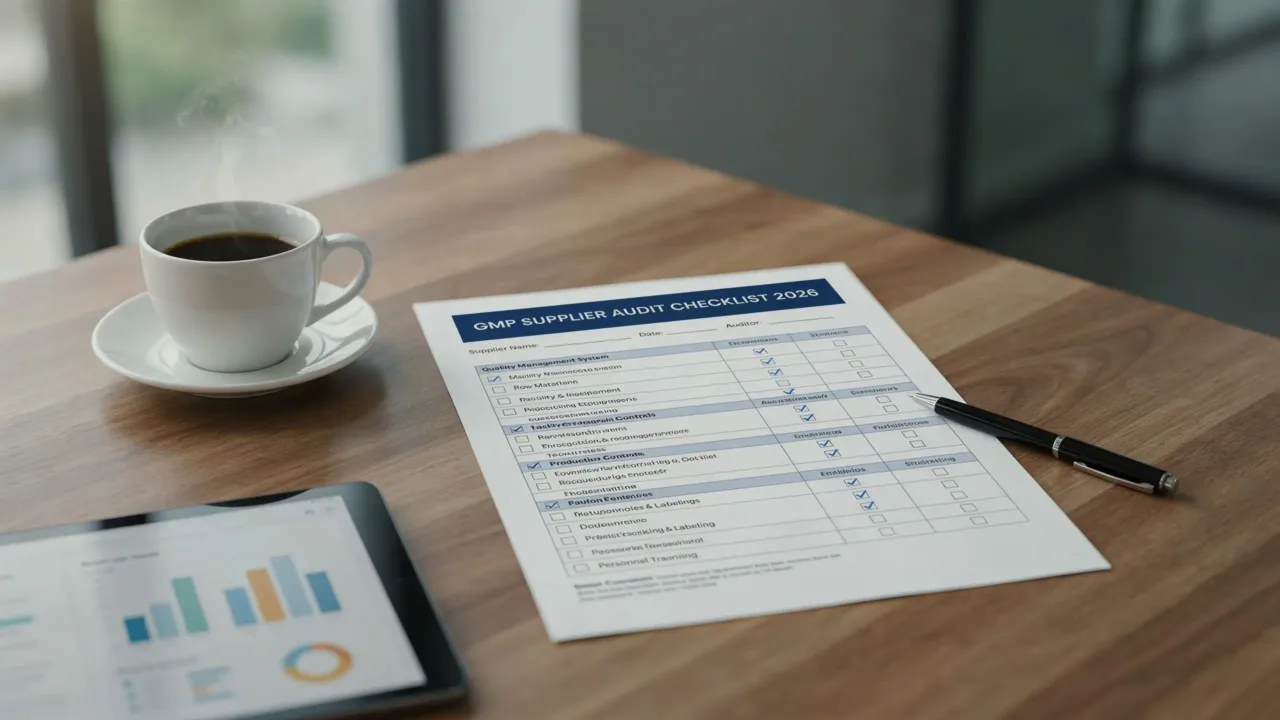
A well-planned GMP supplier audit checklist helps auditors evaluate a supplier’s quality management system, facilities, documentation, production processes, laboratory controls, and data integrity practices. In 2026, companies should also pay close attention to risk-based supplier qualification, corrective and preventive actions (CAPA), and ongoing supplier performance monitoring.
This guide explains the key areas auditors should review during a supplier audit and how GxP Cellators supports pharmaceutical companies with professional GMP supplier audits.
What Is a GMP Supplier Audit?
A GMP supplier audit is a systematic evaluation of a supplier’s quality systems, processes, facilities, and operations to determine whether they meet applicable GMP requirements and agreed quality standards.
Supplier audits help pharmaceutical companies identify compliance gaps before they affect manufacturing operations or product quality. They also provide evidence that suppliers are appropriately qualified and monitored throughout the business relationship.
Depending on the supplier’s role and risk level, an audit may cover raw material manufacturing, packaging operations, contract laboratories, storage facilities, distribution activities, or outsourced pharmaceutical services.
GMP Supplier Audit Checklist: 10 Key Areas to Review
Auditors should use a structured checklist to assess the supplier’s operations consistently. The following ten areas provide a practical framework for conducting GMP supplier audits.
1. Quality Management System
The supplier’s quality management system (QMS) establishes how quality-related activities are controlled, documented, reviewed, and improved.
Auditors should verify:
- Is there a documented and implemented quality management system?
- Is the quality manual current, approved, and periodically reviewed?
- Are quality objectives defined, monitored, and updated?
- Are responsibilities for quality activities clearly assigned?
- Are deviations, complaints, CAPA, and change control managed through approved procedures?
- Are internal audits conducted and documented?
A strong QMS demonstrates that the supplier can identify quality risks, investigate problems, and implement effective corrective actions. Auditors should review actual records rather than relying only on written procedures.
2. Organization and Personnel
Qualified personnel are essential for maintaining GMP compliance. Auditors should determine whether employees understand their responsibilities and have the necessary training to perform their assigned activities.
The audit should confirm:
- Are organizational responsibilities clearly defined?
- Is staffing adequate for the supplier’s operations?
- Are personnel trained before performing GMP-related tasks?
- Are training records complete and maintained?
- Is there a qualified and appropriately independent quality unit?
- Are training effectiveness and competency periodically evaluated?
Auditors should review training records, job descriptions, and competency assessments. They should also speak with relevant employees to confirm that actual working practices match approved procedures.
3. Facilities and Equipment
Facilities and equipment must be suitable for their intended use and maintained in a condition that prevents contamination, mix-ups, and quality defects.
Auditors should check:
- Are facilities clean, orderly, and suitable for the activities performed?
- Is equipment calibrated, qualified where required, and properly maintained?
- Are cleaning procedures documented and followed?
- Is there an effective pest control program?
- Are environmental conditions monitored when necessary?
- Are maintenance, calibration, and equipment qualification records available?
For suppliers handling sensitive materials, auditors should also examine contamination controls, material segregation, and environmental monitoring where applicable.
4. Documentation and Records
Accurate documentation supports traceability, accountability, and reliable decision-making. Incomplete or inconsistent records can create significant compliance risks during pharmaceutical supplier audits.
Auditors should verify:
- Are batch records complete, accurate, and approved?
- Are deviations documented and investigated?
- Is change control properly implemented?
- Are records retained according to applicable requirements?
- Are documents reviewed, approved, and controlled?
- Can materials and batches be traced through relevant records?
Auditors should compare procedures with actual records to confirm that employees follow approved processes. Missing entries, unexplained corrections, and inconsistent dates should be investigated.
5. Production and Process Control
Production and process controls help ensure that materials and products consistently meet established specifications.
The audit should establish:
- Are manufacturing processes validated where required?
- Are in-process controls established and documented?
- Are batch records reviewed and approved?
- Are yields calculated and investigated when outside established limits?
- Are critical process parameters monitored?
- Are deviations and unexpected process results investigated?
Auditors should evaluate whether process controls are appropriate for the supplier’s activities and whether changes are assessed before implementation. For contract manufacturers, additional attention should be given to process validation, technology transfers, and the handling of rejected or nonconforming materials.
6. Quality Control
Quality control activities confirm whether incoming materials, intermediate products, and finished materials meet approved specifications.
Auditors should review:
- Are specifications established and approved?
- Are analytical methods validated or verified as appropriate?
- Is stability testing conducted when required?
- Are laboratory procedures and controls in place?
- Are laboratory instruments calibrated and maintained?
- Are out-of-specification (OOS) results investigated and documented?
The auditor should also assess sample management, reference standards, laboratory documentation, and the approval of test results. Where testing is outsourced, the responsibilities of the supplier and the pharmaceutical company should be clearly documented.
7. Data Integrity
Data integrity is a critical component of GMP compliance. Records must remain accurate, complete, consistent, and reliable throughout their lifecycle.
Auditors should assess:
- Are audit trails enabled and reviewed where required?
- Are user access controls appropriate to individual responsibilities?
- Are electronic signatures controlled and compliant with applicable requirements?
- Is GMP-related data protected against unauthorized changes or deletion?
- Are backup and data recovery procedures established?
- Are original records and relevant metadata retained appropriately?
Auditors should consider the ALCOA+ principles, which emphasize that data should be attributable, legible, contemporaneous, original, and accurate, along with additional expectations for completeness, consistency, endurance, and availability.
Any unexplained data changes, shared user accounts, missing audit trails, or undocumented record corrections should be investigated according to their potential impact on product quality and compliance.
8. Supplier Management and Sub-Supplier Qualification
Suppliers often depend on other organizations for raw materials, testing, transportation, or specialized services. These relationships must be controlled according to their potential impact on pharmaceutical quality.
Auditors should verify:
- Are sub-suppliers qualified before use?
- Are appropriate quality agreements in place?
- Are critical sub-suppliers audited when justified by risk?
- Are supplier performance and quality issues monitored?
- Are changes in approved sub-suppliers assessed and documented?
- Are responsibilities for deviations, complaints, and recalls clearly defined?
Pharmaceutical companies should understand their supply chain beyond the immediate vendor when additional suppliers can affect material quality or regulatory compliance.
9. Packaging and Labeling
Packaging and labeling errors can lead to product mix-ups, incorrect identification, and traceability problems. Auditors should evaluate the supplier’s controls for packaging materials and labeling activities.
The audit should confirm:
- Are labels accurate and approved?
- Is there an effective label issuance and reconciliation process?
- Are packaging materials identified and controlled?
- Are packaging processes validated where required?
- Are obsolete or rejected labels appropriately controlled?
- Are packaging and labeling records maintained?
Auditors should pay particular attention to line clearance, material identification, and controls that prevent mix-ups between different products, batches, or customers.
10. Storage and Distribution
Storage and distribution conditions can directly affect material quality and suitability for pharmaceutical use. Suppliers must maintain appropriate controls throughout handling, storage, and transportation.
Auditors should review:
- Are products and materials stored under specified conditions?
- Is temperature monitoring performed when required?
- Are storage areas organized to prevent contamination and mix-ups?
- Is distribution documented and traceable?
- Are temperature excursions and transportation deviations investigated?
- Is there an established process for product recalls or material retrieval?
Where temperature-sensitive materials are involved, auditors should review monitoring records, excursion investigations, and the qualification of relevant storage or transportation systems, as applicable.
How to Prepare for a GMP Supplier Audit
Effective preparation helps auditors use their time efficiently and focus on significant compliance risks.
Before the audit, review the supplier’s qualification status, previous audit reports, quality agreements, material specifications, deviation history, CAPA records, and relevant performance indicators.
A risk-based audit plan should consider the criticality of the supplied material or service, the supplier’s compliance history, process complexity, and the potential impact of supplier failure on product quality.
During the audit, interview relevant personnel, observe operational activities, and verify procedures against actual records. Document findings with clear supporting evidence and classify them according to the organization’s approved risk and severity criteria.
After the audit, issue a structured report and agree on corrective actions, responsible owners, and completion timelines. Follow-up should confirm that actions address the underlying causes and are effective, rather than simply closing individual observations.
Common Findings During GMP Supplier Audits
Although findings vary by supplier type, auditors may identify recurring weaknesses such as:
- Incomplete or outdated quality procedures.
- Training records that do not demonstrate employee competency.
- Inadequate deviation investigations and ineffective CAPA.
- Missing or incomplete equipment calibration records.
- Weak change control and sub-supplier qualification processes.
- Insufficient audit trail review and electronic access controls.
- Incomplete batch documentation or traceability records.
- Inadequate storage condition monitoring.
- Delayed responses to previous audit observations.
These findings should be assessed according to their severity, scope, and potential impact. A documented CAPA plan should define root causes, corrective actions, preventive measures, responsibilities, and effectiveness checks.
How GxP Cellators Supports Supplier Audits
GxP Cellators provides GMP supplier audit support for pharmaceutical companies seeking to strengthen supplier qualification, quality oversight, and regulatory readiness.
Our Supplier Audit Services Include
- Full-scope supplier audits.
- Pre-qualification audits.
- Routine supplier audits.
- For-cause supplier audits.
- Data integrity audits.
- CAPA verification and follow-up.
These services help organizations evaluate supplier controls, identify potential compliance gaps, and document practical recommendations for improvement.
Why Choose GxP Cellators?
- Auditors with regulatory inspection and industry quality experience.
- Coverage aligned with relevant FDA, EMA, Health Canada, MHRA, and WHO requirements, as applicable.
- Risk-based audit approaches tailored to supplier activities and criticality.
- Practical reports with actionable observations and recommendations.
- Confidential handling of proprietary systems and business information.
GxP Cellators can help pharmaceutical organizations strengthen their supplier oversight processes and make informed decisions about supplier qualification and ongoing monitoring.
Frequently Asked Questions
Q1: What is a GMP supplier audit?
A GMP supplier audit is an examination of a supplier’s quality system, facilities, documentation, and operations to verify that applicable GMP requirements and agreed quality standards are being followed.
Q2: When should GMP supplier audits be conducted?
Supplier audits should be conducted before qualification when appropriate, periodically according to supplier risk, and when significant changes, recurring quality issues, or other concerns justify additional assessment.
Q3: What should auditors review during a GMP supplier audit?
Auditors should review the quality management system, personnel training, facilities and equipment, documentation, production controls, quality control, data integrity, sub-supplier management, packaging and labeling, and storage and distribution.
Q4: How often should a pharmaceutical supplier be audited?
Audit frequency should be determined using a documented risk-based approach. Critical suppliers may require more frequent oversight than suppliers providing lower-risk materials or services. Applicable regulatory requirements and internal procedures should also be considered.
Q5: What happens after a GMP supplier audit?
After the audit, the organization documents findings, evaluates their significance, and requests corrective and preventive actions where necessary. Follow-up activities verify that agreed actions have been implemented and are effective.
Q6: How does GxP Cellators support supplier audits?
GxP Cellators provides full-scope, pre-qualification, routine, and for-cause supplier audits, along with data integrity audits and CAPA verification and follow-up support.
Q7: How can I contact GxP Cellators for supplier audit support?
Visit the GxP Cellators Contact Page to discuss your pharmaceutical supplier audit requirements and explore suitable support.
Contact GxP Cellators
A structured GMP supplier audit checklist helps pharmaceutical companies evaluate supplier quality systems, improve traceability, identify compliance gaps, and strengthen supply chain oversight.
If your organization needs support with GMP supplier audits, supplier qualification, data integrity assessments, or CAPA follow-up, contact GxP Cellators to discuss your requirements.

