

Uncategorized Archives | Page 2 of 2 | GxP Cellators Consultants Ltd.

21/10/2026
GMP-supplier-audits-1280x720.webp

Introduction

Vendor qualification is an essential part of pharmaceutical quality management. Pharmaceutical companies depend on suppliers for raw materials, packaging components, laboratory services, equipment, and other critical products or services. If a supplier fails to meet quality requirements, the impact can extend to product quality, patient safety, regulatory compliance, and business operations.

GMP supplier audits help organizations evaluate whether their suppliers follow appropriate quality systems and meet applicable Good Manufacturing Practices (GMP) requirements. However, mistakes during vendor qualification can weaken supplier oversight and create compliance risks.

Common problems include inadequate due diligence, missing quality agreements, insufficient supplier audits, poor performance monitoring, and a lack of contingency planning. Understanding these mistakes helps companies build stronger supplier qualification processes and maintain better control over their supply chains.

GxP Cellators provides supplier auditing support to help organizations identify potential weaknesses, evaluate supplier quality systems, and improve their overall compliance approach.

Why Vendor Qualification Is Important in GMP

Vendor qualification is the process of evaluating and approving suppliers before relying on their products or services. It also involves ongoing monitoring to confirm that suppliers continue to meet established quality and regulatory expectations.

A documented supplier qualification process helps pharmaceutical organizations make informed decisions about supplier selection and risk management.

Key benefits include:

  • Product quality: Helps ensure that supplied materials and services meet defined specifications.
  • Regulatory compliance: Supports compliance with applicable GMP requirements and quality procedures.
  • Risk reduction: Identifies supplier-related risks before they affect manufacturing or product quality.
  • Supply chain reliability: Helps reduce disruptions caused by supplier failures or quality issues.
  • Audit readiness: Provides documented evidence of supplier evaluation, approval, and monitoring.

The level of qualification should reflect the risk associated with each supplier. A supplier providing a critical starting material may require more detailed evaluation than one providing a low-risk, non-critical service.

Mistake 1: Inadequate Due Diligence

One common mistake is approving a supplier without conducting sufficient due diligence. Companies may rely on supplier questionnaires, certificates, or commercial commitments without verifying whether the supplier can consistently meet quality requirements.

This approach can leave important risks undiscovered, including weak documentation practices, inadequate quality controls, poor change management, or limited technical capabilities.

How to Avoid This Mistake

Organizations should conduct a structured supplier assessment before granting approval.

Recommended actions include:

  • Review the supplier’s quality management system and relevant certifications.
  • Evaluate manufacturing capabilities, technical resources, and quality controls.
  • Check relevant inspection history and available compliance information.
  • Assess the supplier’s experience with similar materials or services.
  • Verify references and review relevant performance records.
  • Evaluate financial and operational stability where appropriate.

Supplier qualification should be based on documented evidence rather than assumptions. When risks are significant, an on-site or remote GMP supplier audit may be necessary to verify the supplier’s actual practices.

Mistake 2: Missing or Incomplete Quality Agreements

A quality agreement defines the quality-related responsibilities of a pharmaceutical company and its supplier. Without a suitable agreement, both parties may have different expectations regarding documentation, deviations, investigations, change notifications, and product release responsibilities.

Incomplete agreements can also create confusion when a supplier changes a manufacturing process, experiences a quality issue, or receives an unexpected regulatory finding.

How to Avoid This Mistake

Organizations should establish written quality agreements with suppliers when appropriate to the nature and risk of the relationship.

A quality agreement should clearly address:

  • Responsibilities of the supplier and purchasing organization.
  • Applicable quality standards and specifications.
  • Deviation reporting and investigation requirements.
  • Change control and prior notification expectations.
  • Documentation, record retention, and data integrity.
  • Handling of complaints, nonconformities, and product recalls.
  • Audit rights and access to relevant quality records.
  • CAPA responsibilities and follow-up requirements.

Quality agreements should be reviewed periodically and updated whenever responsibilities, processes, or regulatory expectations change.

A signed agreement alone does not guarantee compliance. Organizations must also verify that the agreed requirements are followed in practice.

Mistake 3: Insufficient GMP Supplier Audits

Some organizations qualify suppliers without conducting an appropriate audit or continue using suppliers without reassessing their quality systems. In other cases, audits are too limited to identify significant compliance weaknesses.

Supplier audits provide an opportunity to evaluate actual processes, review quality documentation, interview relevant personnel, and assess whether established procedures are followed.

How to Avoid This Mistake

Develop a risk-based supplier audit program that defines audit frequency, scope, responsibilities, and documentation requirements.

The program may include:

  • Pre-qualification audits: Assess suppliers before initial approval when warranted by risk.
  • Routine supplier audits: Review ongoing compliance and quality performance.
  • For-cause audits: Investigate significant quality concerns, repeated deviations, or other warning signs.
  • Follow-up audits: Verify whether previous findings and corrective actions have been adequately addressed.

Audit scope should reflect the supplier’s role in the pharmaceutical supply chain. For example, an audit of a critical raw material manufacturer may require detailed reviews of manufacturing controls, laboratory practices, traceability, data integrity, and change management.

GMP auditing services can help organizations assess supplier risks systematically and obtain documented findings that support practical improvements.

Mistake 4: Inadequate Supplier Performance Monitoring

Vendor qualification should not end when a supplier receives approval. A supplier that initially meets requirements may experience changes in staffing, production capacity, processes, ownership, or quality performance.

Without ongoing monitoring, organizations may fail to recognize emerging risks until they result in rejected materials, production delays, or regulatory concerns.

How to Avoid This Mistake

Establish clear supplier performance indicators and review them at defined intervals.

Useful indicators may include:

  • Frequency of incoming material rejections.
  • Number and severity of supplier-related deviations.
  • Timeliness and effectiveness of corrective actions.
  • Delivery performance and recurring supply interruptions.
  • Frequency of unapproved or poorly communicated changes.
  • Audit findings and repeat nonconformities.
  • Quality complaints and investigation outcomes.

Supplier performance reviews should lead to documented decisions. Depending on the results, an organization may continue approval, request corrective actions, increase audit frequency, restrict supplier use, or initiate requalification.

A structured monitoring process helps companies identify quality trends early and maintain effective supplier oversight.

Mistake 5: No Contingency Planning

Another important mistake is depending heavily on a single supplier without preparing for possible disruptions. Unexpected manufacturing problems, material shortages, regulatory actions, or transportation issues can interrupt supply and affect business continuity.

The absence of an alternative supplier may make it difficult to maintain production while protecting quality requirements.

How to Avoid This Mistake

Organizations should assess supply continuity risks as part of supplier management.

Recommended steps include:

  • Identify critical suppliers and materials.
  • Evaluate the impact of supplier failure on product quality and manufacturing.
  • Develop contingency plans for significant supply risks.
  • Assess alternative suppliers where technically and commercially appropriate.
  • Qualify alternative suppliers before relying on them.
  • Define escalation procedures for serious supplier issues.
  • Review and test contingency plans periodically.

Alternative suppliers must undergo appropriate qualification before their materials or services are used. A supply emergency should not become a reason to bypass established quality controls.

Additional Vendor Qualification Mistakes to Watch For

Beyond the five primary mistakes, organizations should consider other weaknesses that can reduce the effectiveness of supplier qualification.

Incomplete Documentation

Missing approval records, outdated questionnaires, unclear audit reports, and incomplete CAPA documentation can make it difficult to demonstrate effective supplier oversight.

Maintain accurate, controlled, and accessible records of supplier evaluations, approvals, audits, and performance reviews.

Poor Risk Classification

Applying the same qualification process to every supplier can waste resources while overlooking critical risks.

Use a documented risk assessment to determine the depth of evaluation, audit scope, and monitoring frequency.

Failure to Verify CAPA Effectiveness

Closing a supplier audit finding after receiving a response does not necessarily mean the problem has been resolved.

Review corrective and preventive actions (CAPA), assess supporting evidence, and verify effectiveness when appropriate. Recurring issues may indicate that the underlying cause has not been addressed.

Ignoring Supplier Changes

Changes in manufacturing locations, processes, raw materials, equipment, or subcontractors may affect product quality.

Require suppliers to communicate relevant changes and evaluate their potential impact before accepting them, in line with applicable agreements and procedures.

How GxP Cellators Helps Avoid Vendor Qualification Mistakes

GxP Cellators supports pharmaceutical and life sciences organizations through GMP auditing and compliance-focused services. Supplier audit support can help companies evaluate quality systems, identify gaps, and improve their supplier oversight processes.

Supplier Audit Services Include

  • Pre-qualification supplier audits.
  • Routine supplier audits.
  • For-cause supplier audits.
  • Quality agreement reviews.
  • Supplier performance monitoring support.
  • CAPA verification and follow-up.

Why Choose GxP Cellators?

  • Experienced audit professionals: Support informed evaluations of supplier quality systems and compliance practices.
  • Regulatory awareness: Audit considerations can reflect relevant FDA, EMA, Health Canada, MHRA, and WHO requirements, depending on the engagement.
  • Risk-based approach: Audit scope can be tailored to supplier criticality and identified risks.
  • Practical reporting: Findings can help organizations prioritize corrective actions and strengthen controls.
  • Confidentiality: Supplier information and proprietary business processes should be handled confidentially under agreed arrangements.

An effective supplier audit should do more than identify deficiencies. It should help organizations understand the significance of findings, determine appropriate corrective actions, and improve long-term supplier quality management.

To discuss your supplier audit requirements, visit the GxP Cellators Contact Page.

Best Practices for an Effective GMP Supplier Qualification Program

A reliable supplier qualification program combines risk assessment, documented procedures, effective audits, and ongoing monitoring.

Organizations should follow these best practices:

  1. Create clear qualification procedures: Define how suppliers are assessed, approved, monitored, and requalified.
  2. Use risk-based assessments: Prioritize suppliers according to their potential impact on product quality and patient safety.
  3. Maintain complete records: Document evaluations, approvals, audits, and follow-up activities.
  4. Schedule audits appropriately: Set audit frequency according to risk, supplier performance, and relevant requirements.
  5. Track corrective actions: Assign responsibilities and deadlines for addressing supplier-related findings.
  6. Review performance trends: Use quality and delivery data to identify recurring problems.
  7. Reassess suppliers when needed: Review supplier status following significant changes, repeated failures, or serious compliance concerns.

These practices help organizations move from reactive supplier management toward a proactive and risk-based quality approach.

Frequently Asked Questions

1. What are the most common vendor qualification mistakes?

Common mistakes include inadequate due diligence, missing quality agreements, insufficient GMP supplier audits, poor performance monitoring, incomplete documentation, and a lack of contingency planning.

2. Why is due diligence important in vendor qualification?

Due diligence helps verify whether a supplier has the necessary quality systems, technical capabilities, documentation practices, and operational resources to meet established requirements.

3. What should a GMP supplier audit include?

A GMP supplier audit may review the quality management system, manufacturing controls, documentation, data integrity, deviations, CAPA, change control, traceability, and relevant regulatory compliance requirements. The exact scope depends on supplier risk and the products or services provided.

4. How often should GMP supplier audits be conducted?

Audit frequency should be based on supplier criticality, quality performance, previous findings, applicable requirements, and the organization’s documented risk assessment. Higher-risk suppliers may require more frequent or detailed audits.

5. What is the difference between vendor qualification and a supplier audit?

Vendor qualification is the overall process of evaluating and approving a supplier. A supplier audit is one method used within that process to assess whether the supplier’s quality systems and practices meet relevant requirements.

6. How does CAPA support supplier qualification?

Corrective and preventive actions help address identified supplier deficiencies. Organizations should review CAPA evidence and verify effectiveness where appropriate before considering significant findings resolved.

7. How does GxP Cellators help avoid vendor qualification mistakes?

GxP Cellators provides supplier auditing support, including pre-qualification audits, routine audits, for-cause audits, quality agreement reviews, and CAPA follow-up, helping organizations identify risks and strengthen supplier oversight.

8. How can I contact GxP Cellators for supplier audit support?

Visit the GxP Cellators Contact Page to discuss your supplier audit requirements and explore suitable support options.

Conclusion

Vendor qualification mistakes can expose pharmaceutical organizations to quality problems, supply chain disruptions, and regulatory compliance risks. Inadequate due diligence, incomplete quality agreements, insufficient supplier auditing, weak performance monitoring, and missing contingency plans are important areas to address.

A risk-based approach helps organizations qualify suppliers appropriately, maintain reliable documentation, and respond to quality issues before they become more serious. Regular GMP supplier audits, effective CAPA follow-up, and continuous performance monitoring are key parts of this process.

GxP Cellators supports organizations seeking to strengthen supplier quality management through practical auditing and compliance services. For assistance with your supplier audit requirements, contact GxP Cellators.


21/10/2026
Risk-Based-GMP-Supplier-Audit-1280x720.webp

Introduction

A risk-based GMP supplier audit helps pharmaceutical and life sciences companies evaluate suppliers according to their potential impact on product quality, patient safety, and regulatory compliance. Instead of auditing every supplier at the same frequency, this approach focuses resources on suppliers and activities that present the highest risks.

Suppliers play an important role in pharmaceutical manufacturing. They may provide raw materials, active pharmaceutical ingredients (APIs), packaging materials, laboratory services, equipment, or outsourced manufacturing operations. If a supplier fails to meet Good Manufacturing Practice (GMP) requirements, the resulting problems can affect product quality and the safety of patients.

A structured supplier audit process helps organizations identify weaknesses, review quality controls, and address compliance gaps before they become serious issues. In this guide, we explain how to conduct a risk-based GMP supplier audit, prioritize suppliers, document findings, and follow up on corrective actions.

GxP Cellators provides risk-based GMP supplier audits and related auditing services to help organizations evaluate supplier compliance and strengthen their quality systems.

What Is a Risk-Based GMP Supplier Audit?

A risk-based GMP supplier audit is a systematic assessment of a supplier that considers the level of risk associated with its products, services, processes, and quality management systems.

The main objective is to identify suppliers that could have the greatest impact on product quality, patient safety, data integrity, and regulatory compliance.

For example, a supplier providing a critical pharmaceutical ingredient may require more detailed oversight than a supplier providing a low-risk general office item. Similarly, a contract manufacturer responsible for an important production step may need a more comprehensive audit than a supplier with limited involvement in regulated operations.

Risk-based auditing allows organizations to make informed decisions about audit scope, frequency, and resource allocation. However, the approach does not remove the need for appropriate supplier qualification, documented oversight, or compliance with applicable regulatory requirements.

Why Are Risk-Based GMP Supplier Audits Important?

Supplier audits help organizations confirm that external providers can consistently meet applicable quality and regulatory expectations. A risk-based approach makes this oversight more focused and effective.

1. Protect Product Quality and Patient Safety

Poor-quality raw materials, unsuitable packaging, or unreliable outsourced services can affect the quality of pharmaceutical products. Auditing critical suppliers helps identify these risks before they affect manufacturing or reach patients.

2. Support Regulatory Compliance

Pharmaceutical companies must maintain appropriate control over suppliers and outsourced activities. Supplier audits provide documented evidence that organizations evaluate supplier capabilities, review quality systems, and address identified deficiencies.

3. Identify Quality System Weaknesses

An audit can reveal problems involving documentation, deviation management, change control, training, data integrity, and corrective and preventive actions (CAPA). Identifying these weaknesses early helps suppliers improve their processes.

4. Improve Supply Chain Reliability

Supplier failures can lead to production delays, material shortages, and product quality concerns. Risk-based supplier assessments help organizations understand vulnerabilities and plan appropriate controls.

5. Use Audit Resources Effectively

Not every supplier requires the same level of oversight. A risk-based approach helps organizations prioritize critical suppliers and allocate auditing resources according to documented risk.

Step 1: Assess Supplier Risk

The first step in conducting a risk-based GMP supplier audit is to evaluate the risks associated with each supplier. This assessment should be documented and based on objective information rather than assumptions.

Consider the following factors:

  • Product quality risk: Determine whether the supplier provides materials or services that could directly affect product quality.
  • Patient safety risk: Evaluate the possible consequences of supplier failures for patient safety.
  • Supply chain risk: Review the supplier’s reliability, production capacity, business continuity arrangements, and dependence on other providers.
  • Regulatory risk: Consider the applicable GMP requirements, the supplier’s compliance history, and previous audit findings.
  • Process complexity: Assess the complexity of manufacturing, testing, storage, or other activities performed by the supplier.
  • Data integrity risk: Review whether the supplier generates, manages, or maintains records that support product quality decisions.
  • Change history: Consider significant changes in ownership, facilities, processes, materials, or quality management systems.

Organizations can use a documented risk assessment or scoring matrix to compare suppliers consistently. The assessment method should be suitable for the business and supported by clear criteria.

Step 2: Prioritize Suppliers According to Risk

After completing the initial risk assessment, classify suppliers into appropriate risk categories. This helps determine the level of oversight and audit frequency required.

High-Risk Suppliers

High-risk suppliers may provide critical raw materials, active pharmaceutical ingredients, or services that directly affect product quality and patient safety. They may require more frequent or comprehensive audits, depending on their risk profile and applicable requirements.

Medium-Risk Suppliers

Medium-risk suppliers may provide materials or services that affect quality but have established controls or a less direct impact. Periodic audits and documented performance reviews may be appropriate.

Low-Risk Suppliers

Low-risk suppliers generally have a limited impact on product quality or regulated activities. They may be managed through proportionate qualification, performance monitoring, questionnaires, or less frequent audits where justified.

Important: There is no single audit frequency that is suitable for every supplier. Annual audits may be appropriate for some high-risk suppliers, but the actual schedule should reflect documented risk, regulatory expectations, supplier performance, and significant changes or incidents.

Step 3: Define the Audit Scope and Objectives

Once suppliers have been prioritized, define the scope of each audit. The audit plan should explain what will be assessed, why it matters, and which requirements will be used as evaluation criteria.

A GMP supplier audit may cover:

  • Quality management systems and responsibilities
  • Material purchasing, receipt, storage, and traceability
  • Manufacturing processes and process controls
  • Laboratory testing and quality control
  • Equipment maintenance and calibration
  • Personnel training and qualification
  • Documentation and record management
  • Deviation investigations and CAPA
  • Change control and change notification
  • Data integrity and electronic records, where applicable
  • Complaints, recalls, and product defect management
  • Outsourced activities and subcontractor controls

The audit scope should be tailored to the supplier’s activities and the risks identified during qualification. For example, a supplier of critical pharmaceutical ingredients may require a detailed review of manufacturing controls, laboratory testing, material traceability, and batch documentation.

Clear audit objectives also help auditors prepare relevant questions, identify necessary records, and use available time effectively.

Step 4: Prepare an Audit Plan and Checklist

Good preparation helps make a supplier audit more organized and productive. Before the audit, review available supplier information and identify areas that require additional attention.

The preparation process should include:

  1. Reviewing the supplier’s qualification records and previous audit reports.
  2. Examining complaints, deviations, CAPA records, and performance trends.
  3. Reviewing relevant quality agreements and technical agreements.
  4. Confirming applicable GMP and internal quality requirements.
  5. Selecting qualified auditors with appropriate technical knowledge.
  6. Preparing a risk-based audit checklist.
  7. Establishing the audit schedule, scope, and reporting arrangements.
  8. Requesting relevant documents from the supplier before the audit.

The checklist should guide the audit rather than limit it. Auditors should be prepared to investigate unexpected issues when evidence suggests a potential compliance risk.

For remote audits, organizations should also assess whether the selected approach provides adequate access to records, personnel, systems, and evidence. An on-site audit may still be necessary when physical conditions, manufacturing activities, or other critical risks cannot be adequately evaluated remotely.

Step 5: Conduct the GMP Supplier Audit

During the audit, the team should gather objective evidence to determine whether the supplier’s activities meet the defined requirements. The audit should be systematic, professional, and focused on risk.

Review Documentation and Records

Examine relevant SOPs, training records, material specifications, batch records, testing results, deviation reports, CAPA documentation, and change control records.

Check whether records are complete, accurate, traceable, and consistent with the supplier’s approved procedures.

Interview Relevant Personnel

Speak with employees who perform or supervise important activities. Interviews can help auditors understand how procedures are implemented in daily operations and whether personnel understand their responsibilities.

Inspect Facilities and Processes

Where an on-site audit is required, observe relevant production areas, laboratories, warehouses, material handling processes, and equipment. Evaluate whether actual practices match documented procedures.

Evaluate Quality Controls

Review how the supplier manages deviations, investigations, out-of-specification results, complaints, changes, and recurring problems. Check whether investigations identify underlying causes and whether corrective actions address the identified risks.

Verify Data Integrity Controls

Assess how relevant records are created, reviewed, approved, stored, and protected. Where applicable, review access controls, audit trails, electronic record management, and controls over data changes.

Throughout the audit, findings should be supported by specific evidence, such as records, observations, or documented statements. Auditors should avoid conclusions that cannot be justified by the evidence collected.

Step 6: Document and Classify Audit Findings

After the audit, document the findings clearly and classify them according to their potential impact and the organization’s approved procedures.

Common supplier audit findings may include:

  • Incomplete or inconsistent documentation
  • Weak deviation investigations
  • Ineffective CAPA implementation
  • Inadequate change control
  • Gaps in employee training
  • Insufficient material traceability
  • Weak data integrity controls
  • Inadequate equipment maintenance or calibration
  • Missing supplier change notifications
  • Poor oversight of subcontracted activities

Findings should explain the requirement, the evidence observed, and the potential risk. Classification systems vary between organizations, so findings should be categorized using the applicable procedures and regulatory expectations.

A formal audit report should summarize the audit scope, objectives, activities, findings, and conclusions. A closeout meeting provides an opportunity to discuss the findings, clarify factual issues, and agree on the next steps.

Step 7: Develop and Verify Corrective Actions

An audit provides limited value if identified problems are not addressed effectively. Following the audit, the supplier should develop a corrective and preventive action plan where required.

An effective CAPA plan should identify:

  • The specific issue and its potential impact
  • The root cause of the problem
  • Immediate corrections or containment measures
  • Corrective actions to eliminate the identified cause
  • Preventive measures to reduce recurrence
  • Responsible personnel and target completion dates
  • Evidence required to demonstrate implementation
  • Methods for checking effectiveness

The auditor or responsible quality team should review the proposed actions to determine whether they adequately address the findings. High-risk issues may require additional controls, escalation, or closer monitoring.

CAPA closure should not be based only on a supplier’s statement that an action is complete. Organizations should review supporting evidence and, where appropriate, verify implementation directly. Effectiveness checks help confirm that the action has reduced the risk and that the problem has not recurred.

Step 8: Monitor Supplier Performance and Reassess Risk

Supplier oversight should continue after the audit. Performance monitoring helps organizations identify changes that could affect the original risk classification.

Relevant indicators may include:

  • Material rejection rates
  • Product quality complaints
  • Delivery and service performance
  • Recurring deviations or CAPA failures
  • Significant process or facility changes
  • Regulatory inspection outcomes, where available
  • Audit findings and overdue corrective actions
  • Problems involving subcontractors or data integrity

A supplier’s risk classification should be updated when new evidence becomes available. Significant quality incidents, repeated failures, ownership changes, or major process changes may justify an earlier audit or additional oversight.

This ongoing process helps ensure that supplier management remains proportionate to actual risk rather than relying only on a fixed audit schedule.

How GxP Cellators Supports Risk-Based GMP Supplier Audits

GxP Cellators provides risk-based GMP supplier audits to help pharmaceutical and life sciences organizations evaluate supplier quality systems, identify compliance gaps, and strengthen supplier oversight.

Our approach considers supplier activities, product quality risks, applicable regulatory expectations, and the organization’s audit objectives.

Our Supplier Audit Services Include

  • Supplier risk assessments
  • Risk-based audit planning
  • Full-scope supplier audits
  • Pre-qualification audits
  • Routine supplier audits
  • For-cause supplier audits
  • CAPA verification and follow-up

These services can help organizations evaluate supplier controls, prioritize important findings, and develop practical improvement plans.

Why Choose GxP Cellators?

  • Experienced auditors: Support from professionals with regulatory inspection and industry quality experience.
  • Regulatory awareness: Consideration of applicable FDA, EMA, Health Canada, MHRA, and WHO requirements.
  • Risk-based approach: Audit scope and activities tailored to the supplier and identified risks.
  • Actionable reporting: Clear findings that help organizations understand compliance weaknesses and required improvements.
  • Confidentiality: Appropriate protection of confidential business information and proprietary systems.

The specific scope and deliverables can be aligned with your supplier profile, regulatory obligations, and quality management objectives.

Conclusion

Conducting a risk-based GMP supplier audit requires a structured process that begins with supplier risk assessment and continues through audit planning, evidence collection, reporting, CAPA verification, and ongoing performance monitoring.

By prioritizing suppliers according to their potential impact on product quality, patient safety, and regulatory compliance, organizations can focus their resources on the areas that matter most. Regular risk reviews and effective corrective actions also help maintain supplier reliability over time.

GxP Cellators supports organizations through risk-based GMP supplier audits, supplier assessments, audit planning, and CAPA follow-up. To discuss your supplier audit requirements, visit our Contact Page.

Frequently Asked Questions

1. What is a risk-based GMP supplier audit?

A risk-based GMP supplier audit evaluates a supplier according to its potential impact on product quality, patient safety, and regulatory compliance. It helps organizations prioritize audit activities based on documented risk.

2. How is supplier risk assessed?

Supplier risk is assessed by reviewing factors such as material criticality, patient safety impact, manufacturing processes, regulatory history, data integrity, supplier performance, and supply chain reliability. The results help determine appropriate oversight and audit frequency.

3. How often should high-risk suppliers be audited?

High-risk suppliers may require more frequent audits, sometimes annually, depending on the supplier’s risk profile, performance, applicable regulations, and previous findings. Audit frequency should be justified and documented rather than based on a universal schedule.

4. What should a GMP supplier audit checklist include?

A checklist may cover quality management systems, manufacturing controls, documentation, training, material traceability, laboratory testing, equipment maintenance, deviations, CAPA, change control, and data integrity. The final scope should match the supplier’s activities and identified risks.

5. What happens when a supplier fails a GMP audit?

The organization should document and classify the findings, assess their potential impact, and request appropriate corrective actions. Depending on the severity, further investigation, enhanced monitoring, additional audits, or restrictions on supplier use may be necessary.

6. How does CAPA verification support supplier compliance?

CAPA verification confirms whether corrective actions have been implemented and supported by evidence. Effectiveness checks help determine whether the root cause has been addressed and whether the issue is unlikely to recur.

7. How does GxP Cellators support risk-based supplier audits?

GxP Cellators provides supplier risk assessments, risk-based audit planning, full-scope supplier audits, pre-qualification audits, routine audits, for-cause audits, and CAPA verification and follow-up.

8. How can I contact GxP Cellators for supplier audit support?

Visit the GxP Cellators Contact Page to discuss your supplier audit requirements, audit scope, and compliance objectives.


21/10/2026
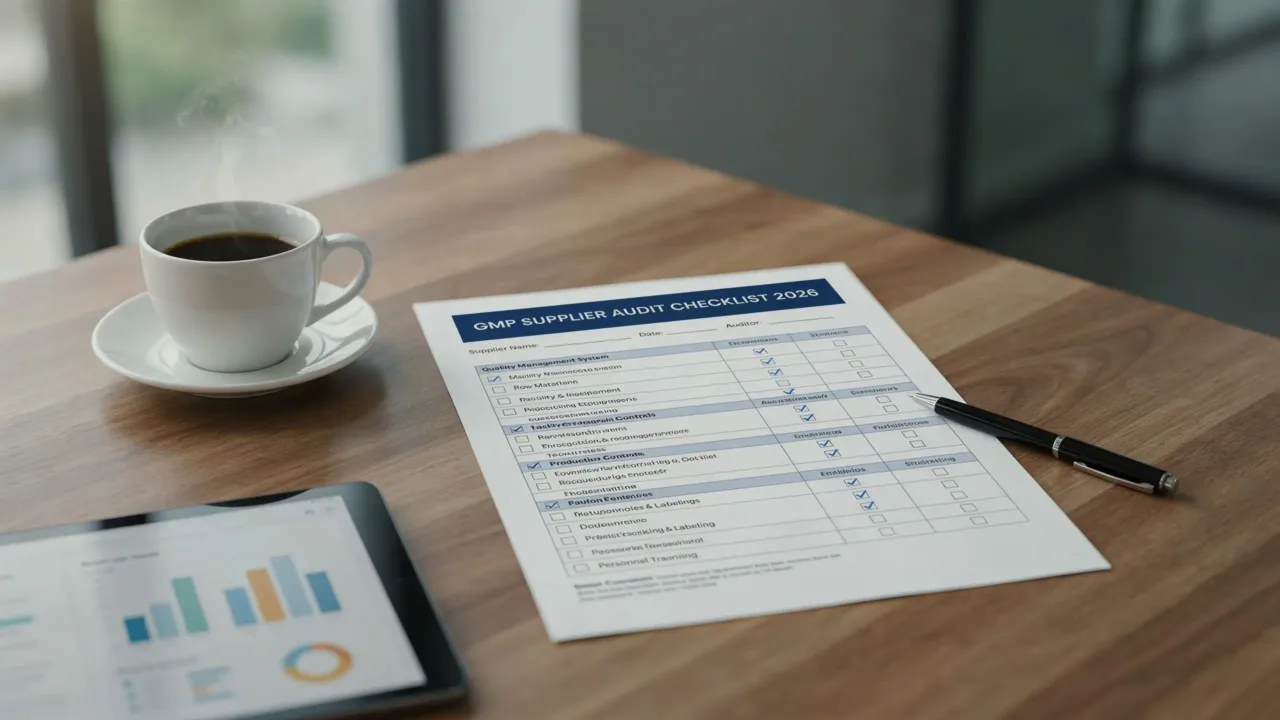
GMP-supplier-audit-checklist-2026-1280x720.webp

Introduction

GMP supplier audits are essential for ensuring that raw materials, components, packaging materials, and outsourced services meet established quality and regulatory requirements. Pharmaceutical companies depend on qualified suppliers to maintain product quality, patient safety, and compliance with Good Manufacturing Practices (GMP).

A well-planned GMP supplier audit checklist helps auditors evaluate a supplier’s quality management system, facilities, documentation, production processes, laboratory controls, and data integrity practices. In 2026, companies should also pay close attention to risk-based supplier qualification, corrective and preventive actions (CAPA), and ongoing supplier performance monitoring.

This guide explains the key areas auditors should review during a supplier audit and how GxP Cellators supports pharmaceutical companies with professional GMP supplier audits.

What Is a GMP Supplier Audit?

A GMP supplier audit is a systematic evaluation of a supplier’s quality systems, processes, facilities, and operations to determine whether they meet applicable GMP requirements and agreed quality standards.

Supplier audits help pharmaceutical companies identify compliance gaps before they affect manufacturing operations or product quality. They also provide evidence that suppliers are appropriately qualified and monitored throughout the business relationship.

Depending on the supplier’s role and risk level, an audit may cover raw material manufacturing, packaging operations, contract laboratories, storage facilities, distribution activities, or outsourced pharmaceutical services.

GMP Supplier Audit Checklist: 10 Key Areas to Review

Auditors should use a structured checklist to assess the supplier’s operations consistently. The following ten areas provide a practical framework for conducting GMP supplier audits.

1. Quality Management System

The supplier’s quality management system (QMS) establishes how quality-related activities are controlled, documented, reviewed, and improved.

Auditors should verify:

  • Is there a documented and implemented quality management system?
  • Is the quality manual current, approved, and periodically reviewed?
  • Are quality objectives defined, monitored, and updated?
  • Are responsibilities for quality activities clearly assigned?
  • Are deviations, complaints, CAPA, and change control managed through approved procedures?
  • Are internal audits conducted and documented?

A strong QMS demonstrates that the supplier can identify quality risks, investigate problems, and implement effective corrective actions. Auditors should review actual records rather than relying only on written procedures.

2. Organization and Personnel

Qualified personnel are essential for maintaining GMP compliance. Auditors should determine whether employees understand their responsibilities and have the necessary training to perform their assigned activities.

The audit should confirm:

  • Are organizational responsibilities clearly defined?
  • Is staffing adequate for the supplier’s operations?
  • Are personnel trained before performing GMP-related tasks?
  • Are training records complete and maintained?
  • Is there a qualified and appropriately independent quality unit?
  • Are training effectiveness and competency periodically evaluated?

Auditors should review training records, job descriptions, and competency assessments. They should also speak with relevant employees to confirm that actual working practices match approved procedures.

3. Facilities and Equipment

Facilities and equipment must be suitable for their intended use and maintained in a condition that prevents contamination, mix-ups, and quality defects.

Auditors should check:

  • Are facilities clean, orderly, and suitable for the activities performed?
  • Is equipment calibrated, qualified where required, and properly maintained?
  • Are cleaning procedures documented and followed?
  • Is there an effective pest control program?
  • Are environmental conditions monitored when necessary?
  • Are maintenance, calibration, and equipment qualification records available?

For suppliers handling sensitive materials, auditors should also examine contamination controls, material segregation, and environmental monitoring where applicable.

4. Documentation and Records

Accurate documentation supports traceability, accountability, and reliable decision-making. Incomplete or inconsistent records can create significant compliance risks during pharmaceutical supplier audits.

Auditors should verify:

  • Are batch records complete, accurate, and approved?
  • Are deviations documented and investigated?
  • Is change control properly implemented?
  • Are records retained according to applicable requirements?
  • Are documents reviewed, approved, and controlled?
  • Can materials and batches be traced through relevant records?

Auditors should compare procedures with actual records to confirm that employees follow approved processes. Missing entries, unexplained corrections, and inconsistent dates should be investigated.

5. Production and Process Control

Production and process controls help ensure that materials and products consistently meet established specifications.

The audit should establish:

  • Are manufacturing processes validated where required?
  • Are in-process controls established and documented?
  • Are batch records reviewed and approved?
  • Are yields calculated and investigated when outside established limits?
  • Are critical process parameters monitored?
  • Are deviations and unexpected process results investigated?

Auditors should evaluate whether process controls are appropriate for the supplier’s activities and whether changes are assessed before implementation. For contract manufacturers, additional attention should be given to process validation, technology transfers, and the handling of rejected or nonconforming materials.

6. Quality Control

Quality control activities confirm whether incoming materials, intermediate products, and finished materials meet approved specifications.

Auditors should review:

  • Are specifications established and approved?
  • Are analytical methods validated or verified as appropriate?
  • Is stability testing conducted when required?
  • Are laboratory procedures and controls in place?
  • Are laboratory instruments calibrated and maintained?
  • Are out-of-specification (OOS) results investigated and documented?

The auditor should also assess sample management, reference standards, laboratory documentation, and the approval of test results. Where testing is outsourced, the responsibilities of the supplier and the pharmaceutical company should be clearly documented.

7. Data Integrity

Data integrity is a critical component of GMP compliance. Records must remain accurate, complete, consistent, and reliable throughout their lifecycle.

Auditors should assess:

  • Are audit trails enabled and reviewed where required?
  • Are user access controls appropriate to individual responsibilities?
  • Are electronic signatures controlled and compliant with applicable requirements?
  • Is GMP-related data protected against unauthorized changes or deletion?
  • Are backup and data recovery procedures established?
  • Are original records and relevant metadata retained appropriately?

Auditors should consider the ALCOA+ principles, which emphasize that data should be attributable, legible, contemporaneous, original, and accurate, along with additional expectations for completeness, consistency, endurance, and availability.

Any unexplained data changes, shared user accounts, missing audit trails, or undocumented record corrections should be investigated according to their potential impact on product quality and compliance.

8. Supplier Management and Sub-Supplier Qualification

Suppliers often depend on other organizations for raw materials, testing, transportation, or specialized services. These relationships must be controlled according to their potential impact on pharmaceutical quality.

Auditors should verify:

  • Are sub-suppliers qualified before use?
  • Are appropriate quality agreements in place?
  • Are critical sub-suppliers audited when justified by risk?
  • Are supplier performance and quality issues monitored?
  • Are changes in approved sub-suppliers assessed and documented?
  • Are responsibilities for deviations, complaints, and recalls clearly defined?

Pharmaceutical companies should understand their supply chain beyond the immediate vendor when additional suppliers can affect material quality or regulatory compliance.

9. Packaging and Labeling

Packaging and labeling errors can lead to product mix-ups, incorrect identification, and traceability problems. Auditors should evaluate the supplier’s controls for packaging materials and labeling activities.

The audit should confirm:

  • Are labels accurate and approved?
  • Is there an effective label issuance and reconciliation process?
  • Are packaging materials identified and controlled?
  • Are packaging processes validated where required?
  • Are obsolete or rejected labels appropriately controlled?
  • Are packaging and labeling records maintained?

Auditors should pay particular attention to line clearance, material identification, and controls that prevent mix-ups between different products, batches, or customers.

10. Storage and Distribution

Storage and distribution conditions can directly affect material quality and suitability for pharmaceutical use. Suppliers must maintain appropriate controls throughout handling, storage, and transportation.

Auditors should review:

  • Are products and materials stored under specified conditions?
  • Is temperature monitoring performed when required?
  • Are storage areas organized to prevent contamination and mix-ups?
  • Is distribution documented and traceable?
  • Are temperature excursions and transportation deviations investigated?
  • Is there an established process for product recalls or material retrieval?

Where temperature-sensitive materials are involved, auditors should review monitoring records, excursion investigations, and the qualification of relevant storage or transportation systems, as applicable.

How to Prepare for a GMP Supplier Audit

Effective preparation helps auditors use their time efficiently and focus on significant compliance risks.

Before the audit, review the supplier’s qualification status, previous audit reports, quality agreements, material specifications, deviation history, CAPA records, and relevant performance indicators.

A risk-based audit plan should consider the criticality of the supplied material or service, the supplier’s compliance history, process complexity, and the potential impact of supplier failure on product quality.

During the audit, interview relevant personnel, observe operational activities, and verify procedures against actual records. Document findings with clear supporting evidence and classify them according to the organization’s approved risk and severity criteria.

After the audit, issue a structured report and agree on corrective actions, responsible owners, and completion timelines. Follow-up should confirm that actions address the underlying causes and are effective, rather than simply closing individual observations.

Common Findings During GMP Supplier Audits

Although findings vary by supplier type, auditors may identify recurring weaknesses such as:

  • Incomplete or outdated quality procedures.
  • Training records that do not demonstrate employee competency.
  • Inadequate deviation investigations and ineffective CAPA.
  • Missing or incomplete equipment calibration records.
  • Weak change control and sub-supplier qualification processes.
  • Insufficient audit trail review and electronic access controls.
  • Incomplete batch documentation or traceability records.
  • Inadequate storage condition monitoring.
  • Delayed responses to previous audit observations.

These findings should be assessed according to their severity, scope, and potential impact. A documented CAPA plan should define root causes, corrective actions, preventive measures, responsibilities, and effectiveness checks.

How GxP Cellators Supports Supplier Audits

GxP Cellators provides GMP supplier audit support for pharmaceutical companies seeking to strengthen supplier qualification, quality oversight, and regulatory readiness.

Our Supplier Audit Services Include

  • Full-scope supplier audits.
  • Pre-qualification audits.
  • Routine supplier audits.
  • For-cause supplier audits.
  • Data integrity audits.
  • CAPA verification and follow-up.

These services help organizations evaluate supplier controls, identify potential compliance gaps, and document practical recommendations for improvement.

Why Choose GxP Cellators?

  • Auditors with regulatory inspection and industry quality experience.
  • Coverage aligned with relevant FDA, EMA, Health Canada, MHRA, and WHO requirements, as applicable.
  • Risk-based audit approaches tailored to supplier activities and criticality.
  • Practical reports with actionable observations and recommendations.
  • Confidential handling of proprietary systems and business information.

GxP Cellators can help pharmaceutical organizations strengthen their supplier oversight processes and make informed decisions about supplier qualification and ongoing monitoring.

Frequently Asked Questions

Q1: What is a GMP supplier audit?

A GMP supplier audit is an examination of a supplier’s quality system, facilities, documentation, and operations to verify that applicable GMP requirements and agreed quality standards are being followed.

Q2: When should GMP supplier audits be conducted?

Supplier audits should be conducted before qualification when appropriate, periodically according to supplier risk, and when significant changes, recurring quality issues, or other concerns justify additional assessment.

Q3: What should auditors review during a GMP supplier audit?

Auditors should review the quality management system, personnel training, facilities and equipment, documentation, production controls, quality control, data integrity, sub-supplier management, packaging and labeling, and storage and distribution.

Q4: How often should a pharmaceutical supplier be audited?

Audit frequency should be determined using a documented risk-based approach. Critical suppliers may require more frequent oversight than suppliers providing lower-risk materials or services. Applicable regulatory requirements and internal procedures should also be considered.

Q5: What happens after a GMP supplier audit?

After the audit, the organization documents findings, evaluates their significance, and requests corrective and preventive actions where necessary. Follow-up activities verify that agreed actions have been implemented and are effective.

Q6: How does GxP Cellators support supplier audits?

GxP Cellators provides full-scope, pre-qualification, routine, and for-cause supplier audits, along with data integrity audits and CAPA verification and follow-up support.

Q7: How can I contact GxP Cellators for supplier audit support?

Visit the GxP Cellators Contact Page to discuss your pharmaceutical supplier audit requirements and explore suitable support.

Contact GxP Cellators

A structured GMP supplier audit checklist helps pharmaceutical companies evaluate supplier quality systems, improve traceability, identify compliance gaps, and strengthen supply chain oversight.

If your organization needs support with GMP supplier audits, supplier qualification, data integrity assessments, or CAPA follow-up, contact GxP Cellators to discuss your requirements.

Contact: https://www.gxpcellators.com/contact/


21/10/2026
GMP-Quality-System-Audits-1-1280x720.webp

Introduction

Risk-based GMP quality system audits are an important part of maintaining compliance in pharmaceutical manufacturing. Instead of auditing every quality system element with the same frequency and depth, this approach prioritizes areas that may have the greatest impact on product quality, patient safety, data integrity, and regulatory compliance.

Pharmaceutical companies manage multiple quality processes, including documentation control, deviation management, change control, corrective and preventive actions (CAPA), supplier management, and validation. Reviewing every process equally can consume significant time and resources. Risk-based auditing helps organizations focus their efforts where they are most needed.

A well-planned risk-based GMP quality system audit can identify weaknesses before they lead to recurring deviations, inspection observations, or product quality concerns. In this guide, we explain how pharmaceutical companies can identify risks, prioritize audits, define audit scope, document findings, and monitor corrective actions. GxP Cellators also provides GMP auditing services to support organizations in strengthening their quality systems.

What Are Risk-Based GMP Quality System Audits?

Risk-based GMP quality system audits are structured assessments that use risk to determine which quality system elements require the most attention. The audit approach considers the potential severity of a failure, the likelihood of occurrence, and the ability of existing controls to detect or prevent a problem.

For example, repeated data integrity issues or ineffective CAPA processes may require more immediate attention than a well-controlled administrative process with a strong compliance history. The audit plan should reflect these differences rather than applying an identical schedule to every department.

The objective is not to reduce audit coverage without justification. Instead, it is to use available resources effectively while maintaining appropriate oversight of all relevant quality system elements.

Risk-based audits can also support continuous improvement by helping management understand recurring issues, evaluate the effectiveness of controls, and direct resources toward areas that need improvement.

Why Are Risk-Based GMP Quality System Audits Important?

Pharmaceutical companies operate under strict quality and regulatory expectations. A weakness in one quality process can affect several other processes, making a systematic audit approach essential.

1. Prioritizing Patient Safety and Product Quality

Product quality risks should be a central consideration when developing an audit plan. Weak deviation investigations, inadequate change control, or ineffective validation practices can potentially affect the quality, safety, or consistency of pharmaceutical products.

Risk-based GMP quality system audits help identify these weaknesses and prioritize appropriate corrective actions.

2. Strengthening Data Integrity

Accurate, complete, consistent, and reliable records are essential for demonstrating GMP compliance. Auditors may review electronic records, access controls, audit trails, laboratory documentation, and procedures for managing data.

A risk-based approach gives greater attention to systems where unreliable or incomplete data could affect product release decisions or regulatory submissions.

3. Improving Inspection Readiness

Regulatory inspections can examine whether pharmaceutical companies maintain effective quality systems and reliable supporting documentation. Internal risk-based audits help organizations identify potential gaps before an inspection.

However, internal audits do not guarantee a successful regulatory inspection. Their value lies in identifying weaknesses early and ensuring that appropriate actions are taken.

4. Using Audit Resources Effectively

A structured risk assessment helps quality teams decide which processes require deeper reviews, more frequent audits, or additional technical expertise. This supports better planning without overlooking lower-risk areas that still require appropriate oversight.

Step 1: Identify the Quality System Elements to Audit

The first step is to identify the quality system elements included in the audit programme. The exact scope will depend on the organization’s operations, product types, applicable regulations, previous audit results, and quality risks.

Common elements include:

  • Quality management system: Evaluate whether quality policies, procedures, responsibilities, and controls are established and implemented effectively.
  • Management responsibility: Review management oversight, quality objectives, escalation processes, and management review activities.
  • Documentation control: Check document approval, version control, record retention, and the availability of current procedures.
  • Training: Verify whether employees have appropriate training and documented qualification for their assigned responsibilities.
  • Deviation management: Assess deviation reporting, investigation quality, root cause analysis, and timely closure.
  • Change control: Review how changes are assessed, approved, implemented, and verified before routine use.
  • Corrective and preventive actions (CAPA): Examine root cause investigations, action plans, completion records, and effectiveness checks.
  • Supplier management: Evaluate supplier qualification, performance monitoring, risk classification, and periodic reassessment.
  • Validation: Review validation and qualification activities relevant to manufacturing processes, equipment, utilities, and computerized systems.
  • Data integrity: Examine controls that help ensure records remain attributable, legible, contemporaneous, original, accurate, complete, and reliable.
  • Self-inspection: Determine whether internal audits are planned, documented, and followed by appropriate corrective actions.
  • Complaints and recalls: Review complaint investigations, escalation procedures, product quality assessments, and recall readiness.
  • Annual product review: Check whether applicable product quality reviews are completed and whether trends are evaluated.
  • Stability programme: Assess whether stability studies, testing schedules, and results are managed according to approved procedures.
  • Management review: Determine whether quality performance, recurring issues, audit findings, and improvement opportunities receive appropriate management attention.

This initial inventory helps establish the boundaries of the risk assessment and ensures that important quality processes are considered.

Step 2: Assess and Evaluate Quality Risks

After identifying the quality system elements, the next step is to evaluate the risks associated with each area. Risk assessments should follow a documented and consistent methodology appropriate to the organization’s operations.

Assess the Impact on Product Quality

Consider how a failure could affect product identity, strength, quality, purity, or other relevant quality attributes. Processes directly influencing critical manufacturing or testing decisions may require greater attention.

Assess the Impact on Patient Safety

Evaluate whether a potential failure could result in an unsuitable product reaching a patient or compromise an important safety-related control. The potential consequences should be clearly documented.

Assess Data Integrity Risks

Review the possibility of missing records, unauthorized changes, incomplete audit trails, uncontrolled system access, or unreliable data used to make quality decisions.

Assess Regulatory Compliance Risks

Consider applicable GMP requirements, previous inspection observations, recurring audit findings, and weaknesses in procedures or records. A history of significant or repeated findings may indicate the need for a more detailed assessment.

Organizations may use a documented risk-ranking matrix or other appropriate risk assessment tools. The rationale behind each risk rating should be recorded so that audit priorities can be explained and reviewed.

Step 3: Prioritize Audits According to Risk

Once risks have been assessed, quality teams can establish audit priorities. A common approach divides quality system elements into high-, medium-, and low-risk categories.

High-Risk Quality System Elements

High-risk areas may include recurring data integrity problems, ineffective CAPA, significant manufacturing deviations, inadequate change control, or weaknesses in critical validation activities.

These areas may require more frequent audits, deeper technical reviews, and prompt management attention. The actual frequency should be based on documented risk, applicable requirements, and previous performance.

Medium-Risk Quality System Elements

Medium-risk areas may have established controls but show some weaknesses, emerging trends, or opportunities for improvement. Periodic audits can determine whether controls remain effective and whether additional action is needed.

Low-Risk Quality System Elements

Low-risk areas may have a strong compliance history, stable processes, and effective controls. These areas may be audited less frequently where justified by the risk assessment and applicable requirements.

Low risk does not mean no risk. All relevant quality system elements should remain within an appropriate audit programme, and priorities should be reconsidered when circumstances change.

Step 4: Define the Audit Scope and Plan

After setting priorities, the audit team should define what will be reviewed, why it is important, and how the audit will be conducted.

A clear audit plan typically identifies:

  • The purpose and objectives of the audit.
  • The departments, systems, processes, or facilities included.
  • The applicable procedures and regulatory requirements.
  • The records, reports, and supporting evidence to be reviewed.
  • The personnel responsible for audit activities.
  • The planned schedule and required resources.
  • The method for recording, classifying, and communicating findings.

For example, an audit focused on CAPA effectiveness may review the quality of root cause investigations, the suitability of corrective actions, closure timelines, and evidence that problems have not recurred.

Defining the scope in advance keeps the audit focused while allowing auditors to investigate additional concerns if significant risks emerge during the review.

Step 5: Conduct the GMP Quality System Audit

A structured audit process helps ensure that findings are based on objective evidence rather than assumptions.

Review Documents and Records

Auditors should examine relevant SOPs, training records, deviation reports, change controls, CAPA records, validation documents, supplier assessments, and other applicable evidence.

Interview Relevant Personnel

Interviews help auditors understand how procedures are applied in daily operations. They can also reveal differences between written procedures and actual practices.

Verify Implementation

The existence of an approved procedure does not automatically demonstrate effective implementation. Auditors should verify that personnel follow the procedure and that supporting records demonstrate the required activities.

Document Findings by Risk

Audit findings should clearly describe the observed condition, the supporting evidence, and the relevant requirement or procedure. Where appropriate, findings should be prioritized according to their potential impact and the organization’s documented classification criteria.

A clear report helps management understand the issues and determine which corrective actions need immediate attention.

Step 6: Monitor CAPA and Review Audit Effectiveness

An audit provides limited long-term value if identified problems are not corrected effectively. Following the audit, responsible teams should investigate findings, identify root causes, establish corrective and preventive actions, and track implementation.

Verify CAPA Implementation

Auditors or designated quality personnel should confirm that agreed actions have been completed and supported by appropriate evidence. Completion alone does not establish that the original problem has been resolved.

Evaluate CAPA Effectiveness

Effectiveness checks should determine whether the actions addressed the root cause and reduced the likelihood of recurrence. Depending on the issue, verification may involve record reviews, trend analysis, interviews, or follow-up audits.

Review Risk Assessments Periodically

Risk levels may change following significant deviations, new equipment installation, process changes, supplier problems, organizational changes, or new regulatory expectations.

The audit programme should therefore be reviewed periodically and updated when new evidence changes the risk profile.

Common Challenges in Risk-Based GMP Quality System Audits

Although risk-based auditing offers several benefits, implementation can present practical challenges.

Inconsistent risk scoring: Different departments may assess similar issues differently. A documented methodology and clear scoring criteria can improve consistency.

Incomplete historical data: Limited deviation, complaint, or audit history can make risk assessments less reliable. Teams should document uncertainties and use available evidence carefully.

Overlooking lower-risk processes: Excessive focus on high-risk areas may leave gaps in overall audit coverage. The programme should maintain appropriate oversight of all relevant quality system elements.

Weak CAPA follow-up: Findings may remain unresolved or recur if root causes are not adequately investigated. Effectiveness verification should be built into the audit follow-up process.

Insufficient management involvement: Risk-based audit plans work best when management reviews significant findings, provides resources, and supports timely corrective action.

Addressing these challenges helps create a consistent, evidence-based audit programme that supports continuous quality improvement.

How GxP Cellators Supports Risk-Based Quality System Audits

GxP Cellators provides GMP auditing services for pharmaceutical companies seeking to evaluate quality system performance, identify compliance gaps, and improve audit readiness.

Support can be tailored to the organization’s operations, quality risks, and audit objectives.

Services may include:

  • Risk assessments to identify and prioritize high-risk quality system elements.
  • Risk-based audit planning and scope development.
  • Full-scope GMP quality system audits.
  • Documentation and record reviews.
  • Data integrity audits.
  • CAPA effectiveness reviews.
  • Mock inspections and inspection-readiness assessments.
  • CAPA verification and follow-up activities.

GxP Cellators supports organizations in evaluating their quality systems against relevant regulatory expectations, including those associated with the FDA, EMA, Health Canada, MHRA, and WHO, as applicable to the organization and audit scope.

The approach emphasizes practical findings, clear documentation, and actionable recommendations. Audit activities can be tailored to the organization’s processes and proprietary information is handled with appropriate confidentiality.

To discuss your requirements, visit the GxP Cellators contact page.

Best Practices for an Effective Risk-Based Audit Programme

Pharmaceutical companies can improve audit programme effectiveness by following several practical principles:

  1. Use a documented and consistent risk assessment methodology.
  2. Consider product quality, patient safety, data integrity, and regulatory compliance when assigning risk.
  3. Use previous audit findings, deviations, complaints, and CAPA trends to inform audit priorities.
  4. Define the scope and objectives before each audit.
  5. Ensure auditors have suitable technical knowledge and independence.
  6. Record findings using clear, objective evidence.
  7. Assign responsibility and timelines for corrective actions.
  8. Verify CAPA effectiveness rather than relying only on completion records.
  9. Reassess risks when processes, suppliers, systems, or regulatory expectations change.
  10. Review the audit programme periodically to confirm that it remains appropriate and effective.

These practices help ensure that risk-based GMP quality system audits remain systematic, transparent, and focused on meaningful compliance improvements.

Frequently Asked Questions

1. What is a risk-based GMP quality system audit?

A risk-based GMP quality system audit prioritizes audit activities according to their potential impact on product quality, patient safety, data integrity, and regulatory compliance. It helps pharmaceutical companies focus attention on areas that require the greatest oversight.

2. How is risk assessed for quality system audits?

Risk is assessed by reviewing the potential consequences of a failure, its likelihood, available controls, previous findings, and relevant historical data. Organizations should use documented criteria and record the rationale for their risk ratings.

3. How often should high-risk quality system elements be audited?

High-risk elements may require more frequent audits, potentially annually or following significant changes or serious findings. However, the appropriate frequency depends on the documented risk assessment, applicable requirements, and the organization’s audit programme.

4. What quality system elements should a GMP audit cover?

Depending on the audit scope, elements may include documentation control, training, deviation management, change control, CAPA, supplier management, validation, data integrity, complaints, recalls, stability programmes, and management review.

5. How do risk-based GMP quality system audits improve inspection readiness?

They help organizations identify weaknesses, review supporting evidence, prioritize corrective actions, and monitor compliance trends before regulatory inspections. They support preparedness but cannot guarantee a particular inspection outcome.

6. What is the role of CAPA in risk-based auditing?

CAPA addresses identified problems and their root causes. In risk-based audits, findings are prioritized according to risk, and follow-up checks help establish whether corrective actions were implemented and effectively prevented recurrence.

7. How does GxP Cellators support risk-based GMP quality system audits?

GxP Cellators offers risk assessments, audit planning, quality system audits, documentation reviews, data integrity audits, CAPA effectiveness reviews, mock inspections, and follow-up support tailored to client requirements.

8. How can I request GMP auditing services from GxP Cellators?

Visit the GxP Cellators contact page to discuss your organization’s quality system audit needs and the support required.

Conclusion

Risk-based GMP quality system audits help pharmaceutical companies prioritize compliance risks, use audit resources effectively, and strengthen quality management systems. By identifying relevant quality system elements, assessing risk consistently, defining audit scope, documenting objective findings, and verifying CAPA effectiveness, organizations can build a more effective audit programme.

Regular risk reviews are equally important because quality risks can change as processes, suppliers, systems, and regulatory expectations evolve. A structured approach helps companies maintain appropriate oversight while focusing attention on the areas that matter most.

GxP Cellators provides GMP auditing services to help pharmaceutical organizations assess quality system performance, identify potential gaps, and strengthen inspection readiness. Visit the contact page to discuss your risk-based GMP quality system audit requirements.


21/10/2026
GMP-Quality-System-Audit-1280x720.webp

Introduction

Data integrity is a critical part of every Good Manufacturing Practice (GMP) quality system. Pharmaceutical manufacturers and other regulated organizations must ensure that the data used to make quality decisions is complete, accurate, consistent, and reliable. During a GMP quality system audit, auditors examine how an organization creates, records, processes, reviews, stores, and protects its data.

Data integrity problems can affect product quality, patient safety, batch release decisions, and regulatory compliance. Missing records, shared user accounts, incomplete audit trails, and undocumented changes can raise concerns about the reliability of quality-related information.

A GMP quality system audit and data integrity review help organizations identify weaknesses before they become serious compliance issues. GxP Cellators supports organizations through GMP auditing services designed to assess data integrity controls, identify risks, and recommend practical corrective actions.

Why Data Integrity Matters in a GMP Quality System

Pharmaceutical operations depend on accurate records at every stage, from raw material testing and manufacturing to laboratory analysis, packaging, and product distribution. If these records are incomplete or unreliable, organizations may struggle to demonstrate that their processes consistently meet established quality requirements.

Data integrity applies to both paper-based and electronic records. It also covers hybrid systems in which information is recorded on paper but processed or maintained electronically.

During an audit, the objective is not simply to confirm that documents exist. Auditors assess whether the records accurately represent the activities performed and whether appropriate controls prevent unauthorized changes, loss, or misuse of information.

A well-designed data integrity program supports:

  • Reliable manufacturing and laboratory records.
  • Accurate batch documentation and release decisions.
  • Effective investigations into deviations and quality events.
  • Traceability of changes made to electronic records.
  • Compliance with applicable regulatory requirements.
  • Better preparation for regulatory inspections.

What Auditors Look For During a GMP Quality System Audit

1. Audit Trails

Audit trails are important controls for maintaining the integrity of electronic records. They capture relevant information about activities and changes within a computerized system, helping organizations establish what happened, when it happened, and who performed the activity.

During a GMP quality system audit, auditors may check whether audit trails are enabled for relevant GxP systems and whether they capture the information needed to reconstruct critical activities.

Key audit trail checks include:

  • Whether audit trails are enabled and appropriately configured.
  • Whether changes to records capture the user, date, time, and relevant change details.
  • Whether audit trails are protected against unauthorized alteration or deletion.
  • Whether audit trail reviews are performed at defined intervals or as part of specific quality activities.
  • Whether unusual activities and unexplained changes are investigated.
  • Whether audit trail review responsibilities are clearly assigned and documented.

For example, an unexplained change to laboratory results or a deleted entry in a manufacturing record may require investigation. Organizations should have procedures for reviewing relevant audit trail information and documenting the outcome.

Simply enabling an audit trail is not enough. Its configuration, review process, and supporting documentation must be appropriate for the system and associated risks.

2. Access Controls and User Management

Access controls help ensure that only authorized personnel can use computerized systems and perform activities appropriate to their responsibilities. Weak access management can make it difficult to determine who created, modified, approved, or deleted a record.

Auditors typically examine whether user accounts are unique to individuals and whether permissions follow defined job responsibilities.

Important checks include:

  • Whether each user has an individual account.
  • Whether shared or generic accounts are restricted and appropriately justified where permitted.
  • Whether access permissions match assigned roles.
  • Whether administrator privileges are limited and controlled.
  • Whether access rights are reviewed periodically.
  • Whether access is removed promptly when employees change roles or leave the organization.
  • Whether unsuccessful login attempts and suspicious activities are managed appropriately.

For instance, if several analysts use the same account to enter laboratory results, the organization may not be able to establish individual accountability. This can create a significant data integrity concern.

A documented user access management process helps maintain accountability throughout the system lifecycle.

3. Electronic Signatures and Electronic Records

Electronic signatures are frequently used to review, approve, and authorize activities in regulated environments. Auditors assess whether these signatures are appropriately linked to electronic records and whether the controls meet applicable regulatory requirements.

In the United States, 21 CFR Part 11 addresses requirements for electronic records and electronic signatures within its scope. Other applicable regulations and guidance may also influence how organizations manage electronic documentation.

During an audit, reviewers may examine:

  • Whether electronic signatures are unique to the individuals using them.
  • Whether signatures are linked to the relevant records.
  • Whether the system records the signer’s identity, date, time, and meaning of the signature as applicable.
  • Whether credentials are protected against unauthorized use.
  • Whether signature-related procedures are documented and followed.
  • Whether electronic records remain accessible and readable throughout their required retention period.

Organizations should also verify that computerized systems are validated or otherwise appropriately qualified for their intended use, based on applicable requirements and risk.

An electronic signature should provide reliable evidence of who approved a record and what that approval represented. Weak controls can undermine the trustworthiness of the approval process.

4. Data Protection, Backup, and Recovery

GMP data must remain protected, accurate, and available throughout its required lifecycle. Organizations need suitable controls to prevent accidental deletion, unauthorized modification, system failures, and loss of critical records.

During a GMP data integrity audit, auditors may review backup procedures, recovery arrangements, data storage controls, and evidence that these measures work as intended.

Key areas include:

  • Whether data is protected against unauthorized changes.
  • Whether backup schedules and responsibilities are documented.
  • Whether backup processes cover relevant records and metadata.
  • Whether backups are protected against loss or unauthorized access.
  • Whether restoration and recovery tests are performed and documented.
  • Whether records remain readable and retrievable when required.
  • Whether system failures and data loss incidents are investigated.

A backup process should not be considered effective simply because backups are scheduled. Organizations should have appropriate evidence that data can be restored and remains complete and usable.

Data retention and recovery arrangements should also reflect applicable regulatory requirements, business needs, and the risks associated with the records.

5. Documentation Practices and ALCOA+ Principles

Documentation practices are central to GMP compliance. Auditors evaluate whether records provide trustworthy evidence of manufacturing, testing, review, and quality activities.

The ALCOA+ principles are widely used to support good documentation and data integrity practices. They emphasize that data should be attributable, legible, contemporaneous, original, and accurate, along with additional characteristics such as completeness, consistency, endurance, and availability.

Auditors may review whether:

  • Records identify the person responsible for an activity.
  • Entries are recorded at the time the activity occurs.
  • Information remains legible and understandable.
  • Original records or appropriate verified copies are maintained.
  • Data is accurate and supported by relevant evidence.
  • Corrections are traceable and properly explained.
  • Records include relevant information rather than only selected results.
  • Documentation is retained and retrievable for the required period.

For example, recording manufacturing activities well after completion without a justified and documented explanation may raise questions about the reliability of the record.

Organizations should also review how they manage handwritten entries, corrections, worksheets, printouts, raw data, and electronic records. Procedures must reflect the actual processes employees follow.

6. Personnel Training and Awareness

Employees play an important role in maintaining data integrity. Even well-designed systems can be undermined when personnel do not understand their responsibilities or follow established procedures incorrectly.

Auditors therefore assess whether employees receive suitable training on GMP documentation, data integrity, computerized systems, and their assigned duties.

Typical checks include:

  • Whether relevant personnel receive data integrity training.
  • Whether training records are maintained.
  • Whether training is completed before employees perform assigned activities, where required.
  • Whether employees understand documentation and correction procedures.
  • Whether role-specific system training is provided.
  • Whether refresher training is conducted when appropriate.
  • Whether training effectiveness is evaluated where necessary.

Organizations should also ensure that employees understand how to report suspected data integrity issues without making unauthorized changes to records.

Training should be practical and relevant to employees’ responsibilities rather than limited to general awareness presentations.

Common Data Integrity Findings in GMP Audits

Data integrity issues can arise from technical weaknesses, unclear procedures, insufficient training, or ineffective oversight. Identifying these issues early allows organizations to assess their impact and implement appropriate corrective and preventive actions.

Common findings include:

  • Shared user accounts that prevent individual accountability.
  • Disabled, incomplete, or inadequately reviewed audit trails.
  • Excessive access privileges for users.
  • Missing metadata or incomplete electronic records.
  • Undocumented changes to laboratory or manufacturing data.
  • Inadequate backup and recovery testing.
  • Inconsistent documentation and record correction practices.
  • Incomplete training records.
  • Insufficient investigation of suspicious or unexplained activities.
  • CAPA actions that do not address the underlying cause of a problem.

Not every observation represents the same level of risk. Organizations should evaluate findings according to their potential impact on product quality, patient safety, record reliability, and regulatory compliance.

Where a potential data integrity failure is identified, the organization should preserve relevant evidence, assess the scope and impact, investigate the cause, and determine appropriate corrective action.

How to Prepare for a GMP Data Integrity Audit

Preparation should begin before the audit date. A structured review helps organizations identify weaknesses, gather supporting evidence, and confirm that procedures are implemented in practice.

Step 1: Identify Relevant Systems and Records

Create an inventory of computerized systems, paper records, and hybrid processes that support GMP activities. Prioritize systems according to their intended use and potential impact on product quality and patient safety.

Step 2: Review Data Integrity Procedures

Check procedures covering audit trails, user access, electronic signatures, data corrections, backups, record retention, and incident investigations. Confirm that the procedures reflect actual working practices.

Step 3: Examine Audit Trail and Access Reviews

Verify that required reviews are completed, documented, and followed up when issues are identified. Confirm that access permissions remain appropriate for users’ current responsibilities.

Step 4: Check Training and Documentation

Review training records and assess whether employees understand the procedures relevant to their work. Sample records to determine whether documentation is complete, accurate, traceable, and maintained appropriately.

Step 5: Evaluate Previous Findings and CAPA

Review earlier audit observations, deviations, inspection findings, and corrective and preventive action records. Determine whether actions were implemented effectively and whether similar issues have occurred again.

Step 6: Document Gaps and Prioritize Actions

Record identified weaknesses, assess their potential impact, and assign responsibilities and target dates for remediation. Critical concerns should be escalated through the organization’s quality management system.

How GxP Cellators Supports Data Integrity Audits

GxP Cellators provides data integrity audit support as part of its GMP quality system auditing services. The objective is to help organizations evaluate existing controls, identify potential compliance gaps, and improve their readiness for regulatory scrutiny.

Data Integrity Audit Services Include

  • Audit trail reviews.
  • User access and permission reviews.
  • Electronic signature compliance reviews.
  • Data protection, backup, and recovery reviews.
  • Documentation and record management reviews.
  • Personnel training and procedure reviews.
  • Mock inspections and audit readiness support.
  • CAPA verification and follow-up.

The audit approach can be tailored to the organization’s operations, systems, quality risks, and applicable regulatory expectations.

Why Choose GxP Cellators?

GxP Cellators supports regulated organizations through practical, risk-based auditing and quality compliance services.

Key benefits include:

  • Audit support informed by pharmaceutical quality and regulatory expectations.
  • Consideration of applicable FDA, EMA, Health Canada, MHRA, and WHO requirements and guidance.
  • Risk-based reviews tailored to the organization’s operations.
  • Clear findings and actionable recommendations.
  • Support for CAPA follow-up and remediation planning.
  • Confidential handling of proprietary information, subject to agreed arrangements.

An effective audit should do more than identify problems. It should help the organization understand the risks, establish priorities, and develop a sustainable improvement plan.

To discuss GMP auditing and data integrity requirements, visit the GxP Cellators Contact Page.

Frequently Asked Questions

1. What do auditors look for in data integrity during GMP quality system audits?

Auditors examine audit trails, access controls, electronic signatures, data protection, documentation practices, personnel training, and record retention. They also assess whether data is complete, accurate, traceable, and supported by appropriate procedures and controls.

2. Why are audit trails important for data integrity?

Audit trails help establish who performed an activity, when it occurred, and what information changed. When appropriately configured and reviewed, they support traceability, investigations, and the assessment of potentially unauthorized or unexplained changes.

3. What are common data integrity findings in GMP quality system audits?

Common findings include shared accounts, incomplete audit trail reviews, excessive access privileges, missing records, undocumented corrections, inadequate backup testing, and insufficient investigations. The significance of each finding depends on its context and potential impact.

4. How does ALCOA+ support GMP data integrity?

ALCOA+ provides principles for maintaining reliable records. It emphasizes attributable, legible, contemporaneous, original, accurate, complete, consistent, enduring, and available data. These principles help organizations establish and assess good documentation practices.

5. How does GxP Cellators support data integrity audits?

GxP Cellators offers audit support covering audit trails, user access, electronic signatures, data protection, documentation, training, mock inspections, and CAPA follow-up. Services can be tailored to the organization’s quality system and compliance needs.

6. How often should data integrity audits be conducted?

Audit frequency should be determined using a documented, risk-based approach. Factors may include system criticality, regulatory expectations, previous findings, system changes, data integrity incidents, and the effectiveness of existing controls.

7. How can a company prepare for a GMP data integrity audit?

Companies should review relevant systems and procedures, verify access controls, assess audit trail reviews, check training records, examine documentation, test backup and recovery arrangements, and evaluate previous findings and CAPA effectiveness.

Contact GxP Cellators for GMP Audit Support

Reliable data integrity controls help pharmaceutical organizations maintain trustworthy records, strengthen their quality systems, and prepare for regulatory inspections. Regular reviews can identify weaknesses before they affect product quality or undermine confidence in GMP records.

GxP Cellators provides GMP auditing and quality compliance support to help organizations assess data integrity risks, review existing controls, and identify practical improvement opportunities.

To discuss your requirements for a GMP quality system audit or data integrity assessment, visit the GxP Cellators Contact Page.


20/10/2026
GMP-Quality-System-Audits-1280x720.webp

Introduction

CAPA, deviations, and change control are essential elements of a pharmaceutical Good Manufacturing Practice (GMP) quality system. These processes help organizations identify problems, investigate their causes, implement corrective measures, and maintain control over changes that may affect product quality or regulatory compliance.

During GMP quality system audits, auditors evaluate whether these processes are properly documented, consistently followed, and effective in practice. A well-designed audit can identify weaknesses before they develop into major compliance concerns or affect product quality.

This blog explains how to evaluate CAPA, deviation management, and change control during GMP quality system audits, highlights common issues, and describes how GxP Cellators supports organizations in strengthening their quality systems.

Understanding GMP Quality System Audits

GMP quality system audits assess whether an organization’s quality management processes meet applicable regulatory requirements and established internal procedures. These audits review documentation, responsibilities, investigation practices, risk assessments, and evidence of effective implementation.

CAPA, deviations, and change control are closely connected. For example, a deviation may reveal a recurring process problem that requires a CAPA. If resolving that problem requires changes to equipment, procedures, or manufacturing processes, the change control system may also need to be involved.

Auditors should therefore evaluate these processes individually and examine how effectively they work together. This approach helps identify recurring issues, weak investigations, incomplete documentation, and gaps in quality oversight.

1. Evaluating CAPA During GMP Quality System Audits

Corrective and Preventive Action (CAPA) is used to address identified problems, investigate root causes, prevent recurrence, and verify that implemented actions are effective.

During a CAPA audit, auditors should look beyond the existence of records. They should determine whether the organization has identified the real cause of a problem, selected appropriate actions, and demonstrated that those actions achieved the intended results.

What to Check During a CAPA Audit

  • CAPA documentation: Verify that each CAPA has a clear description, supporting evidence, assigned responsibility, and appropriate records.
  • Root cause analysis: Check whether the investigation identifies the underlying cause instead of simply describing the observed problem.
  • Corrective actions: Confirm that actions address the identified issue and are specific, practical, and assigned to responsible personnel.
  • Preventive actions: Evaluate whether measures have been considered to reduce the likelihood of similar problems occurring elsewhere.
  • Effectiveness checks: Review whether effectiveness criteria are defined and supported by documented evidence.
  • Tracking and closure: Confirm that deadlines, approvals, outstanding tasks, and closure decisions are properly managed.

Common CAPA Audit Findings

Common issues include superficial root cause analysis, generic corrective actions, missing effectiveness checks, and CAPAs that remain open beyond their planned completion dates.

Auditors may also identify repeated CAPAs addressing the same problem without evidence that the underlying cause has been resolved. Such patterns can indicate weaknesses in investigation quality, management oversight, or the effectiveness of the CAPA process.

To assess effectiveness, auditors should review selected CAPA records, compare identified causes with completed actions, and examine subsequent deviations or quality events. Closure should be supported by evidence rather than based solely on task completion.

2. Evaluating Deviations During GMP Quality System Audits

A deviation occurs when an activity, process, result, or documented requirement does not follow an approved procedure or established expectation. In pharmaceutical manufacturing, deviations must be appropriately recorded, assessed, investigated, and resolved according to applicable procedures.

Deviation management audits help determine whether the organization responds consistently to unexpected events and evaluates their potential impact on product quality, patient safety, and regulatory compliance.

What to Check During a Deviation Audit

  • Deviation documentation: Verify that events are recorded accurately and within the timelines established by approved procedures.
  • Investigation quality: Check whether investigations are thorough, evidence-based, and appropriate to the nature and potential risk of the event.
  • Root cause identification: Determine whether the investigation identifies a credible underlying cause and considers relevant contributing factors.
  • Product quality impact: Review whether potential effects on affected batches, materials, processes, and product disposition have been assessed.
  • CAPA implementation: Confirm that corrective or preventive actions are initiated when justified by the investigation.
  • Deviation trending: Examine whether recurring events and emerging patterns are identified, evaluated, and escalated when necessary.

Common Deviation Audit Findings

Typical findings include undocumented events, delayed investigations, incomplete evidence, superficial root cause analysis, and insufficient assessment of product quality impact.

Another concern is the repeated classification of similar events as isolated incidents without reviewing their frequency or common causes. When deviations are not trended effectively, organizations may miss opportunities to identify systemic problems.

During a deviation management audit, auditors should sample records from different processes, compare them with applicable procedures, and verify that investigation conclusions are supported by documented evidence. They should also check whether significant or recurring deviations lead to appropriate follow-up actions.

3. Evaluating Change Control During GMP Quality System Audits

Change control is the formal process used to assess, approve, implement, and verify changes that may affect a regulated operation. Examples include changes to equipment, facilities, computerized systems, manufacturing processes, specifications, suppliers, and controlled documentation.

An effective change control process ensures that proposed changes are evaluated before implementation and that relevant risks, approvals, and verification activities are properly managed.

What to Check During a Change Control Audit

  • Change documentation: Confirm that proposed changes are recorded with a clear description, justification, and defined scope.
  • Impact assessment: Verify that potential effects on product quality, validated systems, regulatory commitments, documentation, and ongoing operations are assessed.
  • Risk assessment: Check whether the level of review and verification is appropriate to the potential impact of the change.
  • Approvals: Ensure that authorized personnel and relevant quality functions review and approve changes before implementation, as required by established procedures.
  • Implementation: Review whether approved changes are implemented according to the documented plan.
  • Verification and closure: Confirm that required testing, qualification, validation, training, and documentation updates are completed before the change is closed, where applicable.

Common Change Control Audit Findings

Common problems include undocumented changes, incomplete impact assessments, missing approvals, implementation before authorization, and insufficient verification after implementation.

Auditors may also find that procedures, training materials, validation records, or related documents have not been updated following a change. These gaps can create inconsistencies between approved documentation and actual operational practices.

A change control audit should examine both open and closed change records. Auditors should verify that the final implementation matches the approved proposal and that outstanding activities are appropriately managed before closure.

4. Reviewing the Connection Between CAPA, Deviations and Change Control

Although CAPA, deviations, and change control serve different purposes, they should operate as connected parts of the pharmaceutical quality system.

For example, a deviation investigation may identify a recurring equipment problem. A CAPA may then be required to address its root cause. If the proposed solution involves modifying the equipment or updating an approved operating procedure, the organization may also need a formal change control record.

During GMP quality system audits, auditors should verify that these relationships are documented and managed according to approved procedures.

Important audit questions include:

  • Are deviations linked to relevant CAPAs when necessary?
  • Are corrective actions supported by adequate root cause investigations?
  • Are changes arising from CAPAs assessed and approved through the appropriate process?
  • Are related procedures, training records, and controlled documents updated?
  • Is effectiveness verified after actions and changes are implemented?
  • Are recurring issues reviewed through appropriate quality metrics and management oversight?

Reviewing these connections helps auditors identify fragmented processes, duplicated investigations, and unresolved quality risks.

5. Documentation, Data Integrity and Audit Evidence

Reliable documentation is essential when evaluating GMP quality system audits. Records should provide clear evidence of what happened, how an issue was investigated, which decisions were made, and whether required actions were completed.

Auditors should verify that records are accurate, traceable, complete, and maintained according to applicable procedures and record-management requirements.

Particular attention should be given to investigation reports, approval histories, effectiveness checks, change records, training documentation, and supporting data. For computerized systems, auditors may also review relevant audit trails, access controls, and electronic record practices where applicable.

Missing information, unexplained record changes, inconsistent dates, or unsupported conclusions may indicate weaknesses that require further investigation. Auditors should assess these issues using a risk-based approach and determine whether they affect the reliability of the quality system.

6. How to Prepare for a GMP Quality System Audit

Organizations can improve audit readiness by reviewing their procedures, quality records, and performance indicators before an audit begins.

The following practices can help:

  1. Review current procedures: Confirm that CAPA, deviation, and change control procedures are approved, current, and consistently implemented.
  2. Check open records: Identify overdue investigations, pending actions, and records awaiting required approvals.
  3. Review recurring trends: Examine repeated deviations, ineffective CAPAs, and changes associated with similar problems.
  4. Verify supporting evidence: Ensure that investigation conclusions, approvals, implementation activities, and effectiveness checks are documented.
  5. Assess employee awareness: Confirm that personnel understand their responsibilities and follow approved procedures.
  6. Perform internal reviews: Use risk-based sampling to identify potential weaknesses and prioritize corrective actions.
  7. Track remediation: Assign responsibilities and target dates for addressing identified gaps, and monitor progress through closure.

Preparation should focus on whether processes work effectively in practice, rather than simply ensuring that documents are available. A structured approach can help organizations identify potential issues and strengthen their readiness for regulatory inspections.

7. How GxP Cellators Supports GMP Quality System Audits

GxP Cellators provides GMP auditing services to help regulated organizations evaluate quality systems, identify compliance gaps, and improve audit readiness.

Its quality system audit support can include:

  • CAPA effectiveness reviews
  • Deviation investigation reviews
  • Change control reviews
  • Quality documentation reviews
  • Data integrity audits
  • Mock inspections
  • CAPA verification and follow-up

These activities help organizations examine whether quality processes are appropriately documented, consistently implemented, and supported by reliable evidence.

Why Choose GxP Cellators?

GxP Cellators supports organizations through a structured, risk-based auditing approach tailored to their operations and quality system needs.

Key benefits include:

  • Auditors with regulatory inspection and industry quality experience
  • Consideration of applicable FDA, EMA, Health Canada, MHRA, and WHO requirements
  • Risk-based audit planning aligned with operational activities
  • Practical reports highlighting observations and improvement opportunities
  • Confidential handling of proprietary systems and business information

The appropriate audit scope depends on the organization’s activities, applicable regulations, and specific compliance objectives. A focused quality system audit can help teams prioritize issues and develop actionable improvement plans.

To discuss your requirements, visit the GxP Cellators Contact Page.

Frequently Asked Questions

Q1. How do you evaluate CAPA in a GMP quality system audit?

CAPA is evaluated by checking documentation, root cause analysis, corrective and preventive actions, effectiveness checks, assigned responsibilities, and timely closure. Auditors also verify whether completed actions address the identified causes and reduce the likelihood of recurrence.

Q2. How do you evaluate deviations in a GMP quality system audit?

Auditors check whether deviations are documented, investigated, assessed for potential product quality impact, and supported by evidence. They also review root cause identification, CAPA implementation, investigation timelines, and deviation trending.

Q3. How do you evaluate change control in a GMP quality system audit?

Change control is evaluated by reviewing change documentation, impact and risk assessments, required approvals, implementation records, and verification activities. Auditors confirm that changes follow approved procedures and that relevant documentation and training are updated when necessary.

Q4. What are common issues with CAPA, deviations, and change control?

Common issues include superficial root cause analysis, generic corrective actions, missing effectiveness checks, incomplete deviation investigations, undocumented changes, insufficient impact assessments, missing approvals, and inadequate verification after implementation.

Q5. How does GxP Cellators support quality system audits?

GxP Cellators provides GMP auditing support that can include CAPA effectiveness reviews, deviation investigation reviews, change control reviews, documentation assessments, data integrity audits, mock inspections, and CAPA follow-up.

Q6. Why are GMP quality system audits important?

GMP quality system audits help organizations identify weaknesses in quality processes, evaluate compliance with applicable requirements, improve documentation practices, and assess whether corrective actions are effective. They can also support ongoing inspection readiness and continuous improvement.

Q7. How do I contact GxP Cellators for quality system audit support?

You can visit the GxP Cellators Contact Page to discuss your GMP quality system audit requirements and determine the appropriate scope of support.

Contact GxP Cellators

Effective CAPA, deviation management, and change control processes are essential for maintaining a robust pharmaceutical quality system. Regular GMP quality system audits help organizations identify weaknesses, assess corrective actions, and improve their compliance practices.

If your organization needs support with GMP quality system audits, CAPA effectiveness reviews, deviation investigations, or change control assessments, contact GxP Cellators to discuss your requirements.

Contact: https://www.gxpcellators.com/contact/


20/10/2026
GMP-quality-system-audits-identify-risks-1280x720.webp

Introduction

Hidden compliance risks are issues that may remain unnoticed during routine quality checks but can become serious problems during a regulatory inspection. These risks may exist in documentation, manufacturing processes, employee training, data management, corrective actions, or other parts of a pharmaceutical quality management system.

GMP quality system audits help organizations identify these weaknesses before they affect product quality, patient safety, or regulatory compliance. Instead of checking only whether procedures exist, auditors evaluate whether those procedures are followed, documented, and effective in daily operations.

A structured audit can also reveal recurring problems that individual department checks might miss. In this article, we explain how GMP quality system audits identify hidden compliance risks and how GxP Cellators supports organizations in strengthening their quality systems.

How GMP Quality System Audits Identify Hidden Compliance Risks

An effective quality system audit examines both documented procedures and actual workplace practices. The following audit activities help identify risks that may otherwise remain undetected.

1. Deep Dive into Documentation

Documentation is a critical part of Good Manufacturing Practice (GMP). Batch records, standard operating procedures (SOPs), deviation reports, training records, equipment logs, and change control documents provide evidence that regulated activities are performed correctly.

During a quality system audit, auditors review these records for missing information, inconsistencies, incomplete approvals, unexplained corrections, and outdated procedures. They also compare related records to determine whether the information is consistent across departments.

For example, an SOP may require a specific equipment check before production begins. However, if batch records repeatedly contain incomplete entries for that check, the issue may indicate a documentation weakness or a gap in procedural compliance.

Identifying such problems helps organizations correct documentation practices, improve record accuracy, and reduce the risk of regulatory findings.

2. Process Walkthroughs

Written procedures do not always reflect what happens during actual operations. Process walkthroughs allow auditors to observe how employees perform activities, use equipment, handle materials, and follow approved procedures.

Auditors may examine production activities, material handling, equipment cleaning, laboratory operations, or document approval workflows. They compare observed practices with approved SOPs and applicable GMP requirements.

For example, a procedure may require materials to be identified and segregated before use. If employees follow an informal practice that differs from the approved procedure, the audit may reveal a risk that is not visible in document reviews alone.

Process walkthroughs help identify procedural gaps, inconsistent working practices, and weaknesses in operational controls. They also allow auditors to discuss practical challenges with employees and recommend improvements that support consistent compliance.

3. Interviews with Personnel

Employee knowledge and awareness have a direct impact on GMP compliance. Even when procedures are available, employees may misunderstand instructions, lack appropriate training, or follow unofficial practices developed over time.

During interviews, auditors ask personnel how they perform their responsibilities, report deviations, document activities, and respond to unexpected situations. The purpose is to understand actual practices rather than simply confirm that employees have completed training.

For instance, an employee may have a valid training record but may not understand when a deviation must be reported. This difference between documented training completion and practical understanding can represent a hidden compliance risk.

Interviews can also identify communication problems between departments, unclear responsibilities, and weaknesses in quality culture. Organizations can use these findings to improve training effectiveness, clarify procedures, and strengthen employee accountability.

4. Data Integrity Reviews

Data integrity is essential for reliable pharmaceutical manufacturing, laboratory testing, and quality decision-making. Inaccurate, incomplete, altered, or poorly controlled records can undermine confidence in product quality and regulatory compliance.

GMP quality system audits examine how data is generated, recorded, reviewed, stored, and protected throughout its lifecycle. Depending on the systems and processes involved, auditors may review access permissions, audit trails, electronic signatures, backup arrangements, and controls over changes to records.

For example, shared user accounts or inappropriate access privileges may make it difficult to establish who performed an activity. Similarly, an audit trail that is not routinely reviewed may allow questionable changes to remain unnoticed.

Auditors also consider relevant data integrity principles, including ALCOA+, where applicable. These principles support records that are attributable, legible, contemporaneous, original, accurate, complete, consistent, enduring, and available.

Identifying data integrity weaknesses helps organizations improve system controls, review practices, and documentation reliability.

5. Trend Analysis

An individual deviation or complaint may appear minor when reviewed in isolation. However, repeated occurrences can indicate a broader weakness in the quality management system.

During a GMP quality system audit, auditors may examine trends in deviations, out-of-specification results, complaints, rejected batches, recurring maintenance issues, training gaps, and corrective and preventive actions (CAPAs).

For example, several deviations involving the same production step may suggest that the root cause has not been adequately addressed. Similarly, repeated overdue CAPAs may indicate problems with resource allocation, investigation quality, or management oversight.

Trend analysis helps organizations identify patterns, prioritize recurring issues, and determine whether previous corrective actions have been effective.

A strong review process considers both the number of events and their potential impact. This approach helps prevent organizations from overlooking serious risks simply because individual events were initially classified as minor.

6. Risk Assessment

Risk assessment helps auditors determine which processes and quality systems require the greatest attention. A risk-based approach considers factors such as potential patient impact, product quality consequences, process complexity, previous audit findings, and the effectiveness of existing controls.

For example, an area with repeated deviations and weak documentation may require more detailed examination than a stable process with a strong compliance history.

Auditors can use risk assessment to prioritize critical systems, identify control weaknesses, and focus audit resources where they can provide the greatest value.

Risk assessment also supports better decision-making after an audit. Findings can be prioritized according to their potential severity and the urgency of the required corrective actions.

However, risk ratings should be supported by documented evidence and appropriate scientific and quality-based reasoning rather than assumptions alone.

Additional Areas Auditors Review to Identify Hidden GMP Risks

Beyond the six main activities, a comprehensive quality system audit may examine several connected quality processes.

CAPA Effectiveness and Root Cause Analysis

Corrective and preventive action systems help organizations investigate problems, address root causes, and prevent recurrence. Auditors review whether investigations are sufficiently detailed, proposed actions address the identified causes, and effectiveness checks demonstrate meaningful improvement.

Repeated findings may indicate that previous CAPAs addressed symptoms rather than underlying problems.

Change Control Management

Changes to equipment, manufacturing processes, facilities, software, materials, or procedures can introduce new compliance risks. Auditors evaluate whether changes are properly assessed, approved, documented, and verified before implementation.

Incomplete impact assessments or changes implemented without appropriate approval may create gaps in validated or qualified states and established procedures.

Training and Competency Management

Auditors examine whether employees receive appropriate training before performing assigned tasks and whether training records accurately reflect completed activities. They may also assess whether competency is evaluated for critical responsibilities.

A completed training record alone does not always demonstrate that an employee can consistently perform a task correctly.

Management Review and Quality Oversight

Management review helps ensure that significant quality issues receive appropriate attention and resources. Auditors may evaluate how management reviews quality trends, recurring deviations, audit findings, CAPA status, and other relevant performance indicators.

Weak oversight can allow known compliance risks to remain unresolved for extended periods.

How GxP Cellators Supports Quality System Audits

GxP Cellators provides GMP auditing and compliance support to help organizations evaluate their quality systems and identify potential weaknesses. Its approach can help businesses understand existing gaps, prioritize corrective actions, and strengthen their readiness for regulatory inspections.

Quality system audit support may include:

  • Full-scope quality system audits.
  • Documentation and record reviews.
  • Process walkthroughs and operational assessments.
  • Personnel interviews and training-related reviews.
  • Data integrity control assessments.
  • Trend analysis of deviations, complaints, and CAPAs.
  • Risk assessments and prioritization of findings.
  • CAPA verification and follow-up activities.

GxP Cellators emphasizes a risk-based approach tailored to the organization’s operations and quality objectives. Audit findings can help teams understand where controls may be ineffective and which improvements deserve priority.

Why Choose GxP Cellators?

Organizations evaluating GMP auditing services should consider the auditor’s relevant industry experience, regulatory knowledge, audit methodology, and ability to communicate practical findings.

GxP Cellators supports quality and compliance activities with a focus on:

  • Auditing informed by relevant regulatory expectations, including those of the FDA, EMA, Health Canada, MHRA, and WHO, as applicable.
  • Risk-based assessments aligned with the organization’s operations.
  • Practical audit reports that help teams understand identified gaps.
  • Support for CAPA follow-up and verification.
  • Confidential handling of proprietary information.

The scope of an audit should always be agreed upon according to the organization’s needs, applicable requirements, and the systems being assessed.

To discuss your requirements, visit the GxP Cellators Contact Page.

Benefits of Identifying Hidden Compliance Risks Early

Identifying risks before they develop into significant quality problems offers several benefits.

Improved regulatory readiness: Organizations can address documentation gaps, ineffective controls, and recurring findings before a regulatory inspection.

Stronger product quality: Effective quality systems help identify weaknesses that could affect manufacturing consistency, laboratory reliability, or product quality.

Better data reliability: Reviewing data management practices can improve confidence in records used for quality decisions and regulatory submissions.

More effective CAPA management: Root cause analysis and effectiveness checks help organizations reduce recurring problems rather than repeatedly correcting the same symptoms.

Better use of resources: Risk-based prioritization helps teams focus on significant weaknesses instead of treating every finding as equally important.

These benefits depend on appropriate follow-up. An audit identifies potential problems, but sustainable improvement requires management commitment, effective corrective actions, and continued monitoring.

Frequently Asked Questions

Q1. What are hidden compliance risks in GMP?

Hidden compliance risks are weaknesses in procedures, documentation, employee practices, data controls, or quality systems that may not be detected during routine checks. If left unresolved, they can contribute to regulatory findings, product quality issues, and potential patient safety concerns.

Q2. How do GMP quality system audits identify hidden risks?

GMP quality system audits identify risks through detailed documentation reviews, process walkthroughs, personnel interviews, data integrity assessments, trend analysis, and risk-based evaluations. Auditors also examine CAPA effectiveness and other quality processes to identify recurring or systemic weaknesses.

Q3. Why are hidden GMP risks dangerous?

Hidden GMP risks can remain undetected until they affect product quality, data reliability, or regulatory compliance. Depending on their nature and severity, they may lead to inspection findings, repeated deviations, ineffective corrective actions, or risks to patient safety.

Q4. What areas are reviewed during a GMP quality system audit?

A GMP quality system audit may review SOPs, batch records, training, deviations, CAPA, change control, data integrity, complaints, supplier controls, and management oversight. The precise scope depends on the organization’s operations, risk profile, and applicable regulatory requirements.

Q5. How does GxP Cellators help identify hidden compliance risks?

GxP Cellators provides GMP auditing and compliance support, including quality system audits, documentation reviews, process walkthroughs, data integrity reviews, trend analysis, risk assessments, and CAPA follow-up, according to the agreed audit scope.

Q6. How often should a GMP quality system audit be conducted?

Audit frequency should be based on risk, applicable regulatory requirements, the organization’s audit program, previous findings, process changes, and quality performance. Higher-risk or poorly performing areas may require more frequent assessment than stable, well-controlled processes.

Q7. What is the difference between a GMP quality system audit and a regulatory inspection?

A GMP quality system audit is generally conducted as part of an organization’s internal or external quality oversight program to assess compliance and identify improvement opportunities. A regulatory inspection is conducted by a relevant authority to evaluate compliance with applicable laws and regulations.

Contact GxP Cellators

Hidden compliance risks can be difficult to identify when routine processes appear to be working normally. A structured GMP quality system audit helps organizations examine underlying weaknesses, evaluate the effectiveness of quality controls, and prioritize corrective actions.

GxP Cellators provides GMP auditing and compliance support to help organizations assess their quality systems and identify potential areas for improvement.

To discuss your quality system audit requirements, visit the GxP Cellators Contact Page.


20/10/2026
GMP-quality-system-audit-checklist-1280x720.webp

Introduction

A GMP quality system audit examines the systems, procedures, and processes that ensure pharmaceutical products meet applicable quality and regulatory requirements. It helps organizations identify compliance gaps, evaluate quality management practices, and determine whether corrective actions are effective.

In 2026, pharmaceutical companies need to pay close attention to documentation control, data integrity, supplier qualification, deviation management, and corrective and preventive actions (CAPA). A structured GMP quality system audit checklist helps quality teams review these areas systematically and prepare for regulatory inspections.

This guide covers 15 essential areas to review during a pharmaceutical quality system audit. GxP Cellators provides GMP auditing services to help organizations evaluate their quality systems, identify potential risks, and develop practical improvement plans.

GMP Quality System Audit Checklist: 15 Areas to Review

1. Quality Management System

The Quality Management System (QMS) provides the foundation for maintaining product quality and regulatory compliance. Auditors should evaluate whether the system is documented, implemented, and regularly reviewed.

  • Is there a documented and approved quality management system?
  • Is the quality manual current and approved?
  • Are quality objectives defined, monitored, and reviewed?
  • Are responsibilities for maintaining the QMS clearly assigned?

An effective QMS should support consistent processes, risk management, continuous improvement, and compliance with applicable GMP requirements.

2. Management Responsibility

Management plays an important role in maintaining a strong pharmaceutical quality system. Auditors should assess whether senior management provides the necessary resources, oversight, and direction to support quality objectives.

  • Is management committed to product quality and regulatory compliance?
  • Are roles, responsibilities, and authorities clearly defined?
  • Are management reviews conducted at planned intervals?
  • Are sufficient resources available to maintain quality operations?

Management involvement is important because unresolved quality issues may indicate weaknesses in the overall quality management system.

3. Documentation Control

Accurate documentation is essential for demonstrating that pharmaceutical activities are performed according to approved procedures. Documentation control ensures that employees use current instructions and that records remain complete and traceable.

  • Are documents reviewed, approved, and controlled?
  • Are standard operating procedures (SOPs) current?
  • Are obsolete documents removed from active use?
  • Are records retained according to applicable requirements?

Auditors should also examine document revisions, approval histories, record corrections, and controls over electronic documentation. Poor documentation practices can create compliance gaps and make it difficult to demonstrate that required activities were performed correctly.

4. Training and Competency

Employees must have the knowledge and skills required to perform their assigned responsibilities. A GMP training audit evaluates whether personnel receive appropriate training before performing regulated activities and whether their competency is maintained.

  • Are personnel trained on relevant SOPs and GMP requirements?
  • Are training records complete and current?
  • Is training effectiveness evaluated?
  • Are employees retrained when procedures or responsibilities change?

Training records should demonstrate that employees understand the procedures relevant to their roles. Where necessary, organizations should use competency assessments or practical evaluations rather than relying only on attendance records.

5. Deviation Management

Deviation management ensures that departures from approved procedures, specifications, or expected results are documented and investigated. Effective investigations help organizations understand what happened and prevent similar issues from recurring.

  • Are deviations documented promptly?
  • Are investigations thorough and scientifically justified?
  • Are root causes evaluated appropriately?
  • Are corrective actions implemented and monitored?

Auditors should review deviation trends, investigation timelines, recurring issues, and the effectiveness of actions taken. Repeated deviations may indicate underlying weaknesses in procedures, training, equipment, or process controls.

6. Change Control

Change control helps organizations assess and manage changes that could affect product quality, validated systems, or regulatory compliance. Changes should be evaluated and approved before implementation, where required by the applicable procedure.

  • Are proposed changes documented and controlled?
  • Are quality and regulatory impact assessments conducted?
  • Are changes reviewed and approved by authorized personnel?
  • Are required validation, documentation, and training activities completed?

A GMP quality system audit should examine changes involving equipment, facilities, computerized systems, manufacturing processes, suppliers, and controlled documents. Auditors should also verify that implemented changes are reviewed to confirm the intended outcome.

7. Corrective and Preventive Actions (CAPA)

CAPA is a central component of an effective pharmaceutical quality system. It helps organizations correct identified problems, investigate their causes, and reduce the likelihood of recurrence.

  • Are CAPAs documented and tracked?
  • Are root causes identified using appropriate investigation methods?
  • Are corrective and preventive actions assigned clear responsibilities?
  • Is CAPA effectiveness verified and documented?

Auditors should check whether actions address the actual root cause instead of only correcting the immediate problem. Overdue CAPAs, repeated findings, and ineffective actions should receive appropriate attention based on their potential impact on product quality and patient safety.

8. Supplier Management

Supplier management ensures that materials, components, and services obtained from external providers meet established quality requirements. Supplier oversight is particularly important when external organizations can affect product quality or GMP compliance.

  • Are suppliers evaluated and qualified before approval?
  • Are supplier audits conducted according to risk and established procedures?
  • Are quality agreements in place where appropriate?
  • Are supplier performance and quality issues monitored?

A supplier audit should consider the supplier’s quality system, relevant documentation, deviation handling, change notification practices, and previous performance. Supplier qualification and requalification should reflect the level of risk associated with the supplied materials or services.

9. Validation and Qualification

Validation and qualification activities provide documented evidence that processes, equipment, utilities, analytical methods, and computerized systems are suitable for their intended purposes.

  • Are relevant manufacturing processes validated?
  • Are analytical methods validated or verified, as applicable?
  • Are equipment and utilities qualified?
  • Are computerized systems validated according to their intended use and risk?

Auditors should review validation protocols, acceptance criteria, reports, deviations, and ongoing monitoring arrangements. They should also assess whether changes are evaluated for their potential impact on the validated state.

10. Data Integrity

Data integrity is essential for maintaining reliable records and demonstrating compliance with pharmaceutical regulations. Information should remain accurate, complete, consistent, and traceable throughout its lifecycle.

  • Are appropriate audit trails enabled and reviewed for relevant systems?
  • Are user access controls defined and maintained?
  • Is data protected against unauthorized alteration or deletion?
  • Are electronic and paper records reviewed for completeness and accuracy?

Auditors should examine how data is created, processed, reviewed, stored, and retained. They should also evaluate relevant backup arrangements, access permissions, audit trail review practices, and controls over original records.

Where applicable, organizations should consider ALCOA+ principles: data should be attributable, legible, contemporaneous, original, accurate, complete, consistent, enduring, and available.

11. Self-Inspection and Internal Audits

Self-inspections and internal audits help organizations identify quality weaknesses before they develop into more significant compliance problems. Their effectiveness depends on appropriate planning, objective assessment, and timely follow-up.

  • Are self-inspections conducted according to an approved schedule?
  • Are audits performed by appropriately qualified and independent personnel?
  • Are findings documented and assigned appropriate priorities?
  • Are corrective actions tracked through completion and effectiveness checks?

Auditors should review the internal audit programme, previous findings, recurring issues, and evidence of continuous improvement. Audit frequency and scope should reflect operational complexity, risk, and previous compliance performance.

12. Complaints and Recalls

Complaint handling and recall management are important for protecting patients and responding to potential product quality issues. Organizations should maintain procedures for investigating complaints and determining whether further action is necessary.

  • Are product complaints documented and investigated?
  • Are investigations completed within established timelines?
  • Are complaint trends reviewed for recurring quality issues?
  • Are recall procedures documented and periodically evaluated?

Auditors should also examine escalation procedures, relevant regulatory notifications, traceability arrangements, and communication responsibilities. Complaint investigations should generate appropriate corrective actions when recurring or significant problems are identified.

13. Annual Product Quality Review

Annual Product Quality Review, or the applicable periodic product quality review process, helps organizations evaluate manufacturing consistency and identify trends that may affect product quality.

  • Are periodic product quality reviews conducted as required?
  • Are deviations, complaints, and rejected batches evaluated?
  • Are product quality and process performance trends identified?
  • Are appropriate follow-up actions documented?

Reviews should consider relevant information such as changes, CAPA, stability results, and other applicable quality data. Auditors should verify that identified trends are investigated and that actions are assigned and followed up appropriately.

14. Stability Programme

A pharmaceutical stability programme provides information about product quality over time under defined storage conditions. It supports shelf-life decisions and helps identify potential changes in product characteristics.

  • Is stability testing conducted according to approved protocols?
  • Are stability results reviewed and documented?
  • Are adverse trends investigated?
  • Are out-of-specification results handled according to approved procedures?

Auditors should review stability protocols, testing schedules, data records, investigations, and reporting arrangements. They should also verify that significant findings are assessed for their potential impact on product quality, shelf life, and regulatory commitments.

15. Management Review and Quality Metrics

Management review helps senior leaders evaluate the overall performance of the pharmaceutical quality system. It provides an opportunity to assess significant risks, recurring issues, resource requirements, and improvement priorities.

  • Are management reviews conducted at planned intervals?
  • Are relevant quality metrics and trends reviewed?
  • Are recurring deviations, CAPAs, complaints, and audit findings discussed?
  • Are decisions and follow-up actions documented and tracked?

Useful indicators may include overdue CAPAs, repeat deviations, supplier performance, training completion, complaint trends, and audit findings. Metrics should support meaningful decisions rather than simply report activity.

Although management responsibility and management review are closely related, the audit should assess both leadership accountability and the effectiveness of the formal review process.

How GxP Cellators Supports Quality System Audits

GxP Cellators provides GMP quality system audits for pharmaceutical companies seeking to evaluate their compliance arrangements and strengthen quality processes. Its audit support can help organizations identify weaknesses, review documented evidence, and prioritize improvements based on operational and compliance risks.

Our Quality System Audit Services Include

  • Full-scope quality system audits
  • Documentation and SOP reviews
  • Data integrity audits
  • CAPA effectiveness reviews
  • GMP supplier audits
  • Mock inspections and inspection-readiness assessments
  • CAPA verification and follow-up

The audit scope can be tailored to an organization’s facilities, processes, quality risks, and applicable regulatory expectations.

Why Choose GxP Cellators?

Organizations can benefit from a practical approach to identifying compliance gaps and improving quality system performance.

  • Industry and regulatory experience: Auditors with relevant regulatory inspection and pharmaceutical quality experience.
  • Regulatory coverage: Consideration of applicable FDA, EMA, Health Canada, MHRA, and WHO requirements.
  • Risk-based assessment: Audit scope tailored to operational risks and organizational needs.
  • Actionable reporting: Findings and recommendations designed to support practical remediation.
  • Confidentiality: Appropriate protection of proprietary information and quality documentation.

A well-planned audit should do more than identify deficiencies. It should help the organization understand their causes, establish appropriate priorities, and implement sustainable improvements.

How to Prepare for a GMP Quality System Audit in 2026

Before an audit, organizations should define the scope, identify applicable requirements, and review previous findings. Preparing relevant SOPs, training records, deviation investigations, CAPA records, supplier documentation, validation reports, and data integrity controls can make the process more effective.

It is also useful to assign responsible personnel to each audit area and confirm that outstanding actions are being tracked. However, preparation should focus on the actual implementation of quality procedures rather than merely organizing documents for the auditor.

After the audit, findings should be assessed according to their significance and potential impact. The organization should establish clear action owners, target dates, root-cause investigations, and effectiveness checks where appropriate.

A risk-based approach helps quality teams focus resources on issues that could have the greatest impact on product quality, patient safety, and regulatory compliance.

Frequently Asked Questions

1. What is a GMP quality system audit?

A GMP quality system audit examines the systems and processes used to maintain pharmaceutical quality and regulatory compliance. It covers areas such as documentation, training, deviation management, change control, CAPA, supplier management, validation, and data integrity.

2. How many areas should be reviewed in a GMP quality system audit?

The audit scope depends on the organization’s activities, risks, and applicable requirements. This checklist covers 15 important areas, including the QMS, management responsibility, documentation, training, deviations, change control, CAPA, suppliers, validation, data integrity, self-inspection, complaints, product quality review, stability, and management review.

3. How often should GMP quality system audits be conducted?

Audit frequency should be based on applicable regulatory requirements, internal procedures, risk, previous findings, and changes in operations. Some areas may require more frequent review. Organizations should establish a documented audit programme rather than assume that one fixed frequency is suitable for every system.

4. What are the most important areas in a GMP quality system audit?

Important areas include documentation control, deviation management, CAPA, change control, supplier qualification, validation, data integrity, and management oversight. The final priorities should reflect the organization’s processes, previous findings, and potential risks to product quality.

5. How does GxP Cellators support quality system audits?

GxP Cellators provides GMP quality system audit support, documentation reviews, data integrity audits, CAPA effectiveness reviews, supplier audits, mock inspections, and follow-up activities. The scope can be adapted to the organization’s requirements and quality objectives.

6. What should happen after a GMP quality system audit?

After the audit, findings should be documented, evaluated, and prioritized. The organization should investigate root causes, assign corrective actions, establish target dates, and verify effectiveness where appropriate. Follow-up helps ensure that identified issues are addressed and do not continue to affect quality system performance.

7. How can I contact GxP Cellators for quality system audit support?

You can contact GxP Cellators through the official contact page to discuss your audit requirements, quality system concerns, and potential areas for improvement.

Contact GxP Cellators: https://www.gxpcellators.com/contact/

Contact GxP Cellators

If your organization needs support with GMP quality system audits, documentation reviews, data integrity assessments, or CAPA effectiveness reviews, GxP Cellators can help you evaluate your quality systems and identify practical improvement opportunities.

Visit the contact page to discuss your pharmaceutical quality and GMP auditing requirements.

Contact: https://www.gxpcellators.com/contact/


20/10/2026
cGMP-Compliance-Audit-vs-FDA-Inspection-1280x720.webp

Introduction

cGMP compliance audits and FDA inspections play important roles in maintaining pharmaceutical product quality, patient safety, and regulatory compliance. Although both activities evaluate compliance with applicable requirements, they differ in their purpose, authority, scope, and outcomes.

Understanding the difference between a cGMP compliance audit and an FDA inspection helps pharmaceutical manufacturers prepare effectively, identify compliance gaps, and maintain reliable quality systems. Internal audits and independent assessments can identify weaknesses before a regulatory inspection takes place.

GxP Cellators supports pharmaceutical and life sciences organizations through cGMP compliance audits, mock FDA inspections, documentation reviews, data integrity assessments, and inspection readiness services.

What Is a cGMP Compliance Audit?

A cGMP compliance audit is a systematic evaluation of a pharmaceutical company’s processes, facilities, documentation, and quality management systems against applicable current Good Manufacturing Practice (cGMP) requirements.

These audits may be conducted by internal quality teams, independent external auditors, or qualified consultants. Their primary purpose is to identify compliance gaps, evaluate existing controls, and recommend corrective actions before issues affect product quality or regulatory readiness.

A cGMP compliance audit may cover manufacturing operations, laboratory activities, equipment qualification, employee training, documentation practices, deviation management, change control, and corrective and preventive actions (CAPA).

Main Objectives of a cGMP Audit

  • Identify gaps in pharmaceutical manufacturing and quality systems.
  • Verify whether procedures are followed and documented appropriately.
  • Evaluate data integrity and recordkeeping practices.
  • Review deviations, investigations, and CAPA effectiveness.
  • Assess supplier qualification and material controls.
  • Support continuous improvement and regulatory inspection readiness.

The audit scope and frequency are generally determined by organizational procedures, risk assessments, regulatory expectations, and the importance of the processes being reviewed.

What Is an FDA Inspection?

An FDA inspection is an official regulatory activity conducted by the U.S. Food and Drug Administration to evaluate whether a regulated establishment complies with applicable requirements. For pharmaceutical manufacturers, inspections may assess compliance with relevant FDA regulations, including current Good Manufacturing Practice requirements under 21 CFR Parts 210 and 211, where applicable.

Unlike a routine internal or independent audit, an FDA inspection is conducted under regulatory authority. FDA investigators may examine manufacturing facilities, review records, interview employees, observe operations, and evaluate whether procedures and controls meet applicable requirements.

The inspection’s scope depends on its purpose, the establishment’s activities, regulatory priorities, and the issues being evaluated.

Main Objectives of an FDA Inspection

  • Evaluate compliance with applicable FDA regulations.
  • Review manufacturing and quality control activities.
  • Examine records, procedures, and supporting evidence.
  • Assess data integrity and product quality controls.
  • Identify regulatory deficiencies or potentially significant compliance concerns.
  • Determine whether further regulatory action may be appropriate.

An FDA inspection may conclude without significant observations, or it may identify issues requiring a written response and corrective action. Serious deficiencies can lead to additional regulatory scrutiny or enforcement action, depending on the circumstances.

cGMP Compliance Audit vs FDA Inspection: Key Differences

Although cGMP audits and FDA inspections may examine similar systems, they serve different purposes. Understanding these differences helps organizations prepare the right documentation, allocate resources, and respond appropriately to findings.

AspectcGMP Compliance AuditFDA Inspection
PurposeIdentify compliance gaps and improvement opportunitiesEvaluate compliance with applicable FDA requirements
Conducted byInternal auditors or independent external auditorsAuthorized FDA investigators
AuthorityOrganizational audit program or contractual arrangementRegulatory authority
FrequencyBased on audit schedules, risk, and organizational needsBased on regulatory priorities and inspection planning
ScopeDefined by the audit planDetermined by FDA inspection objectives
FindingsAudit observations, deficiencies, and recommendationsInspectional observations and other regulatory findings, as applicable
Follow-upCorrective actions and effectiveness checksResponses, corrective actions, and potential regulatory follow-up
OutcomeInternal improvement and compliance evidenceRegulatory assessment and possible further action

The main difference is that a cGMP compliance audit is a quality management and improvement activity, while an FDA inspection is a regulatory evaluation. A successful internal audit does not guarantee that an FDA inspection will have no findings.

Why Are Both cGMP Audits and FDA Inspections Important?

Pharmaceutical organizations need effective internal oversight as well as the ability to demonstrate compliance to regulators. cGMP audits help identify weaknesses before they become more serious problems, while FDA inspections independently evaluate compliance with applicable regulatory requirements.

Regular audits can also help organizations maintain stronger documentation, improve employee awareness, and verify that quality systems operate as intended.

1. Early Identification of Compliance Gaps

A well-planned cGMP audit can identify missing records, outdated procedures, incomplete investigations, inadequate training documentation, and weaknesses in process controls. Early identification gives the organization an opportunity to investigate and correct issues before a regulatory inspection.

2. Stronger Quality Management Systems

Audits evaluate whether quality systems are working effectively rather than simply existing on paper. Reviewing deviations, CAPA, change control, and management oversight helps organizations identify recurring problems and improve their processes.

3. Better Inspection Readiness

An audit can help confirm that records are accessible, employees understand their responsibilities, and procedures reflect actual practices. Mock FDA inspections can also help teams practise responding to document requests and explaining operational processes accurately.

4. Improved Data Integrity

Pharmaceutical companies must maintain reliable, complete, and traceable records. Audits can examine electronic systems, laboratory data, access controls, audit trails, and documentation practices to identify weaknesses that could affect the reliability of quality decisions.

5. Reduced Risk of Recurring Deficiencies

Corrective action should address the underlying cause of a problem rather than only correcting the immediate issue. Effective CAPA processes, supported by follow-up verification, help prevent recurring findings and strengthen long-term compliance.

Common Findings During cGMP Audits and FDA Inspections

Certain compliance weaknesses can appear during both internal audits and regulatory inspections. Their significance depends on the specific facts, potential impact on product quality, and applicable regulatory requirements.

Documentation and Recordkeeping Issues

Incomplete batch records, inconsistent entries, missing signatures, and undocumented activities can make it difficult to demonstrate that manufacturing operations were performed correctly.

Data Integrity Weaknesses

Inadequate access controls, unexplained data changes, missing audit trail reviews, and poor electronic record management can undermine confidence in pharmaceutical records. Organizations should establish appropriate controls and review practices based on applicable requirements.

Inadequate CAPA Effectiveness

A corrective action may fail to resolve the underlying cause of a deficiency. Auditors may examine whether investigations are scientifically sound, actions are appropriate, and effectiveness checks provide evidence that the problem has been addressed.

Training and Qualification Gaps

Employees need appropriate training for their assigned responsibilities. Missing training records, outdated qualification evidence, or insufficient understanding of procedures may indicate weaknesses in the training system.

Supplier Qualification Problems

Companies should evaluate suppliers according to the risks associated with their materials and services. Inadequate qualification, incomplete supplier assessments, and weak follow-up processes may affect the reliability of incoming materials and outsourced activities.

How to Prepare for an FDA Inspection

Effective FDA inspection readiness should be part of routine quality operations rather than an activity that begins only after an inspection notice arrives.

Review Quality Documentation

Check current procedures, batch manufacturing records, laboratory records, deviation reports, CAPA documentation, change controls, and training records. Ensure records are complete, consistent, approved where required, and readily retrievable.

Conduct a Risk-Based cGMP Audit

Prioritize processes with greater potential impact on product quality and patient safety. Review manufacturing controls, laboratory practices, equipment qualification, computerized systems, and other relevant areas based on the organization’s operations.

Verify CAPA Effectiveness

Review open and completed corrective actions to confirm that investigations identify appropriate root causes and actions address those causes. Where required, verify effectiveness and document the results.

Train Employees for Inspection Interactions

Employees should understand their roles, follow approved procedures, and answer questions truthfully. Inspection preparation should focus on actual practices and accurate communication, not rehearsed or misleading answers.

Perform a Mock FDA Inspection

A mock inspection can simulate document requests, facility walkthroughs, employee interviews, and review of quality records. The results can help identify gaps that need to be addressed before an actual inspection.

How GxP Cellators Supports cGMP Audits and FDA Inspection Readiness

GxP Cellators provides auditing and compliance support to help pharmaceutical and life sciences organizations evaluate their quality systems and prepare for regulatory scrutiny.

Its services can help organizations identify potential weaknesses, review supporting documentation, and develop practical corrective action plans.

Services Include

  • Full-Scope cGMP Compliance Audits: Evaluate relevant manufacturing processes, facilities, documentation, and quality systems.
  • Mock FDA Inspections: Simulate inspection activities to identify readiness gaps and improve team preparedness.
  • Pre-Inspection Readiness Assessments: Review procedures, records, and operational controls before a regulatory inspection.
  • Data Integrity Audits: Assess applicable controls for reliable, complete, and traceable records.
  • Documentation Reviews: Identify missing, inconsistent, or incomplete quality documentation.
  • CAPA Verification and Follow-Up: Review corrective actions and assess whether they adequately address identified issues.

Why Choose GxP Cellators?

GxP Cellators focuses on practical compliance support tailored to organizational needs. Its approach includes risk-based assessments, actionable findings, and confidential handling of proprietary information.

Organizations can use these services to strengthen internal oversight, improve quality system performance, and identify opportunities to improve inspection readiness. The exact scope of support depends on the organization’s facilities, activities, and specific requirements.

Frequently Asked Questions

1. What is the difference between a cGMP audit and an FDA inspection?

A cGMP audit is conducted by internal or external auditors to evaluate compliance and identify improvement opportunities. An FDA inspection is conducted by authorized FDA investigators to assess compliance with applicable regulatory requirements.

2. Can a cGMP audit replace an FDA inspection?

No. A cGMP audit cannot replace an FDA inspection. However, internal audits, independent assessments, and mock FDA inspections can help organizations identify gaps and improve their readiness for regulatory scrutiny.

3. What happens if deficiencies are found during an FDA inspection?

The FDA may document inspectional observations, including on Form FDA 483 when applicable. The organization may need to provide a written response and corrective action plan. Depending on the findings and circumstances, additional regulatory action may follow.

4. How often should a pharmaceutical company conduct cGMP audits?

Audit frequency should reflect applicable requirements, organizational procedures, and risk. Higher-risk processes or areas with recurring deficiencies may require more frequent review. Companies should establish and document an appropriate audit schedule.

5. What should a cGMP compliance audit checklist include?

A checklist may cover quality management systems, documentation, manufacturing controls, laboratory operations, equipment qualification, employee training, data integrity, supplier qualification, deviations, and CAPA. The final scope should reflect the facility’s operations and applicable requirements.

6. What is a mock FDA inspection?

A mock FDA inspection is a preparation exercise designed to simulate selected aspects of a regulatory inspection. It can include record reviews, facility walkthroughs, employee interviews, and assessment of inspection readiness. It does not replace an actual FDA inspection.

7. How does GxP Cellators support cGMP audits and FDA inspection preparation?

GxP Cellators offers cGMP compliance audits, mock FDA inspections, pre-inspection readiness assessments, data integrity audits, documentation reviews, and CAPA follow-up support, depending on the organization’s needs.

Contact GxP Cellators

Preparing for an FDA inspection requires effective quality systems, reliable documentation, and a clear understanding of applicable cGMP requirements. Regular audits can help pharmaceutical organizations identify compliance gaps, strengthen corrective actions, and improve inspection readiness.

If your organization needs support with cGMP compliance audits or FDA inspection preparation, contact GxP Cellators to discuss your requirements.

Contact Page: https://www.gxpcellators.com/contact/


20/10/2026

Introduction

Data integrity is one of the most significant factors affecting cGMP compliance audit outcomes in the pharmaceutical industry. Pharmaceutical manufacturers depend on accurate, complete, consistent, and reliable data to demonstrate that their products meet established quality standards. When data is inaccurate, incomplete, altered without proper authorization, or poorly maintained, it can create serious compliance concerns.

During cGMP compliance audits, auditors review records, electronic systems, laboratory data, manufacturing documentation, and quality management processes to determine whether an organization follows applicable Current Good Manufacturing Practice requirements. Data integrity weaknesses can lead to major or critical audit findings, additional investigations, regulatory observations, and potential enforcement actions, depending on the nature and severity of the issue.

Understanding the relationship between data integrity and audit outcomes helps pharmaceutical companies identify compliance gaps before they become significant problems. GxP Cellators supports organizations through cGMP auditing services, data integrity assessments, documentation reviews, and practical recommendations designed to strengthen compliance and inspection readiness.

How Data Integrity Impacts cGMP Compliance Audit Outcomes

Data integrity affects several areas of pharmaceutical quality and regulatory compliance. Even when a company has documented procedures, unreliable records can prevent auditors from confirming that activities were performed correctly.

1. Increased Audit Findings

Data integrity issues are common concerns during pharmaceutical quality audits. Examples include incomplete records, missing audit trail information, unexplained changes to electronic data, and documentation that cannot be linked to the individual who performed the activity.

Depending on their impact, these weaknesses may be classified as minor, major, or critical findings under an organization’s audit classification system. Serious deficiencies can require immediate containment, investigation, corrective action, and management review.

During cGMP compliance audits, organizations should ensure that records accurately reflect the activities performed and that any corrections or changes are properly documented.

2. Regulatory Observations and Enforcement Risks

Data integrity concerns identified during regulatory inspections can lead to regulatory observations and, in serious cases, warning letters or other enforcement actions. The outcome depends on the specific facts, applicable regulations, the potential impact on product quality, and the organization’s response.

Regulators may question the reliability of manufacturing records, laboratory results, stability data, or other evidence used to demonstrate product quality. If records cannot be trusted, it may become difficult for a company to demonstrate that its manufacturing and quality processes remain under control.

Regular cGMP auditing and data integrity reviews help organizations identify weaknesses, investigate their causes, and address deficiencies before an inspection.

3. Risks to Product Quality

Product quality decisions depend on reliable manufacturing, laboratory, and quality control data. When information is missing, inaccurate, or altered without appropriate controls, organizations may be unable to establish whether a batch meets its approved specifications.

For example, incomplete laboratory records may make it difficult to determine whether an analytical test was performed correctly. Similarly, unexplained changes to manufacturing parameters may raise questions about the consistency of a production process.

Data integrity audits help verify that quality-related decisions are supported by trustworthy evidence and that discrepancies are investigated appropriately.

4. Potential Patient Safety Concerns

Reliable data is essential for protecting patients who use pharmaceutical products. If inaccurate or incomplete information affects batch release decisions, product quality assessments, or investigations, the organization may make decisions without sufficient evidence.

Not every data integrity issue creates a direct patient safety risk. However, deficiencies that affect product identity, strength, purity, quality, or safety require careful assessment.

A risk-based approach helps organizations determine the potential impact of data integrity issues, prioritize investigations, and take suitable corrective and preventive actions.

5. Delays in Investigations and Corrective Actions

When records are incomplete or electronic data cannot be reconstructed, quality teams may struggle to determine what happened, when it happened, and who performed the activity.

This can delay deviation investigations, root cause analysis, CAPA implementation, and verification of corrective actions. It may also lead to repeated findings if the underlying cause remains unresolved.

Maintaining reliable records and reviewing data integrity controls regularly helps improve investigations and supports timely, evidence-based decisions.

Common Data Integrity Issues Found During cGMP Audits

During cGMP compliance audits, auditors may examine paper records, electronic systems, laboratory instruments, manufacturing equipment, and quality management processes. The following issues can affect data reliability and regulatory compliance.

Shared or Generic User Accounts

Shared accounts make it difficult to establish individual accountability. If several employees use the same login, auditors may be unable to determine who created, changed, approved, or deleted a record.

Organizations should assign unique user accounts, define appropriate access permissions, and periodically review user access.

Disabled or Incomplete Audit Trails

Audit trails help record relevant actions involving electronic data, including changes, deletions, and other activities supported by the system. Disabled, incomplete, or inadequately reviewed audit trails may prevent organizations from reconstructing important events.

Companies should ensure that audit trail functionality is appropriately configured, protected, and reviewed according to documented procedures and risk.

Data Not Attributable to Individuals

Records should provide sufficient information to establish who performed or documented an activity. Missing signatures, unclear user identities, and undocumented changes can weaken accountability.

Appropriate identification, authentication, and documentation controls help maintain traceability throughout the data lifecycle.

Records Not Contemporaneous

GMP documentation should be recorded when the activity is performed, in accordance with applicable requirements and procedures. Recording activities much later without a justified and documented process can create questions about accuracy and reliability.

Personnel should receive training on timely documentation and the correct handling of late entries.

Data Not Protected From Unauthorized Alteration

Electronic and paper records need suitable safeguards against unauthorized changes, loss, or destruction. Weak permissions, inadequate backups, and insufficient change controls can compromise data reliability.

Access restrictions, secure retention practices, validated systems where required, and appropriate backup controls help protect records.

Incomplete Records and Missing Information

Missing test results, incomplete manufacturing records, unexplained discrepancies, and absent supporting documentation can prevent auditors from verifying whether procedures were followed.

Organizations should establish clear documentation requirements and investigate missing information rather than reconstructing records without appropriate evidence and traceability.

How to Prepare for a Data Integrity Audit

Preparation for a data integrity audit should involve quality assurance, manufacturing, laboratory operations, information technology, and other relevant departments. A structured approach helps organizations identify weaknesses and maintain inspection readiness.

Review Electronic Systems and Audit Trails

Identify systems that create, process, maintain, or report GMP-relevant data. Review access controls, audit trail configuration, data retention, backup arrangements, and relevant system documentation.

The scope of the review should reflect the system’s intended use and the risks associated with the records it manages.

Verify Documentation Practices

Review manufacturing records, laboratory notebooks, analytical results, deviation reports, and other relevant documents. Check whether entries are complete, traceable, appropriately approved, and consistent with established procedures.

Any discrepancies should be evaluated and documented according to the organization’s quality system.

Evaluate Access Controls

Confirm that user permissions reflect assigned responsibilities. Remove or disable accounts when access is no longer required, review privileged access, and prevent inappropriate sharing of credentials.

Periodic access reviews help reduce the risk of unauthorized data changes and improve accountability.

Assess Training and Data Governance

Employees should understand data integrity expectations, documentation practices, system responsibilities, and escalation procedures. Training should be relevant to their roles and reinforced when procedures or systems change.

A clear data governance framework also helps define ownership, review responsibilities, record retention, and escalation of potential data integrity concerns.

Track Findings and Verify CAPA Effectiveness

Audit findings should be documented, assessed for risk, and investigated to identify their underlying causes. Corrective and preventive actions should address the root cause rather than only the immediate symptom.

Organizations should verify whether implemented actions are effective and determine whether similar weaknesses exist in other departments or systems.

How GxP Cellators Supports Data Integrity Audits

GxP Cellators provides auditing and compliance support for organizations operating in regulated life sciences environments. Its approach focuses on identifying weaknesses, evaluating potential compliance risks, and recommending practical improvements to support reliable records and effective quality systems.

Data Integrity Audit Services Include

  • Audit trail reviews: Assessing relevant audit trail controls and review practices.
  • Access control reviews: Evaluating user permissions, account management, and accountability.
  • Electronic signature compliance reviews: Assessing electronic signature controls against applicable requirements.
  • Data governance assessments: Reviewing responsibilities, procedures, and controls throughout the data lifecycle.
  • Documentation reviews: Checking records for completeness, traceability, consistency, and appropriate approval.
  • Training on data integrity requirements: Helping personnel understand their documentation and data management responsibilities.
  • CAPA verification and follow-up: Reviewing corrective actions and assessing whether identified weaknesses have been addressed effectively.

The scope of each engagement can be tailored to the organization’s operations, systems, and identified compliance risks.

Why Choose GxP Cellators for cGMP Auditing Services?

Selecting an appropriate audit partner can help organizations obtain an independent view of their compliance processes and prioritize improvement activities.

GxP Cellators emphasizes the following areas:

  • Relevant industry experience: Audit support informed by pharmaceutical quality practices and regulatory expectations.
  • FDA cGMP focus: Assessment of applicable FDA cGMP requirements within the agreed audit scope.
  • Risk-based approach: Prioritization of potential weaknesses according to their significance and possible impact.
  • Practical recommendations: Clear findings and actionable suggestions to support remediation.
  • Confidentiality: Appropriate handling of proprietary business information and audit records.
  • Follow-up support: Assistance with reviewing corrective actions and evaluating progress toward improved compliance.

An effective audit should do more than identify deficiencies. It should help an organization understand why those deficiencies occurred and what measures may prevent recurrence.

Conclusion

Data integrity plays a central role in cGMP compliance audits because pharmaceutical organizations must demonstrate that their decisions are based on accurate, complete, and reliable records. Shared accounts, incomplete audit trails, missing documentation, inadequate access controls, and weak data governance can all affect audit outcomes.

Regular data integrity assessments, appropriate system controls, employee training, and effective CAPA processes can help organizations reduce compliance risks and improve inspection readiness. However, the appropriate response to a deficiency depends on its nature, severity, and potential impact on product quality and patient safety.

GxP Cellators supports pharmaceutical organizations through data integrity audits and cGMP auditing services designed to identify gaps and recommend practical improvements. To discuss your audit requirements, visit the GxP Cellators Contact Page.

Frequently Asked Questions

Q1. How does data integrity impact cGMP audit outcomes?

Data integrity issues can lead to audit findings, regulatory observations, additional investigations, and potential enforcement actions. They may also affect the reliability of product quality decisions and create patient safety concerns, depending on the nature and severity of the issue.

Q2. What are common data integrity issues in cGMP?

Common issues include shared user accounts, disabled or incomplete audit trails, records that cannot be attributed to individuals, delayed documentation, unauthorized data alterations, and incomplete records.

Q3. How can data integrity issues be prevented?

Organizations can reduce data integrity risks through unique user accounts, appropriate access controls, protected audit trails, timely documentation, relevant employee training, effective data governance, and regular risk-based data integrity audits.

Q4. How does GxP Cellators support data integrity audits?

GxP Cellators offers audit support that can include audit trail reviews, access control assessments, electronic signature compliance reviews, data governance assessments, documentation reviews, training, and CAPA follow-up.

Q5. How do I contact GxP Cellators for data integrity audit support?

You can visit the GxP Cellators Contact Page to discuss your cGMP compliance requirements and data integrity audit needs.

Contact GxP Cellators

If your organization needs support with data integrity assessments, cGMP compliance audits, or audit readiness, contact GxP Cellators to discuss your requirements.

Contact Page: https://www.gxpcellators.com/contact/


Our Presence


Saskatchewan, Canada

Calgary, Canada

Toronto, Canada

North Carolina, USA

Frankfurt, Germany


Indiana, USA

Get in Touch


Saskatchewan, Canada

https://www.gxpcellators.com


You cannot copy content of this page

Verified by MonsterInsights